
That Ordinary-Looking Grass Taking Over Your Pennsylvania Garden Is Actually Invasive
Follow us on Google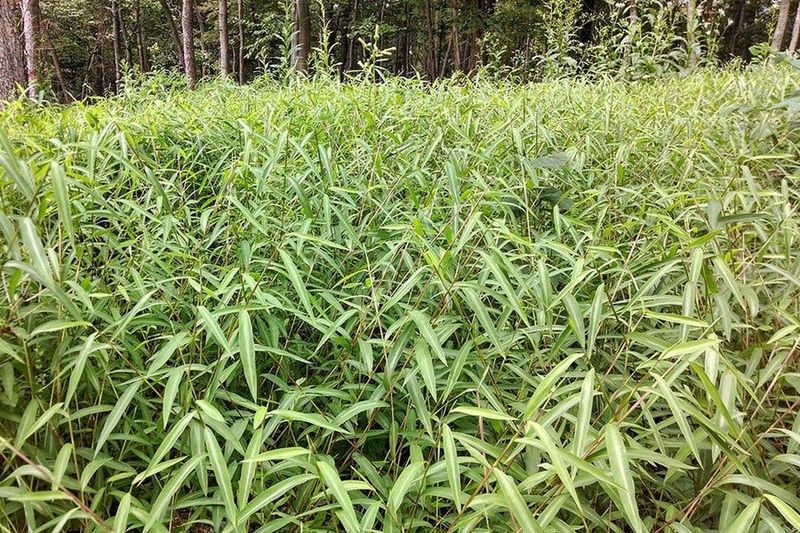
You walk past it for weeks, maybe thinking it blew in from the neighbors or will clear up on its own.
Then one morning you notice it has spread along the whole shaded bed beside your fence, threading between your hostas and up toward the lawn edge.
That grass may be Japanese stiltgrass, Microstegium vimineum, an invasive annual that has become a real problem across Pennsylvania, and the sooner you confirm what you are looking at, the better your chances of stopping it before it sets seed.
Could That Grass Be Japanese Stiltgrass?
Before you pull a single stem, slow down and look closely.
The grass in your bed may be Japanese stiltgrass, but several native and nonnative plants can look similar, and confirming the right candidate before you act protects the plants you actually want to keep.
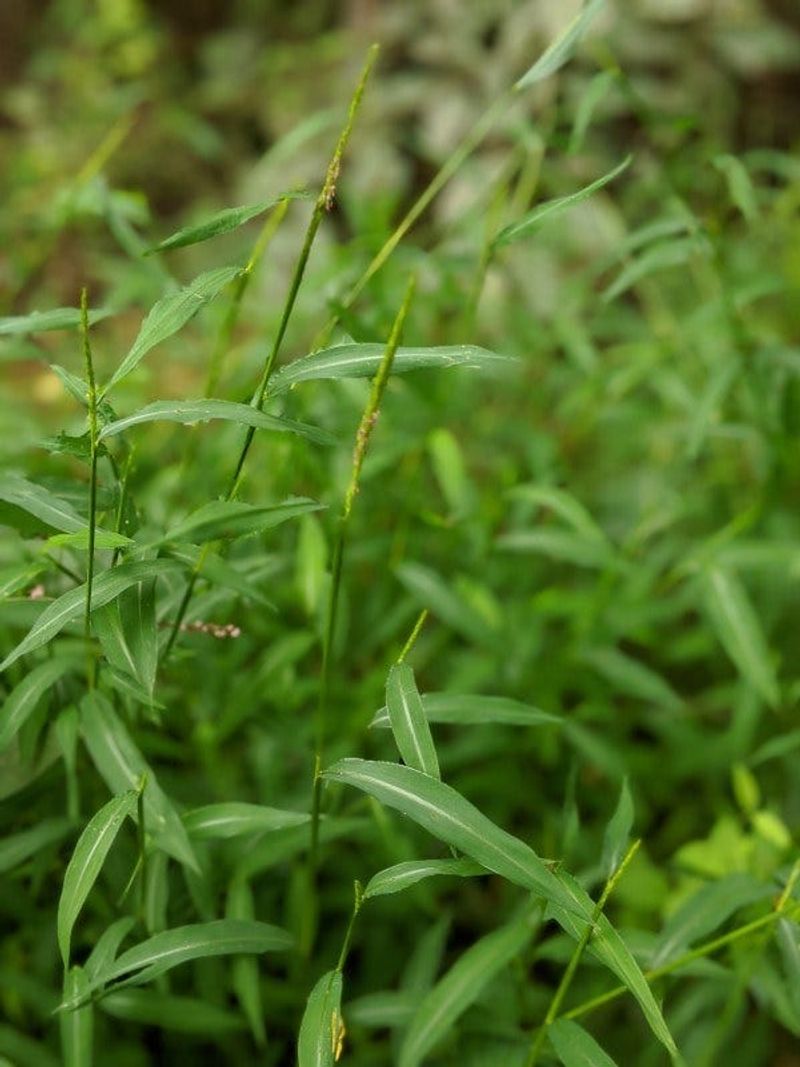
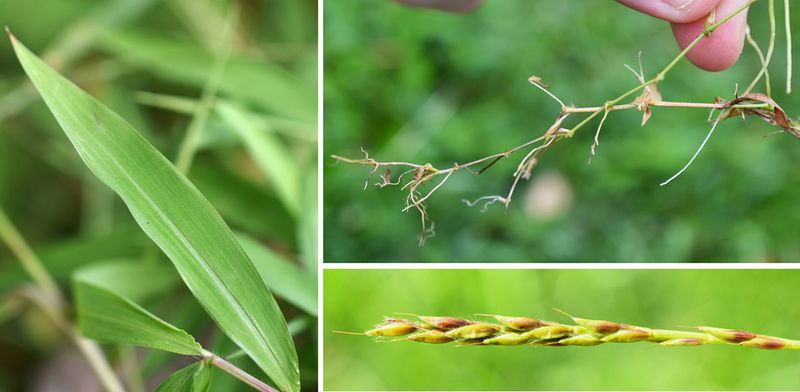
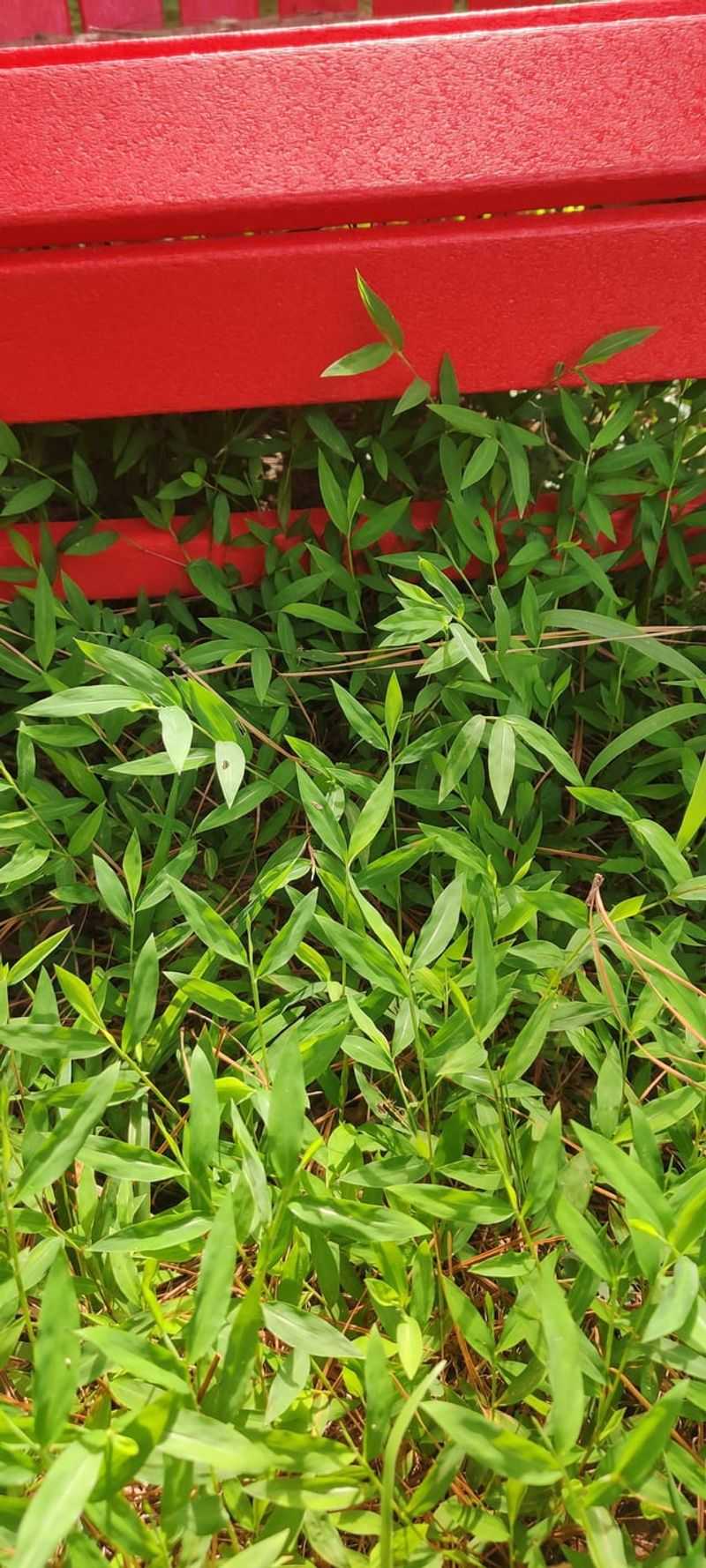
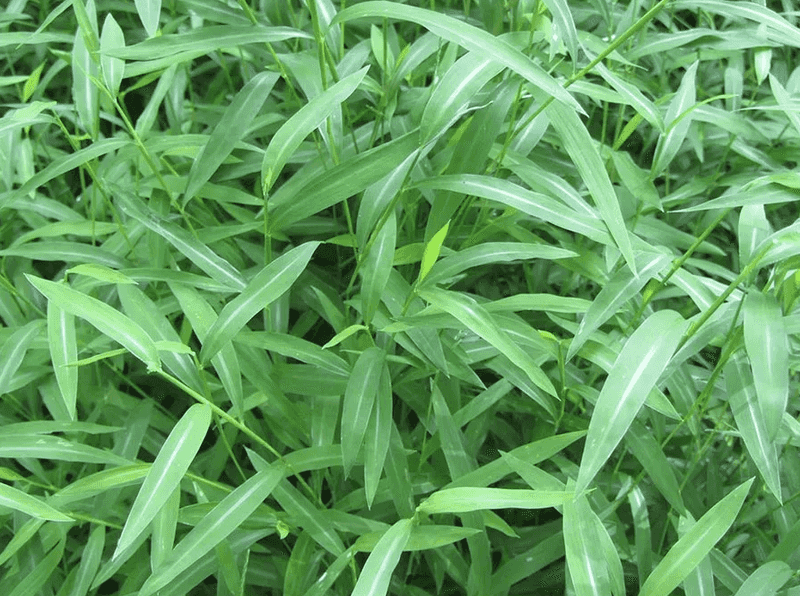
Japanese stiltgrass grows pale green, lance-shaped leaves roughly 1 to 3 inches long, often wider and shorter than typical turfgrass blades.
The stems are thin and wiry, and a mature plant can reach about 2 to 3.5 feet by late summer.
In late summer and early fall, narrow flowering stalks appear, usually carrying one to three spikes, and the whole plant often turns a soft purplish color before it dies back for the season.
The strongest field clue is a shiny, silvery stripe of hairs running along the leaf midrib, sometimes sitting slightly off-center.
Penn State Extension’s Japanese stiltgrass guide points to that reflective stripe as the feature that separates this plant from most look-alikes.
Catch it in low morning light and the stripe practically glows.
Before you remove or spray anything, compare your plant with Virginia cutgrass, rice cutgrass, nimblewill, panicgrass, crabgrass, and smartweeds, all of which can share similar growth habits or leaf shapes.
Rutgers Extension’s stiltgrass fact sheet and University of Maryland Extension’s identification resource both provide comparison details worth checking.
Shaded lawns, woodland edges, roadsides, and disturbed margins are common settings where stiltgrass turns up, but shade is not required.
The plant can establish in full sun when competition is thin.
Confirm the midrib stripe and leaf shape first, then decide what to do next.
Why A Small Patch Can Return For Years
Here is where it gets tricky.
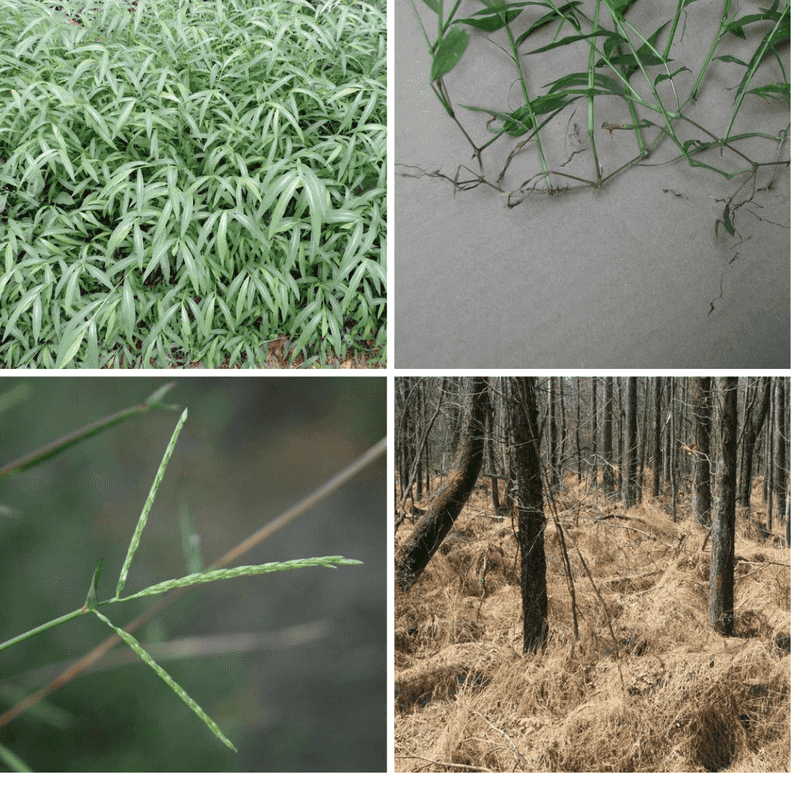
Japanese stiltgrass is an annual, meaning every plant you see will die back in fall without surviving winter underground through a permanent root system.
That sounds like good news, but the seed it leaves behind is the real problem.
According to Rutgers Extension, a single stiltgrass plant can produce up to 1,000 seeds, and those seeds may remain viable in the soil for up to five years.
One overlooked patch in your garden can quietly stock the ground with thousands of seeds before you even notice the plant is there.
Seeds move easily.
They hitch rides on shoes, clothing, animal fur, mowing equipment, and garden clippings.
Penn State Extension notes that floodwater and runoff can also carry seeds into new areas, which is why stiltgrass spreads so readily along stream corridors and low-lying margins.
The practical consequence is straightforward.
Pulling or cutting plants after seeds have already matured can spread the problem rather than solve it.
And even a clean removal in one season leaves years of seeds waiting in the soil below.
West Virginia University Extension and other regional sources agree that realistic control requires returning to the same spot for at least three to five growing seasons.
Think of the seed bank as the plant’s backup plan.
Your job is to interrupt that plan every year before new seeds hit the ground, wearing it down season by season until the reserve is exhausted.
The Conditions That Give It An Opening
Stiltgrass is genuinely opportunistic.
It does not wait for perfect conditions.
It moves into whatever gap is available and makes the most of it.
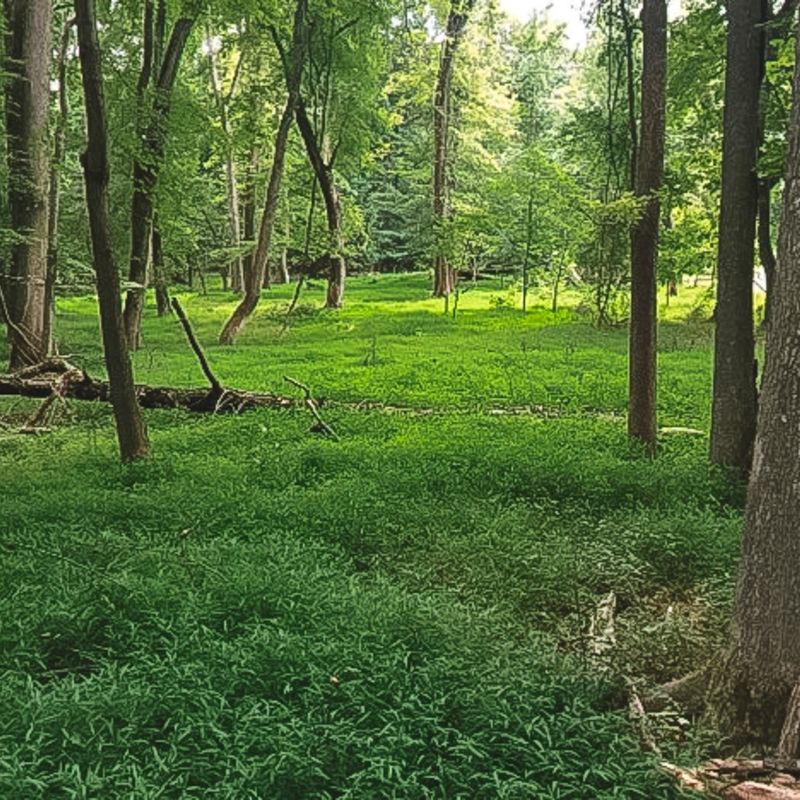
Moist, partly shaded sites are its favorite territory: the shaded bed along your fence, the woodland edge behind the shed, floodplain margins, trail corridors, canopy gaps where a tree came down, roadsides, and anywhere soil has been recently disturbed.
Penn State Extension describes shaded and partly shaded lawns and disturbed areas as especially vulnerable across Pennsylvania.
But shade and wet soil are not required.
Rutgers Extension confirms that stiltgrass can persist in full sun and drier or disturbed ground when native competition is thin.
A bare patch after grading, a dry slope where turf never filled in, a gravel edge where nothing else grows, all of those are open doors.
Where it establishes without competition, it can form dense patches that crowd out lower-growing native plants.
Research published in Biological Conservation has associated stiltgrass invasion with reduced native plant richness and cover in some invaded settings.
Studies in forest understory research point to altered plant communities in certain invaded woodlands, and regional deer pressure research suggests that browsing patterns can also influence how stiltgrass spreads.
Those effects vary by site, soil, moisture, and surrounding vegetation, so stiltgrass alone is not the cause of every decline you might see, but ignoring a growing patch does carry real risk.
The takeaway for Pennsylvania homeowners is to watch the edges: shaded beds, disturbed lawn margins, anywhere the ground cover is thin or the soil is bare.
Use The Plant’s Calendar, Not A Statewide Date
Timing is the lever that makes everything else work.
Get the timing right, and mechanical removal actually interrupts the seed cycle.
Get it wrong, and you end up doing extra work for little gain.
Penn State Extension recommends delaying mechanical removal until around June for some infestations.
Pulling too early can disturb soil and trigger another flush of germination from seeds already waiting just below the surface.
Letting the first wave of seedlings appear, then removing them before they mature, can reduce the overall seed pressure more effectively than an early spring sweep.
The finish line is seed maturity, not a fixed date on the calendar.
University of Maryland Extension and Rutgers Extension both place flowering and seed-head formation from mid-August through October, depending on region and weather conditions that year.
Southeastern Pennsylvania and the Delaware Valley tend to warm earlier in spring and stay warm longer into fall.
The northern tier, the Poconos, and higher elevations in the Laurel Highlands and Allegheny Plateau run cooler, with shorter growing seasons, so the same plant may reach seed maturity later there.
The practical rule is to scout from spring onward, watch for the narrow flowering stalks that signal approaching seed set, and finish your pulling or cutting before viable seed matures.
Use the plant’s development stage as your guide, not a single statewide August date.
If you miss one window, cut the flowering stalks off immediately to reduce the seed load, even if you cannot complete a full removal that day.
Hand-Pull Small Patches Before Seed Matures
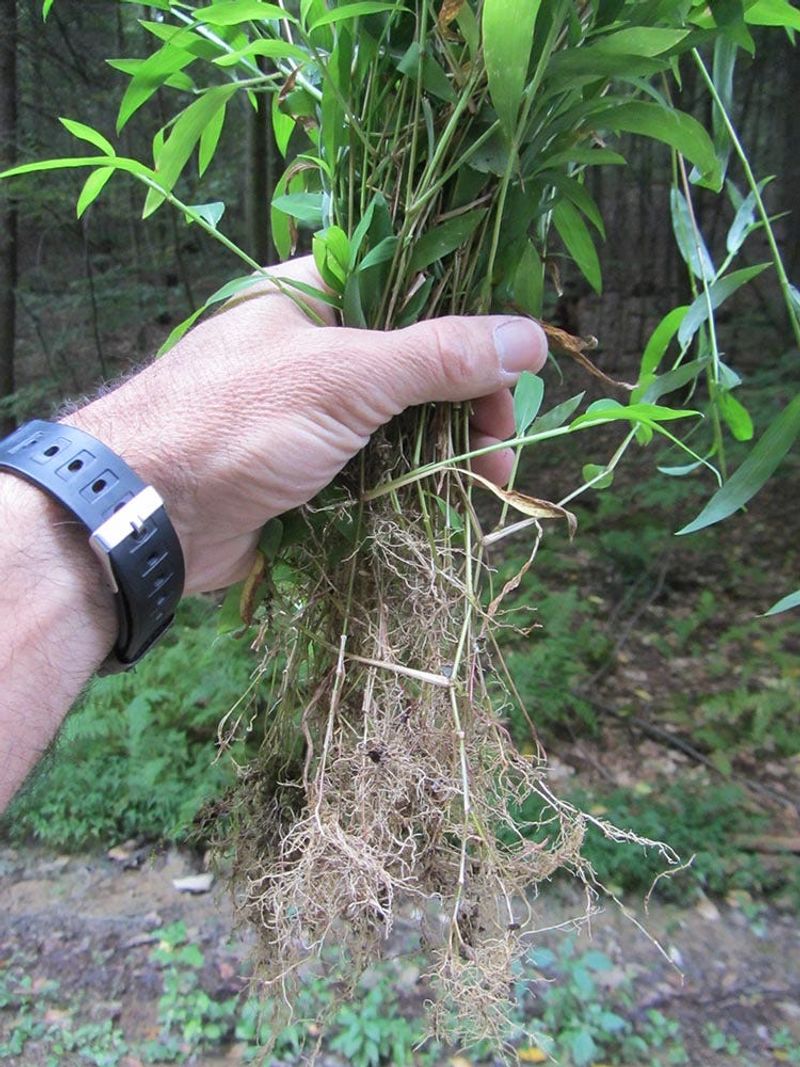
For a small patch mixed in with hostas, ferns, or native ground cover, hand-pulling is genuinely the most targeted tool you have.
The roots are shallow, and when the soil is workable after rain or watering, the whole plant comes out cleanly.
Penn State Extension recommends hand-pulling or cutting small infestations at ground level as a first response.
Grab the stem low, pull steadily, and try to get the root crown.
Work before viable seed drops, which means watching those narrow flowering stalks closely through late summer.
If the plants already have seed heads forming, bag them immediately and remove the bags from the site.
Rutgers Extension warns that seeds can continue to mature on a pulled plant left lying on the ground, so leaving pulled material in a pile is not a safe shortcut.
Seal the bag and put it in the trash, not the compost.
Pull too early in spring and you risk disturbing soil where more seeds are waiting to germinate.
Extension soil disturbance guidance and NC State Extension’s stiltgrass management resource both note that early soil disturbance can encourage a second flush of germination from the seed bank below.
Waiting until June, or until the plant is actively growing but well before seed set, reduces that risk.
Hand-pulling becomes impractical across a large infestation.
For anything covering more than a few square feet, WVU Extension advises combining methods and planning for repeated follow-up visits over three to five growing seasons.
One cleanup is a start, not a finish line.
Cut At Ground Level Instead Of Trusting One Mow
Ordinary mowing can disappoint you with stiltgrass.
The plant has stem nodes low to the ground, and if the mower blade passes above them, the plant simply regrows from those remaining nodes and keeps working toward seed production.
Stiltgrass adapts to repeated mowing by producing seed heads at lower heights, quietly finishing its reproductive cycle below the blade.
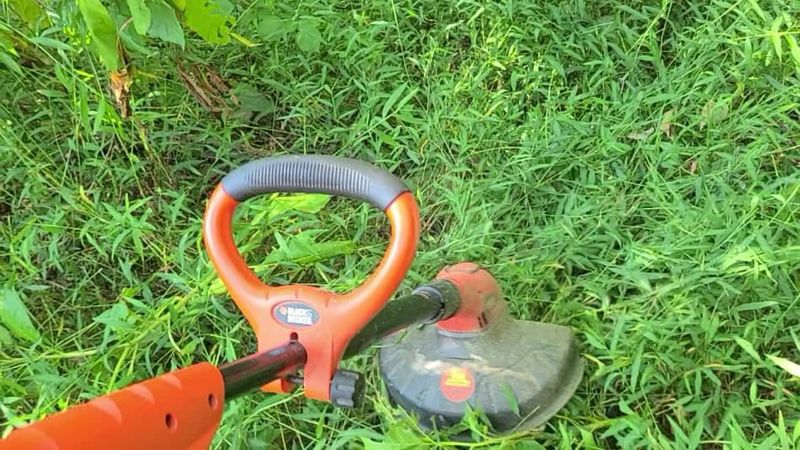
Penn State Extension states that string trimming at ground level is more effective than standard mowing because it removes the stem tissue the plant needs for regrowth.
Set the trimmer head as close to the soil surface as you safely can, and work across the patch before flowering stalks mature.
Penn State’s pasture guidance reinforces that cutting height and timing both matter.
If plants have already begun producing seed heads when you get to them, cutting the flowering stalks off immediately can still reduce the amount of new seed that drops, even if it is not the same as eradication.
Extension Q and A on mowing stiltgrass and Rutgers Extension both confirm that one spring mowing does not solve an established infestation.
Think of ground-level cutting as a way to reduce seed pressure, not as a one-and-done fix.
After trimming, clean the mower deck, the trimmer head, your shoes, and your clothing before moving into a clean area of the yard.
Seeds cling to equipment and fabric, and carrying them from an infested patch to a clean lawn edge or garden bed starts the cycle all over again.
A few minutes of sanitation saves a full season of follow-up work.
Replace Bare Soil With Competitive Cover
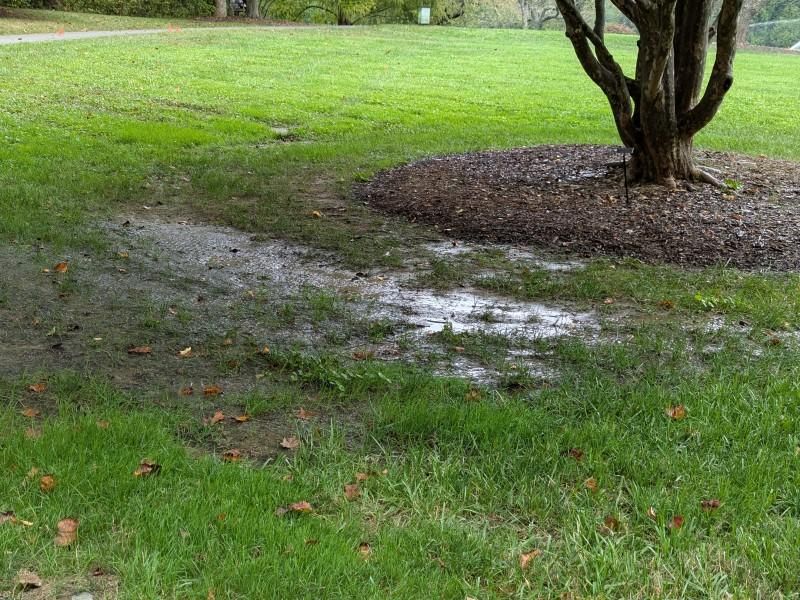
Bare soil is an open invitation.
After you pull or cut stiltgrass from a patch, the exposed ground is ready for the next round of seeds sitting just below the surface, whether they belong to stiltgrass or something else equally unwelcome.
A dense, healthy cool-season lawn is one of the best long-term defenses available in Pennsylvania.
Rutgers Extension recommends soil testing, appropriate fertility management, correct mowing height, consistent watering, and overseeding or reseeding thin or bare areas as soon as possible after removal.
A lawn that fills in completely leaves little room for stiltgrass seedlings to find light.
Aim to reseed bare patches in early fall when cool-season grasses establish most reliably in Pennsylvania.
In landscape beds, a 2 to 3 inch layer of mulch can block enough light to suppress stiltgrass germination.
University of Maryland Extension notes that mulch works as a suppression layer, not a guaranteed destruction method.
An established seed bank below the mulch can still produce seedlings where mulch thins out, shifts, or is disturbed.
Refresh mulch annually and check edges where it tends to thin.
Sanitation belongs in the same conversation as soil cover.
Clean shoes and equipment when leaving an infested area, avoid moving seed-bearing clippings to clean parts of the yard, and do not compost pulled plants that carry seed heads.
Every seed that stays off clean ground is one less plant to deal with next spring.
Competitive ground cover, lawn repair, and sanitation together form a prevention layer.
None of them alone destroys the seed bank, but combined and repeated over several seasons, they steadily reduce the conditions that let stiltgrass thrive.
Use Herbicides Only Within The Label
Herbicides can help when hand-pulling or cutting is not practical across a larger patch, but the right product depends entirely on where you are applying it and what plants are nearby.
There is no single spray that works everywhere without risk.
Preemergence options such as prodiamine or pendimethalin can prevent stiltgrass seeds from germinating, but only if applied before seeds sprout.
Penn State Extension identifies these as possible selective preemergence choices in appropriate turf settings.
Miss the window and they provide no benefit for that season.
After emergence, fenoxaprop-p-ethyl is one postemergence option that Rutgers Extension identifies as effective in certain established turfgrass contexts.
It does not apply universally, so confirming the labeled site before use matters.
University of Maryland Extension’s management guide provides additional postemergence context for different landscape settings.
In planting beds, glyphosate or glufosinate can be used as spot treatments, but both are broad-spectrum products that can injure or kill desirable plants and young trees through accidental overspray.
Penn State Extension specifically warns about glyphosate drift and contact near desirable trees.
Apply carefully, shield nearby plants, and avoid windy conditions.
Penn State’s home garden weed management guidance covers additional site-specific considerations.
Every product must be used according to its current label.
Pennsylvania’s Act 44 pesticide regulations govern registration, use restrictions, and application requirements in the state, and Pennsylvania’s home pesticide safety guidance outlines protections for water, children, pets, and pollinators.
The EPA’s pesticide labeling Q and A explains why the label is a legal requirement, not a suggestion.
No herbicide alone ends a stiltgrass problem.
The seed bank persists.
Combine any chemical treatment with mechanical removal, soil cover, and several seasons of follow-up, and you have a plan that can actually work over time.
Build A Several-Season Control Plan
Stiltgrass control is genuinely a multi-year commitment, not a single weekend project.
The good news is that each season you prevent seed production, you draw down the seed bank a little further.
The plant is working against a clock, and so are you.
Start by confirming the identification.
The silvery midrib stripe, the lance-shaped pale leaves, the thin wiry stems: check those features before removing or spraying anything.
Then scout through the growing season, not just once in spring.
Rutgers Extension’s management guidance and Penn State Extension both emphasize repeated monitoring as a core part of any realistic control plan.
Pull or cut before seed matures, bag any material carrying seed heads, clean your shoes and equipment before moving to clean areas, and repair bare ground immediately with seed or mulch.
Return to the same spot the following spring and the spring after that.
Expect to repeat the cycle for at least three to five growing seasons where the infestation is established.
Removing stiltgrass does not automatically bring native plants back.
Research on stiltgrass management for native plant restoration shows that recovery may also require replanting, erosion control, or deer management depending on the site.
Some areas need active replanting with native ground covers, sedges, or low shrubs to fill the space stiltgrass occupied.
The goal is not to panic over every unfamiliar grass in your yard.
It is to stop a confirmed infestation from adding another thousand seeds to the ground this fall.
Each season you win that race, the problem gets a little smaller and the garden gets a little more yours again.