
What It Really Means When A Cardinal Keeps Visiting Your North Carolina Yard In A Heat Wave
Follow us on Google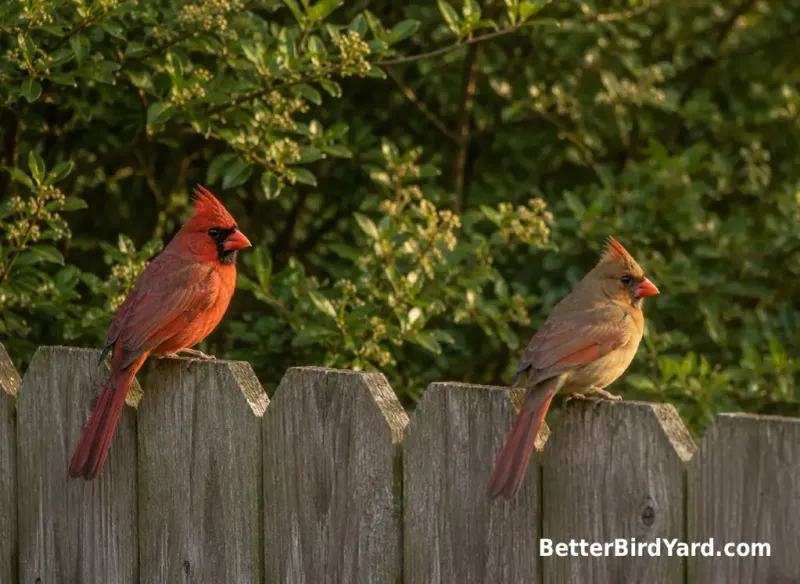
You glance out the kitchen window and there he is again, that same brilliant red cardinal, perched on the fence rail in the middle of a July afternoon that feels like a sauna. He has shown up three days in a row now, and you are starting to wonder what he is after.
Northern Cardinals are year-round neighbors across North Carolina, not passing travelers, so his return visits likely have a practical reason worth understanding. Figuring out what your yard is offering him, and whether you can make it a little safer and more useful, is the kind of small project that pays off all summer long.
Why A Cardinal May Keep Returning
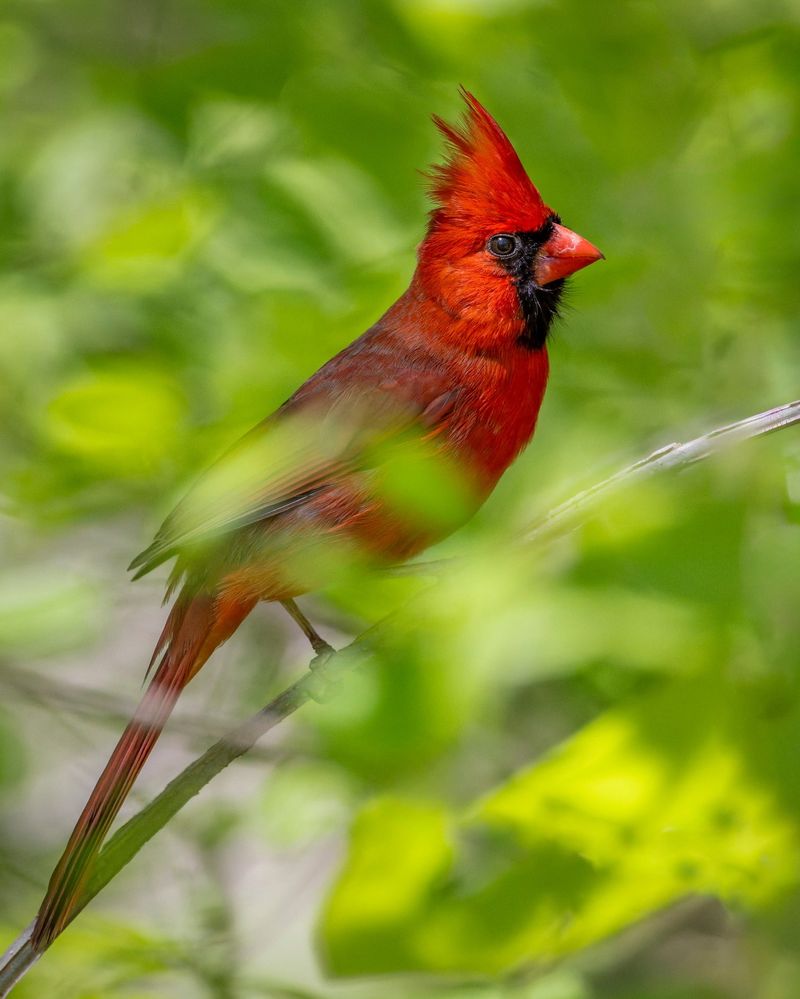
Spot a male Northern Cardinal making daily appearances in your yard during a heat wave, and the first question most people ask is: what does it mean? The honest answer is that it probably means your yard has something useful, though pinning down exactly what takes a little watching.
Northern Cardinals, Cardinalis cardinalis, are permanent residents across all of North Carolina, from the Sandhills to the Piedmont to the mountain foothills. Cornell Lab of Ornithology’s All About Birds profile confirms that cardinals are nonmigratory birds that use open woodland edges, shrubby tangles, dense cover, and backyard feeding areas year-round.
The bird visiting your yard is almost certainly a local resident, not a traveler pushed off course by the heat.
Repeated visits may reflect several overlapping possibilities. The cardinal may hold territory nearby and your yard falls inside that range.
There could be a nest or recently fledged young hidden in a dense shrub just beyond your fence. Fallen seed under a feeder, insects in the grass, or a patch of thick cover that offers shade and concealment can all draw a cardinal back on the same predictable loop.
What the visits do not reveal is equally worth knowing. The behavior alone does not prove that the bird is sick, dehydrated, or in danger.
It does not predict an approaching storm or signal anything supernatural. Cardinals are observant, opportunistic birds that work their territory methodically, and a yard that reliably offers food, cover, or water will earn regular attention, especially when the surrounding landscape bakes under a genuine North Carolina heat wave.
How Heat Changes A Yard’s Appeal
On a 97-degree afternoon in the Piedmont, the difference between a sunny patch of lawn and a shaded shrub border is not subtle. For a bird that weighs less than two ounces, that gap can genuinely matter.
Birds manage heat through several strategies that are worth recognizing. They reduce activity during the hottest part of the day, seek shade, spread their wings slightly to release heat, and use a process similar to panting, where rapid breathing moves air across moist surfaces inside the throat and air sacs to carry heat away from the body.
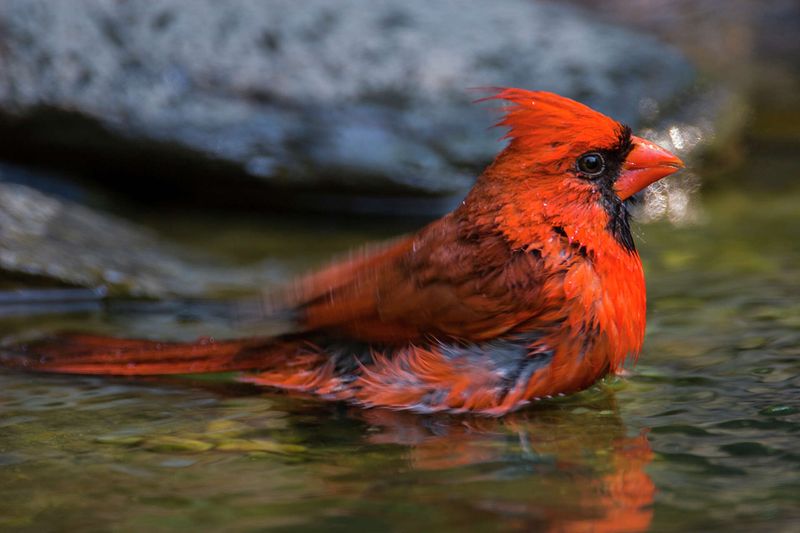
Bathing also helps by wetting the feathers and allowing evaporative cooling on the skin beneath. Audubon’s guidance on helping birds beat the heat describes these behaviors as normal responses that birds use to manage hot conditions, not automatic signs of illness.
Research on avian thermoregulation supports the general picture that extreme heat can increase a bird’s rate of water loss and push it to change its activity patterns. A peer-reviewed study published in the Journal of Experimental Biology examining Sonoran Desert songbirds found that resting metabolism and evaporative cooling rates both respond to temperature stress.
That research involved desert species under laboratory conditions, not cardinals in a North Carolina backyard, so it does not give a precise temperature trigger for backyard action.
What it does support is a simple working idea: when heat is severe, small differences in a yard’s shade, water access, and dense cover can make one spot more attractive than the open landscape around it. Your yard may genuinely be a better option right now, and that is a reasonable starting point for understanding why the cardinal keeps coming back.
Look For The Resource The Bird Already Uses
Before adding anything to your yard, spend a few minutes watching where the cardinal actually goes. That observation will tell you more than any general explanation can.
Cardinals are ground foragers as much as feeder visitors. Cornell’s species account notes that cardinals forage on or near the ground and are especially drawn to sunflower seeds, but they also pick up fallen seed, hunt insects in leaf litter, and move through shrubby cover with purpose.
If your cardinal is spending time near a feeder, a brush pile, a dense azalea border, or a patch of unmowed grass, that location is probably the resource, not the yard as a whole.
A bird sitting quietly in the shade of a dogwood or a cedar is not automatically in distress. Audubon’s coverage of how birds manage heat describes midday shade-seeking as a normal part of a bird’s daily rhythm during warm weather.
Cardinals commonly reduce movement during the hottest hours and become more active again in the late afternoon, which can make a single shaded perch look like a strange obsession when it is actually sensible scheduling.
Watch for where the bird disappears into vegetation. A cardinal that slips repeatedly into the same dense shrub may have a nest or fledglings tucked inside.
One that moves methodically along a fence line near fallen seed is probably foraging. A bird that visits a particular corner and then leaves quickly may be checking a familiar water source or a territorial boundary.
Each pattern points toward a different resource, and knowing which one is present helps you decide whether anything in your yard genuinely needs attention.
A Birdbath May Add Safe Water
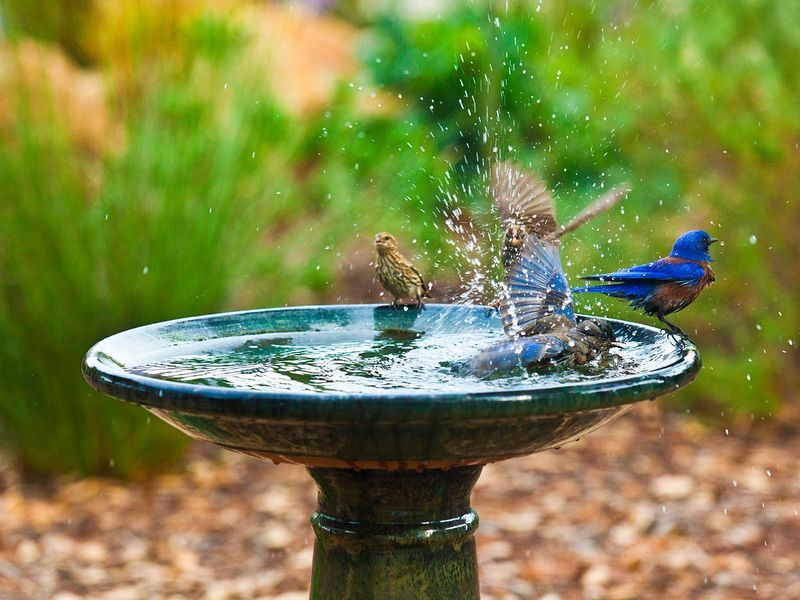
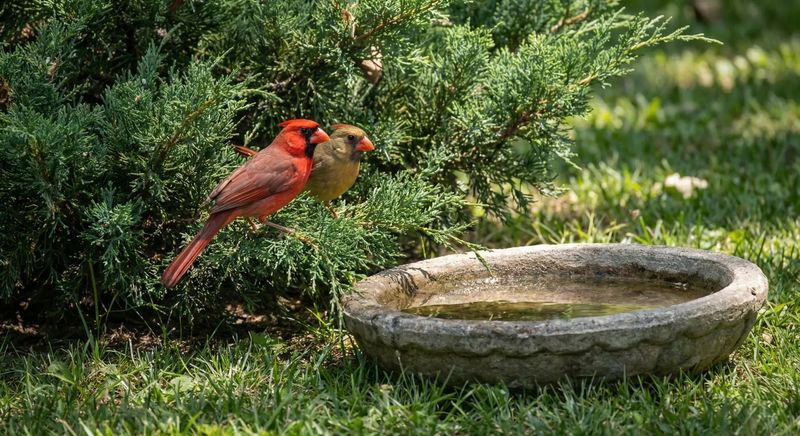
If you watch the cardinal and notice your yard has no obvious water source, a birdbath is a reasonable and low-cost option to consider. Think of it as adding a resource that may be useful, not as a rescue mission for a bird that may not need one.
Getting the setup right matters more than the container itself. NC State Extension’s wildlife habitat guidance recommends a stable, shallow basin with a rough or textured bottom that gives birds secure footing.
Keep most of the water depth around 1 to 2 inches, with a gradual slope from the edge toward the center so birds can wade in at whatever depth feels comfortable. Add a few flat stones or short sticks inside the basin so smaller birds have a nonslip surface to stand on while drinking or bathing.
Avoid deep buckets, garden ponds with steep sides, or any open container a bird cannot easily step out of. A bird that slips into deep water during a heat-stressed moment can drown before it recovers.
Audubon’s birdbath guide reinforces the same principle: shallow, stable, and nonslip are the features that make a bath actually usable.
Do not add anything to the water. Sugar, salt, electrolyte powders, essential oils, soap, and pesticides all create risks rather than benefits.
Clean water is the only thing a bird needs from a bath, and anything dissolved in it changes the chemistry in ways that can irritate skin, eyes, or the digestive tract. Fill the basin with plain tap water, keep it shallow, and let the stones do the safety work.
Balance Shade With Visibility And Cleanliness
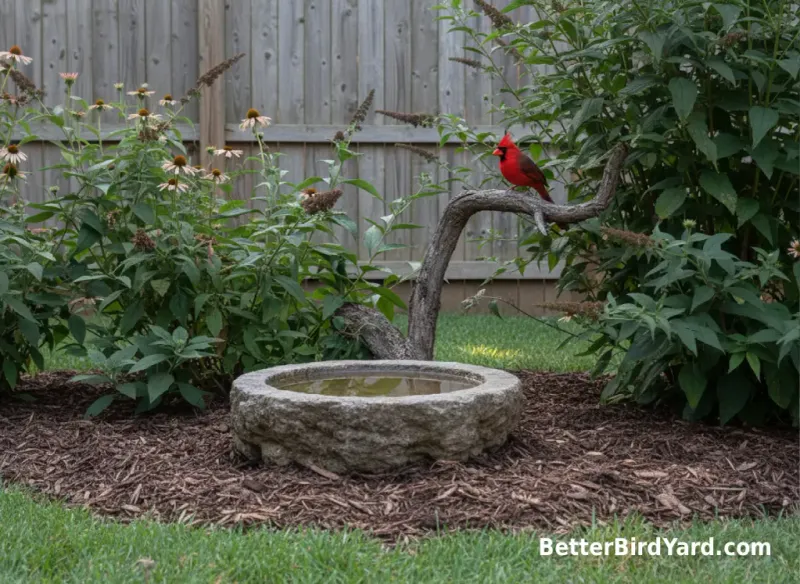
Where you put the bath matters almost as much as how you build it. A basin tucked deep inside a shrub thicket gives birds shade but takes away the one thing they rely on to stay safe: the ability to see a cat or hawk coming before it is too late.
Place the bath within a few feet of a tree canopy, a pergola edge, or an open shrub border that provides overhead shade without creating dense ground-level hiding spots right beside the water. NC State Extension’s backyard bird habitat guide recommends positioning water sources near cover while maintaining clear sightlines, so birds can spot approaching predators and retreat quickly to a nearby perch.
Avoid placing the basin directly against a fence corner or a thick hedge where a cat could crouch undetected within a few feet.
During a heat wave, check the basin every day. Water in a shallow container heats up fast in North Carolina’s summer sun, and warm, stagnant water becomes unappealing to birds and attractive to mosquito larvae within about 48 hours.
Replace warm or visibly dirty water immediately, and scrub any algae off the basin surface before refilling. CDC guidance on backyard wildlife advises cleaning bird baths and feeders at least weekly, or whenever visibly dirty, to reduce the risk of disease transmission among birds.
Standing water that sits more than a day or two can also support mosquito breeding, a real concern across the Coastal Plain and Piedmont during humid summers. Dumping and refilling the basin daily during peak heat solves both problems at once.
A clean bath in a good spot is genuinely useful; a neglected one creates more problems than it solves.
Support The Habitat Beyond Water
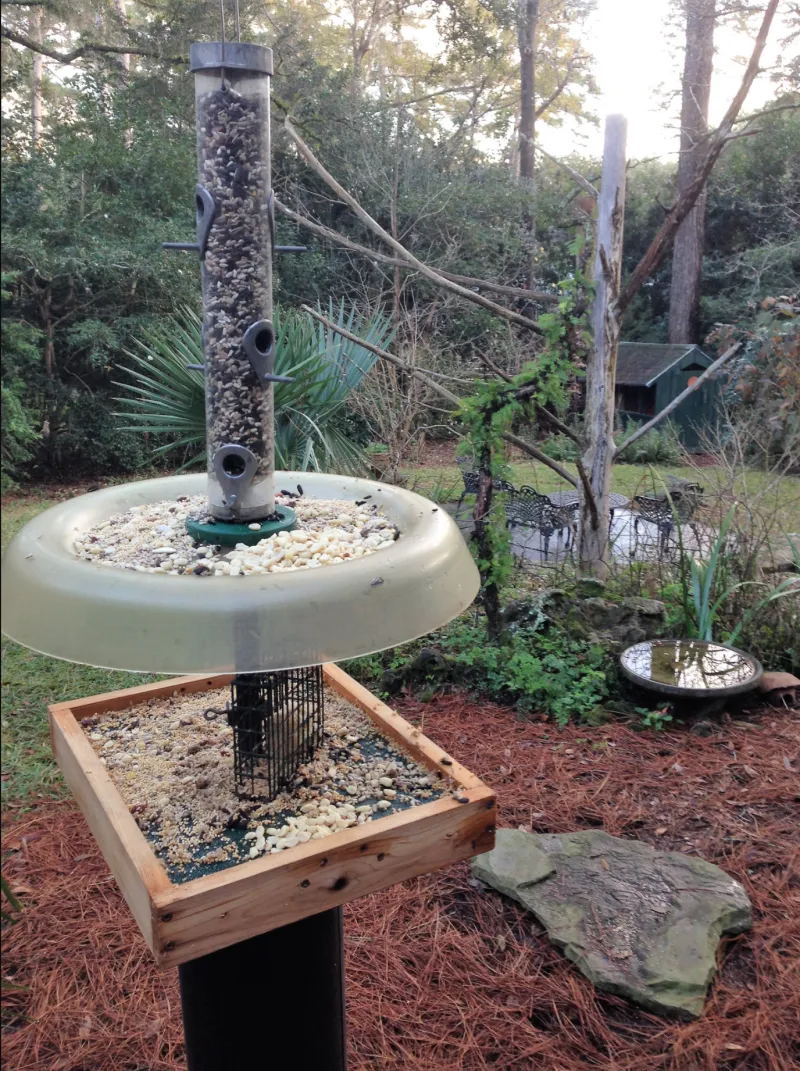
Water gets the most attention during a heat wave, but a cardinal that keeps returning to your yard is probably responding to several overlapping features at once. Food and cover are worth examining alongside any water question.
Sunflower seed is the single most reliable food choice for cardinals. Cornell’s Northern Cardinal profile specifically names sunflower seeds as a top attractant, and many Piedmont homeowners find that a tube or platform feeder stocked with black-oil sunflower seed brings cardinals in reliably.
Keep the feeding area clean, remove any seed that smells musty or looks clumped, and scrub the feeder surfaces regularly. Spoiled seed can carry mold that harms birds, and crowded feeders can increase contact between individuals.
Shrubs, dense undergrowth, native vines, and fruit-bearing trees add habitat layers that a feeder alone cannot provide. NC State Extension’s urban bird habitat guide describes layered plantings of native trees, shrubs, and groundcover as the foundation of good backyard bird habitat, offering nesting sites, insect food, fruit, and cover from predators and weather alike.
Native plants such as dogwoods, beautyberries, viburnums, and native hollies provide berries and structure that cardinals use through multiple seasons. Leaf litter and unmowed patches support the insects that make up a meaningful part of a cardinal’s warm-season diet.
Audubon’s heat-wave bird guidance also points to shade trees and dense cover as habitat features that make yards more useful during extreme heat. Adding these elements takes time, but even one new native shrub placed thoughtfully is a step toward a yard that works as habitat rather than just a lawn with a feeder on it.
Separate Ordinary Heat Behavior From Distress
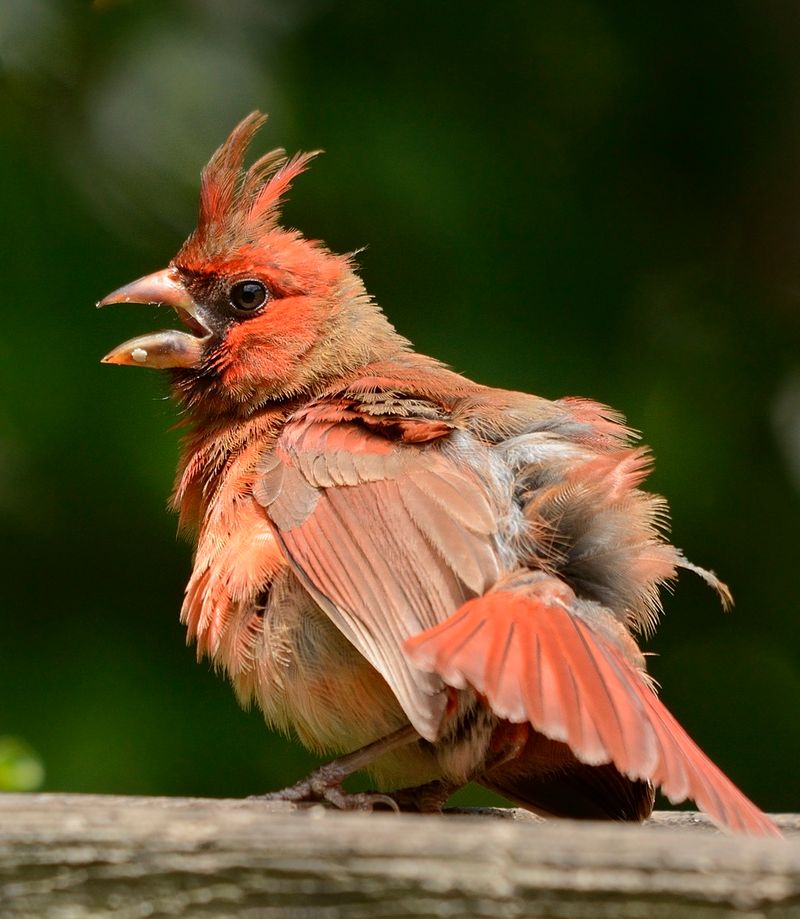
Watching a bird sit still in the shade with its beak open and wings held slightly away from its body can look alarming if you are not sure what normal heat behavior looks like. Most of the time, it is exactly what it appears to be: a bird cooling off.
Panting, open-mouth breathing, wing spreading, changes in feather position, shade-seeking, and midday inactivity are all described by Audubon’s reporting on how birds manage heat as standard thermoregulation responses, not independent signs of illness. A cardinal doing any combination of those things on a 95-degree afternoon in the Sandhills is most likely doing what birds do.
Bathing, too, is a normal cooling behavior, not a sign that something is wrong.
The picture changes when behavior crosses into something more serious. Weakness that keeps a bird on the ground when it should fly, actual falling or tumbling, an obvious injury such as a drooping wing, or prolonged unresponsiveness to nearby movement are more concerning observations.
If you see any of those, the right move is to contact a licensed wildlife rehabilitator or your state wildlife agency rather than attempting hands-on care yourself.
Do not try to catch, hand-feed, or carry a wild cardinal, even one that looks exhausted. Keep children and pets away from any bird that is on the ground and not moving normally.
CDC guidance on backyard wildlife advises washing hands after handling any bird-feeding equipment and avoiding contact with sick or dead wild birds entirely. If you find a dead bird or notice several sick birds near a feeder or bath, remove the equipment temporarily and follow CDC bird-flu precautions for backyard bird enthusiasts while you assess the situation.
Those steps are for genuine emergencies, not for a tired-looking bird resting in the shade on a hot Tuesday.
Use The Visit As A Clue, Not A Prophecy
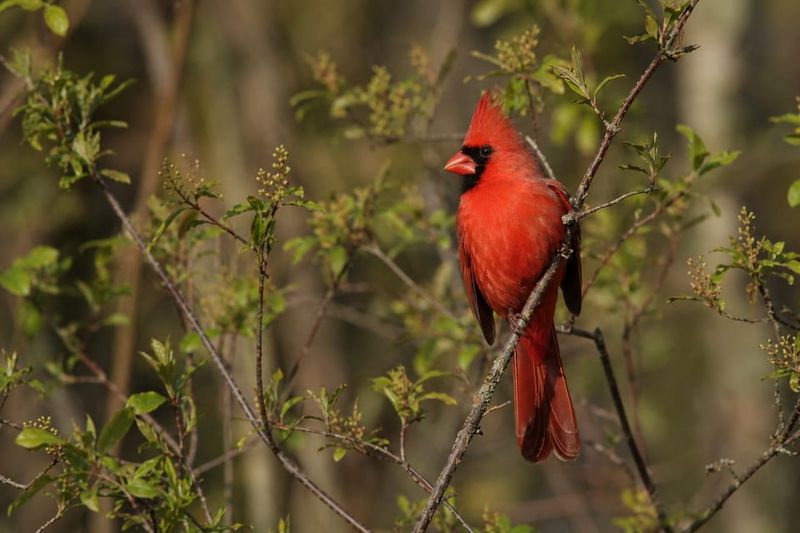
A cardinal that keeps showing up in your yard during a heat wave is most likely telling you something practical: your yard has something worth coming back for. That something may be shade, dense cover, sunflower seed, fallen seed, insects, nesting habitat nearby, or a patch of territory the bird has held since spring.
The visit does not predict tomorrow’s weather, confirm a message from someone you have lost, or mean the bird is in trouble. NC State Extension’s backyard bird habitat guidance frames repeated wildlife visits as evidence that a yard is already providing useful resources, which is a genuinely good sign rather than a cause for alarm.
The most useful response is to observe first, then act on what you actually see. If the yard has a feeder but no water, a shallow birdbath is a reasonable addition.
If it has open lawn but little cover, a native shrub planted near an existing border adds one more layer. Audubon’s heat-wave bird guidance consistently returns to the same practical point: shade, clean water, and cover are the features that make a yard genuinely useful during extreme heat, and adding them supports birds without requiring any diagnosis of what a particular bird needs.
Supporting a bird and diagnosing it are two different things. Responding to current heat conditions in your yard is also very different from predicting what the weather will do next week.
Keep those distinctions clear, make one small improvement if the habitat seems to be missing something obvious, and then simply enjoy the fact that a wild cardinal found your yard worth returning to. That, on its own, is a pretty good outcome for a hot North Carolina summer.