
The Blue Texas Perennials You Plant Once And Never Replant Again
Follow us on Google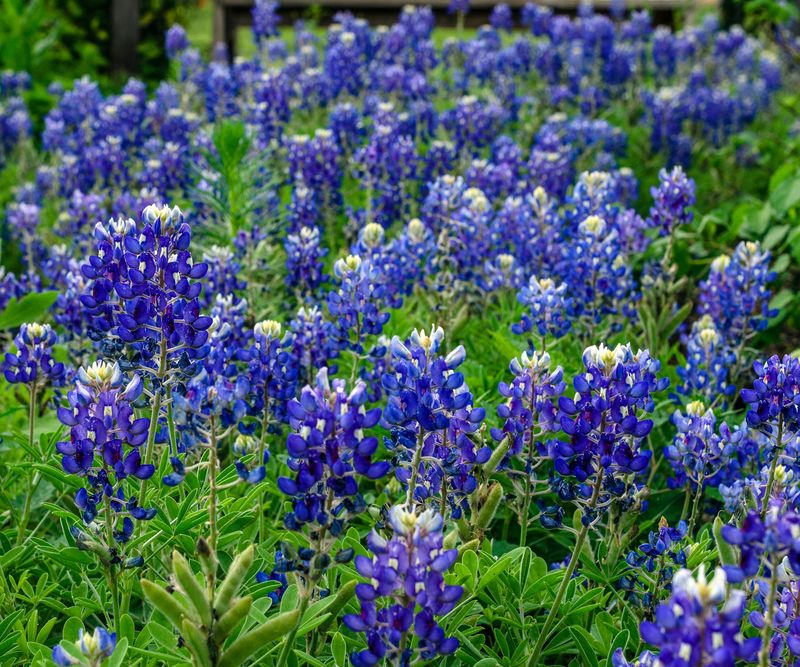
You step outside before breakfast, and the patio already feels warm before the sun clears the fence line.
A mockingbird runs through his morning set, and you notice the flowerbed you fought with all last summer looking tired again.
Texas has a way of turning hopeful color into a yearly chore, and most folks give up somewhere around July.
But blue perennials that genuinely love our heat let you plant once and simply enjoy the show for years.
Here are the ones worth digging a hole for.
1. Mealy Blue Sage Offers Steady Comfort
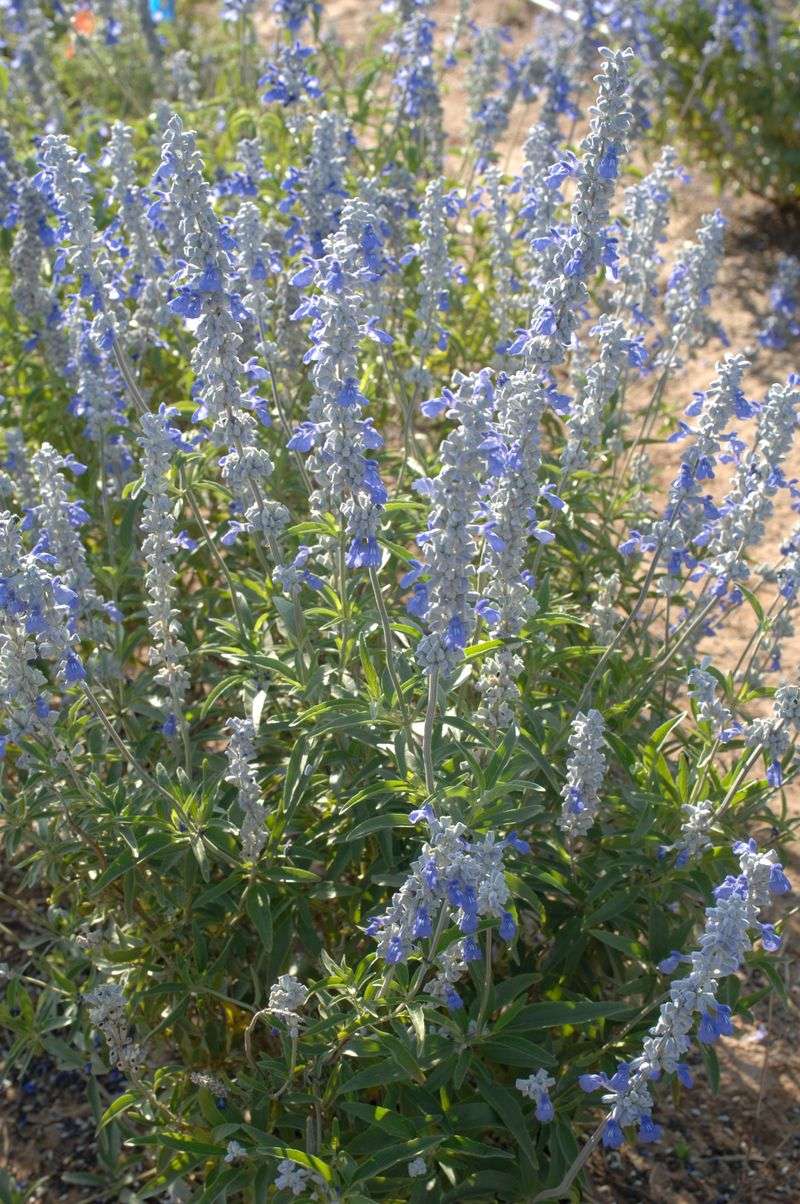
Many Central Texas gardeners first meet Mealy Blue Sage (Salvia farinacea) on a roadside, blooming wild like it owns the ditch.
This Texas native is a quiet hero, handing you steady blue color without asking much in return.
You might worry triple-digit heat will scorch such delicate-looking spikes.
Here is where it gets tricky.
The plant actually thrives in that punishing sun, blooming from late spring all the way to first frost, reaching about 2 to 3 feet tall and just as wide.
Give it full sun, though a little afternoon shade in fierce West Texas heat will not hurt.
Established plants shrug off drought, but do not overwater in the heavy blackland clay common up north.
In late winter, cut the spent stems back to 4 to 6 inches for fresh growth.
Deer tend to leave it alone, and hummingbirds treat it like a diner.
That is a lot of payoff for one afternoon of digging.
2. Gregg’s Mistflower Feeds The Fall Monarchs
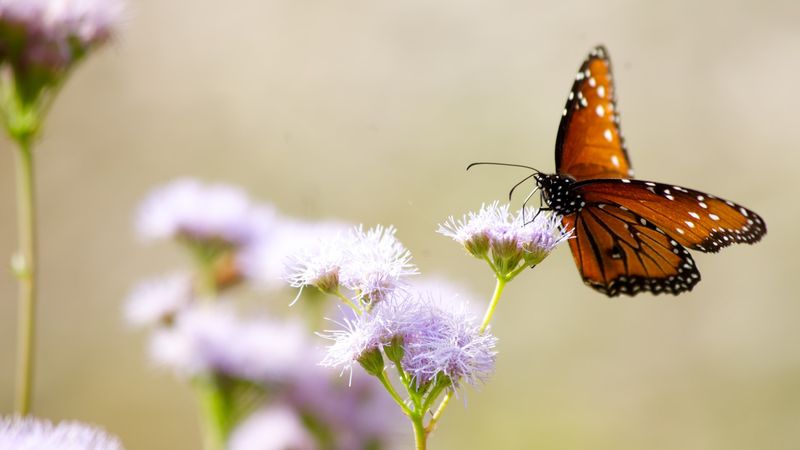
Picture a low cloud of soft lavender-blue puffs right when everything else looks worn out.
That is Gregg’s Mistflower (Conoclinium greggii), and it acts like a living welcome mat for pollinators.
During the fall monarch migration through Central Texas, this plant practically vibrates with Monarchs and Queens.
Its real showstopper stretch runs from late summer into autumn, timed perfectly for the butterflies heading south.
Root hardy down to 0 degrees Fahrenheit, it returns reliably from the Panhandle to the Gulf Coast.
It loves hot, dry spots and shrugs off the shallow alkaline soil of the Hill Country.
So you get xeriscape toughness with a tender-looking bloom.
One honest warning.
It spreads by rhizomes, underground stems that send up new patches nearby.
Divide it every couple of years, or cut it hard to the ground in early spring to keep it tidy.
Texas A&M AgriLife Extension named it a Texas Superstar, which tells you plenty about how little it needs from you.
3. Plumbago Brings The Sky Down To Earth
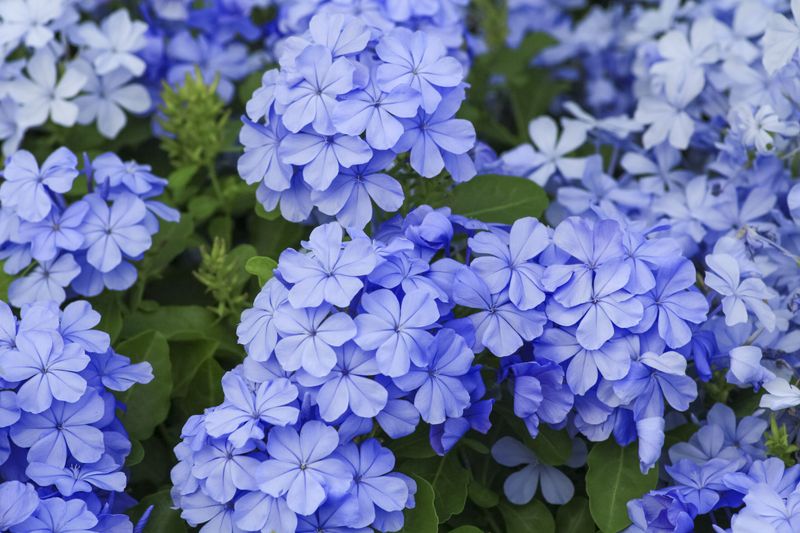
Gardeners call Plumbago (Plumbago auriculata) sky flower for a reason.
The blooms are a pale, almost weightless blue that looks like somebody snipped a piece of the Texas sky and pinned it to a shrub.
It is not native, but this South African transplant took to our heat like it was born here.
Across Central and South Texas, folks plant it once and watch it return year after year.
Here is the catch.
Plumbago is hardy in USDA Zones 9 to 11, so a hard freeze may knock it to the ground.
Do not panic.
It is root hardy and sprouts right back in spring, blooming from late spring until first frost.
Grow it as a rounded shrub 3 to 4 feet tall and up to 5 to 6 feet wide, or train it up a trellis.
Full sun to part shade suits it, and deer usually walk on by.
Few plants give this much blue for so little worry.
4. Blue Mistflower Thrives Where Others Sulk
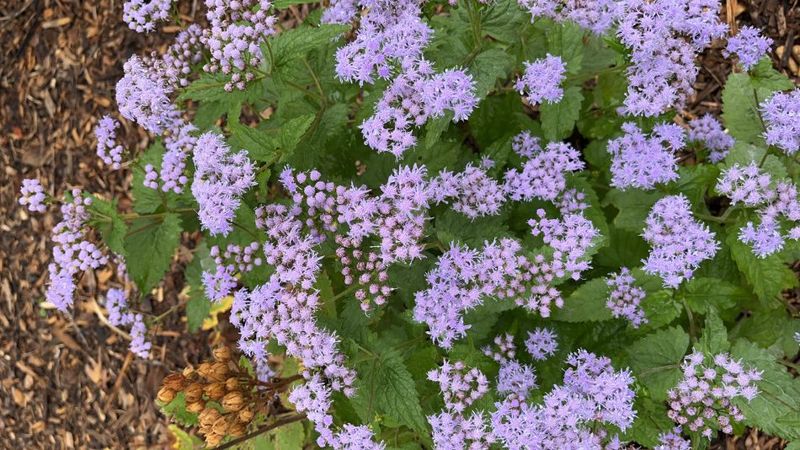
Not every blue bloomer wants blazing sun and dry feet.
Blue Mistflower (Conoclinium coelestinum) is the cousin that actually prefers a little moisture and dappled shade, which makes it a gift for tricky corners.
Along the East Texas pines and in low, damp spots where other perennials pout, this one settles in and blooms happily from midsummer through fall.
The fluffy blue-violet flowers look almost identical to their Hill Country relative but handle acidic sandy soil with ease.
It spreads by rhizomes and seed, so plant it where roaming is welcome, like a wild edge or a rain garden.
Cut it back by half in early summer if you want a bushier, less floppy shape.
Butterflies love it as much as its Gregg’s cousin does.
For a shady bed that always looked like a lost cause, this is the plant that finally fills it in.
5. Texas Sage Blooms When The Rain Comes
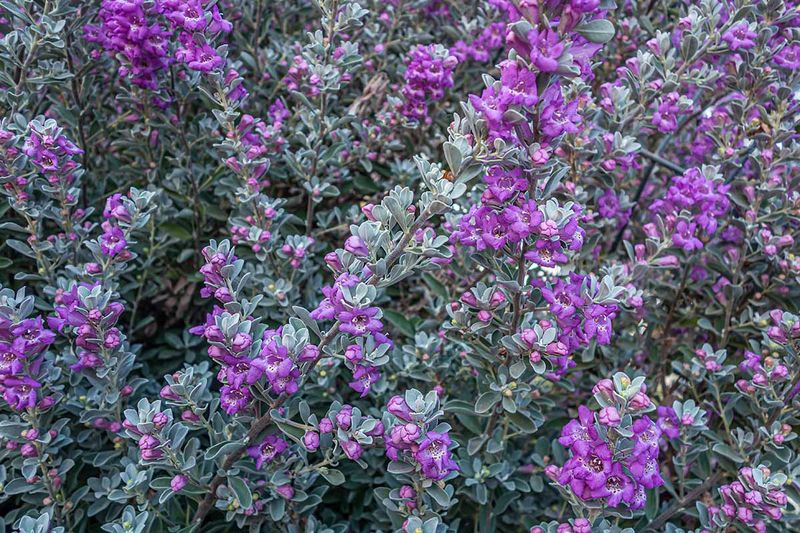
Watch a Texas Sage (Leucophyllum frutescens) after a summer downpour and you will understand why folks call it barometer bush.
The silvery shrub explodes into purple-blue blooms within a day or two of rain, like it heard the thunder coming.
Though the flowers lean lavender, they read blue enough in the landscape to earn their place here.
This tough native handles the caliche and shallow alkaline soil of West Texas and the Hill Country better than almost anything.
Give it full sun and sharp drainage, then walk away.
Overwatering is the fastest way to kill it, so resist the hose once it is established.
It can reach 5 to 8 feet tall and wide, so give it room from the start.
A light shearing in late winter keeps it dense.
It laughs at drought, brushes off high winds, and asks for nothing.
That is desert toughness dressed up in blossoms.
6. Blue Salvia Pentachaeta Loves Alkaline Ground
Some plants tolerate lousy soil.
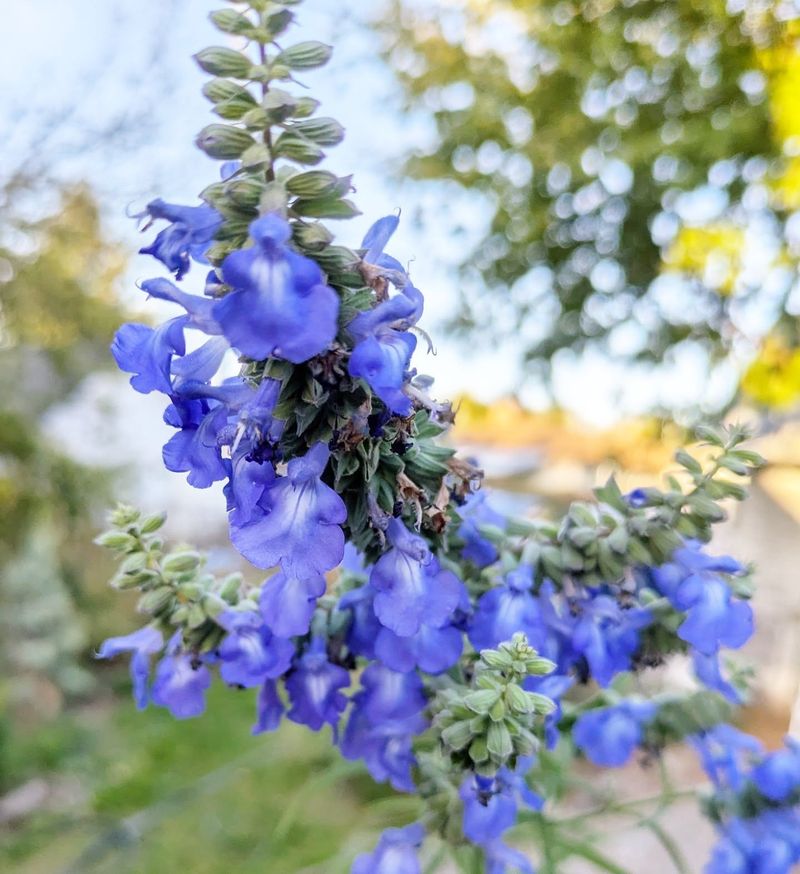
Blue Salvia (Salvia pentachaeta) genuinely seems to prefer it, thriving in the thin, rocky, alkaline ground that makes other perennials give up.
Hill Country gardeners with nothing but caliche under a few inches of dirt find this deep-blue sage a rare match.
It stays modest, around 1 to 2 feet, so it slips into tight spots along paths and rock borders.
Blooming spring through fall, it offers a richer, truer blue than most Texas salvias, a color that stands out against gray-green foliage.
Bees find it fast.
So do hummingbirds, especially on those long evenings when the porch finally cools.
Water it deeply while it settles the first season, then ease off.
Trim spent stems in late winter to keep it neat.
For anyone tired of amending soil that fights back, this little sage feels like a small victory.
7. Prairie Verbena Carpets The Ground In Blue
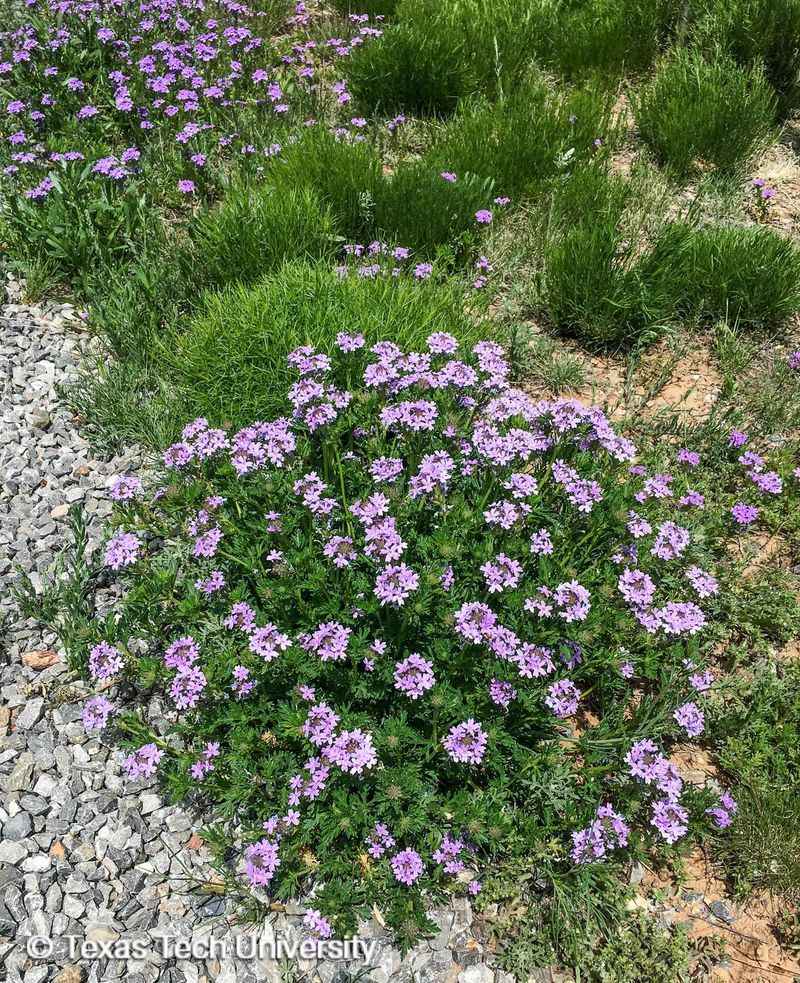
Drive any Texas backroad in spring and you will spot low mats of blue-purple flowers spilling across the shoulder.
That sprawling carpet is Prairie Verbena (Glandularia bipinnatifida), a native that turns bare dirt into a living rug.
It hugs the ground at just 6 to 12 inches tall while spreading a couple of feet wide, making it a natural for the front of a bed or tumbling over a low wall.
From early spring into fall, it keeps pushing out clustered blooms.
Full sun and lean, well-drained soil are all it asks, which suits South Texas and the drier stretches beautifully.
It reseeds gently, so gaps fill themselves over time without you lifting a trowel.
Shear it back after a heavy bloom flush to trigger a fresh wave.
Butterflies drift over it all season.
For groundcover color that never demands replanting, this prairie native does the quiet work for you.
8. Blue Anise Sage Runs Until First Frost
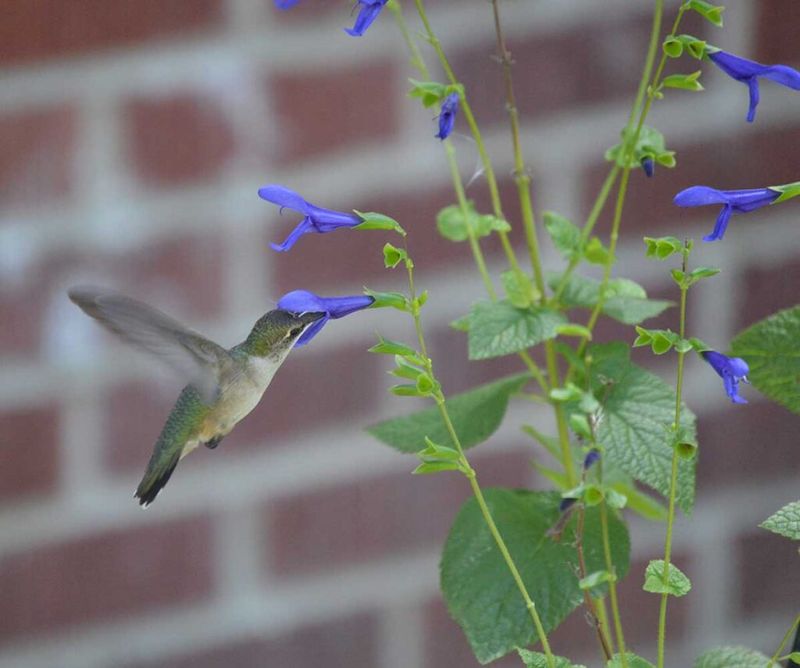
If you want the deepest, most electric blue on this list, Blue Anise Sage (Salvia guaranitica) delivers it.
The tubular cobalt flowers glow against dark green leaves that smell faintly of anise when you brush past.
Hummingbirds treat those long blooms like a personal fountain, working the plant from late spring clear to the first frost.
In Central and North Texas, it dies back in winter and returns from the roots each spring, so you dig once and forget it.
It grows tall, 3 to 5 feet, and appreciates a bit of afternoon shade where summers hit triple digits.
Give it richer soil and steady moisture than the tougher natives on this list, since it is a thirstier hero.
Cut it to the ground after the first hard freeze.
Come spring, it bounces back bigger.
Few plants pull hummingbirds to a porch evening the way this one does.
9. Bluebonnets Reseed Themselves Every Spring
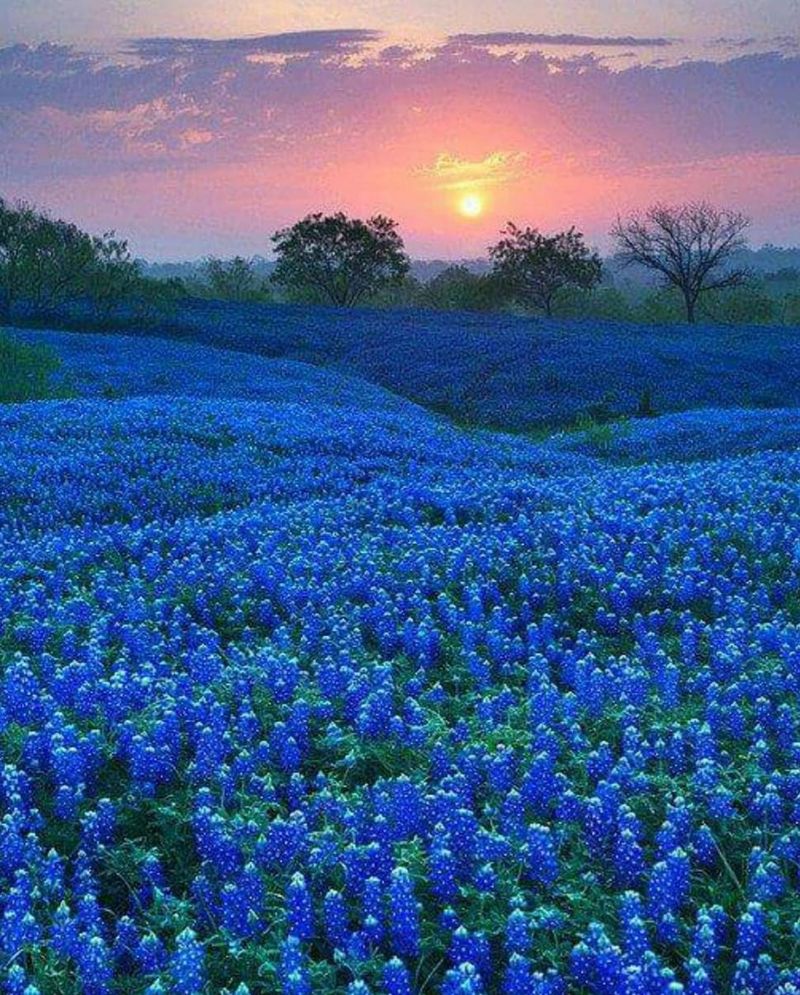
No blue plant belongs on a Texas list more than the state flower itself.
Bluebonnets (Lupinus texensis) blanket roadsides every spring in that unmistakable shade folks drive miles to photograph.
Technically an annual, they earn their spot here through one clever trick.
They reseed so reliably that once you get a patch going, it returns year after year with zero replanting, behaving like a perennial in practice.
Sow seed in fall, from September through November, and press it into contact with lean, well-drained soil in full sun.
Do not fertilize and do not baby them.
Rich soil actually gives you leaves instead of flowers.
Let the seedpods dry and drop before you mow, usually by late May, and next spring takes care of itself.
That patch of blue becomes a family tradition, the kind of thing you photograph the kids in every March.
10. Blue Plumbago’s Cousin Handles The Gulf Coast
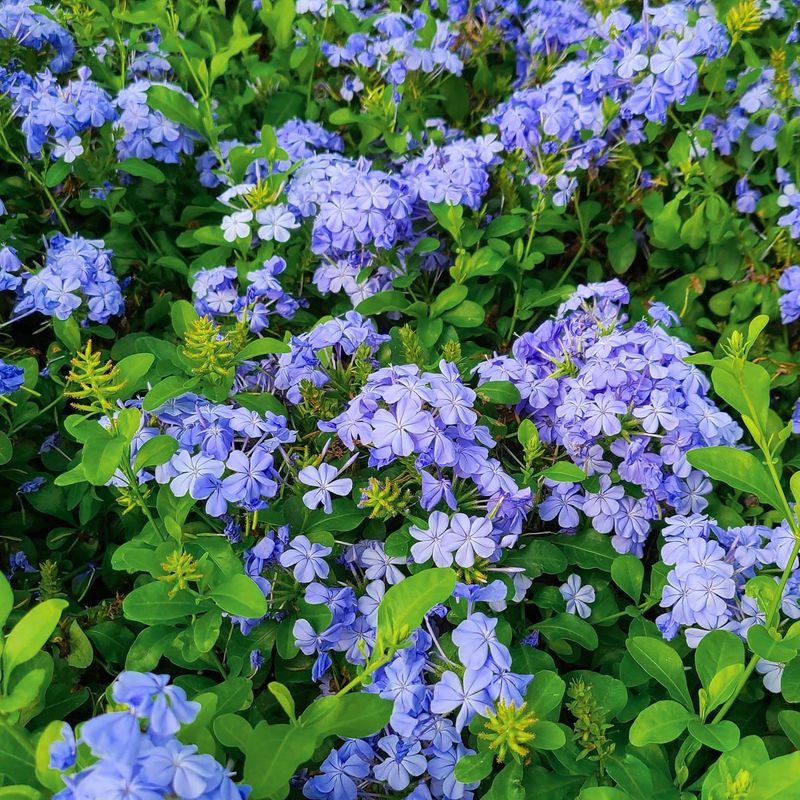
Along the Gulf Coast, humidity and sudden downpours drown plants that would sail through in the Hill Country.
Blue Plumbago proves it can take the coastal beating better than most, holding its pale sky-blue color through muggy Houston summers.
Mixed clay and sandy soils near the coast suit it fine, and it recovers quickly after the heavy rains that roll in from June through November.
When a Gulf storm shreds the top growth, the roots hold and push back out within weeks.
Plant it 3 to 4 feet from other shrubs so air can move through and fungus stays away in the wet season.
Full sun keeps blooms heaviest, though it tolerates the filtered light under coastal live oaks.
Trim it back after any freeze knocks it down.
For a region where so many plants sulk in the salt air and storms, a reliable blue bloomer feels like a small miracle.
11. Skullcap Fills The Hot Rocky Edges
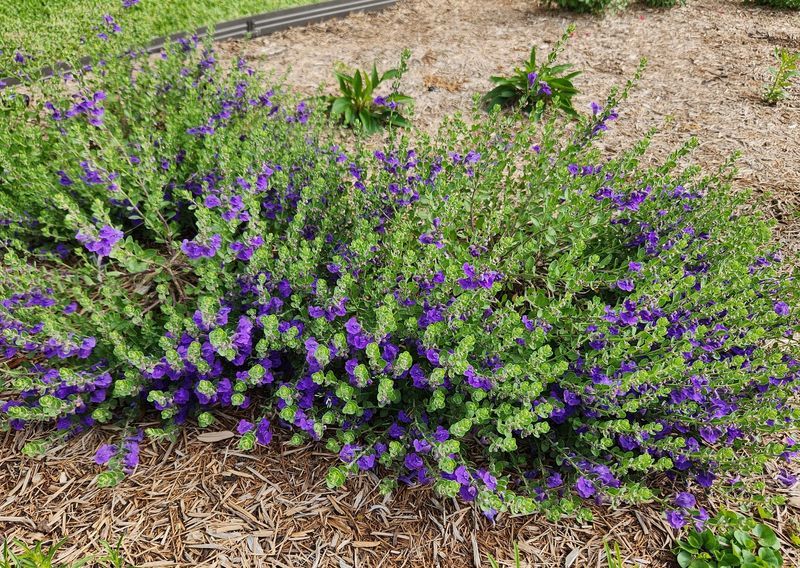
Tucked into hot rock crevices where nothing seems willing to grow, Skullcap (Scutellaria) throws out little blue-violet snapdragon-shaped blooms like it enjoys the challenge.
The plant stays low and tidy, roughly 8 to 12 inches, mounding neatly along walkways, dry slopes, and the baked edges of West Texas beds.
It genuinely wants the tough spots, thriving in shallow alkaline soil and reflected heat off stone and concrete.
Blooming spring into summer, it pulls in bees and small butterflies without demanding water once established.
Drainage matters more than anything, so avoid soggy clay pockets that rot the roots.
A light shear after the first bloom flush keeps it compact and coaxes more flowers.
It asks for so little that you may forget it is there until it lights up the rocks again.
For the hardest, driest corner of the yard, this is the quiet fixer.
12. What Else Actually Helps Them Take Hold
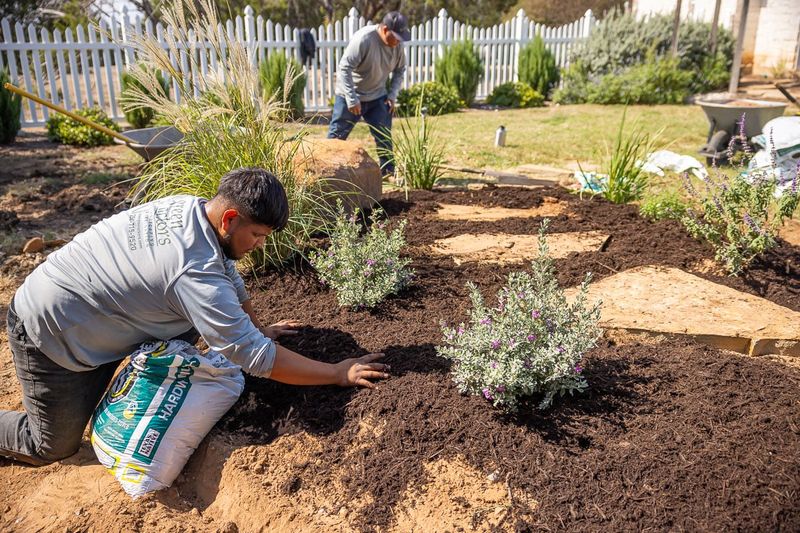
Getting any of these blue perennials to settle so you truly plant once comes down to the first season.
Even drought-tough natives need help finding their footing before they can fend for themselves.
Water deeply during the long dry stretches, aiming for soil moisture 6 to 8 inches down, a few times a week that first growing season.
Check it with a trowel or your finger rather than guessing.
Blackland clay in North Texas holds water, so back off there, while sandy East Texas soil drains fast and needs more frequent drinks.
Match the soil to the plant.
Amend caliche and alkaline Hill Country ground with compost, and never enrich the bed where bluebonnets go.
A 2 to 3 inch mulch layer, kept a few inches off the stems, can cut evaporation by as much as 30 percent through our worst heat.
None of these are magic, they are just genuinely stubborn survivors.
Give them one good year, and they give you back a decade of blue mornings, waiting on the patio before you have even poured the coffee.