
The Texas Porch Plant That Makes Scorpions Less Welcome Around Your Foundation
Follow us on Google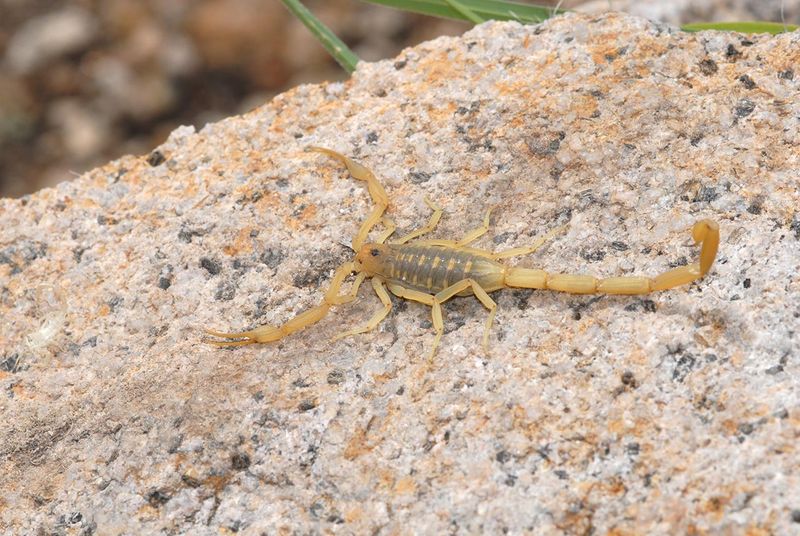
You step outside before breakfast and the porch already feels warm under your feet, and somewhere near the foundation, a striped bark scorpion is probably finishing up its night shift.
Scorpions around a Texas slab are a real, crawling concern, and a lot of homeowners are quietly wondering whether a certain herb they keep seeing online can actually help.
The plant in question is rosemary, and the answer is more interesting than a simple yes or no. This article covers what a real laboratory study found, where the evidence stops, how to grow rosemary successfully in Texas conditions, and which steps actually address the scorpion problem at your foundation.
Rosemary May Be the Porch Plant in Question
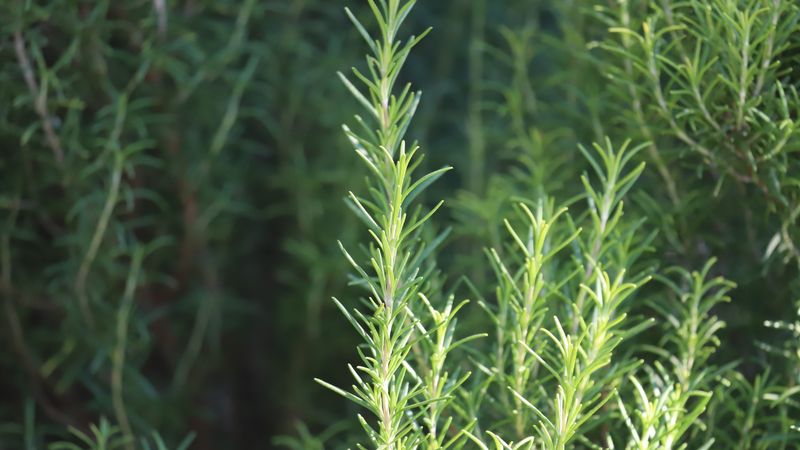
The plant drawing all the attention is rosemary, Salvia rosmarinusRosmarinus officinalis, formerly known as .
It is a sun-loving, drought-tolerant herb that many Texas gardeners already grow for cooking, and it genuinely thrives in the kind of heat that wilts less determined plants.
Texas A&M AgriLife Extension’s rosemary guide describes it as well-suited to many Texas landscapes when it gets the right sun and drainage.
Here is where honesty matters.
Researchers have not shown that a living rosemary plant keeps scorpions away from a Texas foundation.
The claim circulating online is based on laboratory work involving rosemary oil, not a potted herb or a garden bed, and the gap between those two things is significant.
Calling rosemary a proven perimeter barrier or a scorpion exterminator would go further than the science actually goes.
What rosemary can honestly be is a low-risk, supplemental layer.
If you enjoy growing it and your site has good drainage and full sun, planting it near the porch costs you little and may contribute something, even if that something has not been measured at the foundation scale.
The study behind the claim is real and worth understanding, and the sections ahead will walk through exactly what it found, what it did not test, and what Texas A&M recommends for the broader scorpion problem.
The Evidence Starts With Rosemary Oil
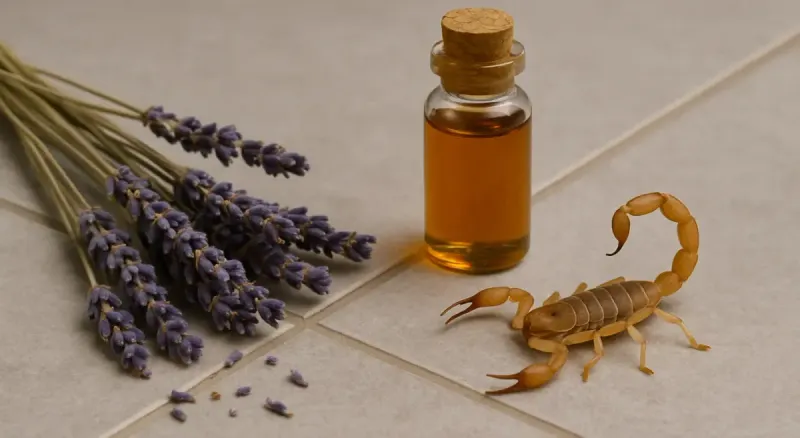
A 2019 study published in the Journal of Arachnology is the piece of research behind the rosemary-and-scorpions story, and it is worth reading carefully.
Researchers collected 16 striped bark scorpions, Centruroides vittatus, from Oklahoma and placed each one individually in a two-chamber arena.
One side of the arena had sand treated with rosemary oil.
The other had sand treated with mineral oil as a control.
The scorpions spent significantly less time on the rosemary-oil-treated sand.
The result carried a p-value of 0.0031, which in plain terms means the difference was unlikely to be random chance.
That published finding is real, and it tells us something genuinely interesting about how rosemary odor can affect scorpion behavior under controlled conditions.
But the test setup was a small laboratory arena, not a Texas backyard.
The scorpions were choosing between two patches of treated sand, not deciding whether to enter a home with a rosemary plant near the door.
The study did not test any living rosemary plant, any garden bed, any porch container, or any foundation perimeter.
The researchers themselves noted that further work was needed to understand whether the effect holds over larger areas, how long it lasts outdoors, and whether scorpions eventually adapt and stop avoiding the scent.
Striped bark scorpions do live across much of Texas, so the species tested is relevant here.
The result, though, describes behavior in a closed arena with a specific oil concentration applied directly to sand.
That is a meaningful starting point for research, and it is not a guarantee that rosemary growing in your yard will push scorpions away from your slab.
A Living Plant Is an Unproven Step
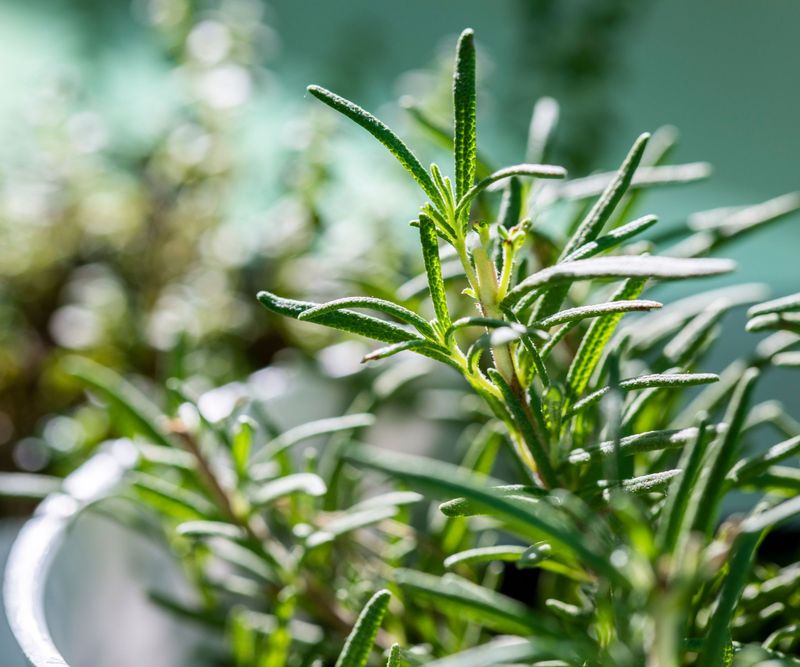
The most important correction in this whole conversation comes down to one distinction: rosemary oil on sand is not the same thing as a rosemary plant growing beside your porch.
The 2019 study tested the extracted oil applied directly to a surface, and the authors were explicit that they tested the oil rather than the intact plant.
No part of that study involved a living rosemary plant, a container on a patio, a garden bed along a foundation, or any outdoor setting at all.
A growing rosemary plant releases aromatic compounds through its leaves, but the concentration and distribution of those compounds outdoors is a completely different situation from oil-treated sand in a closed arena.
Wind, heat, humidity, plant size, and distance from the slab all change what a scorpion nearby might actually encounter.
The study provides no evidence that a living plant creates outdoor exposure comparable to what the scorpions avoided in the lab.
The authors also called for more research on three specific questions: whether the effect works over larger areas, how long any deterrent effect lasts before it fades, and whether scorpions eventually adapt to the scent and stop responding to it.
None of those questions have been answered for living plants in a landscape setting.
A separate consideration is species variation.
The Oklahoma scorpions in that study are the same species found across much of Texas, but a later study found that rosemary oil affected one European scorpion species while having no effect on another.
Scorpion responses to scent are not universal.
Treat rosemary as a possibility worth exploring, not a scent wall that scorpions cannot cross.
Give Rosemary the Sun and Drainage It Needs
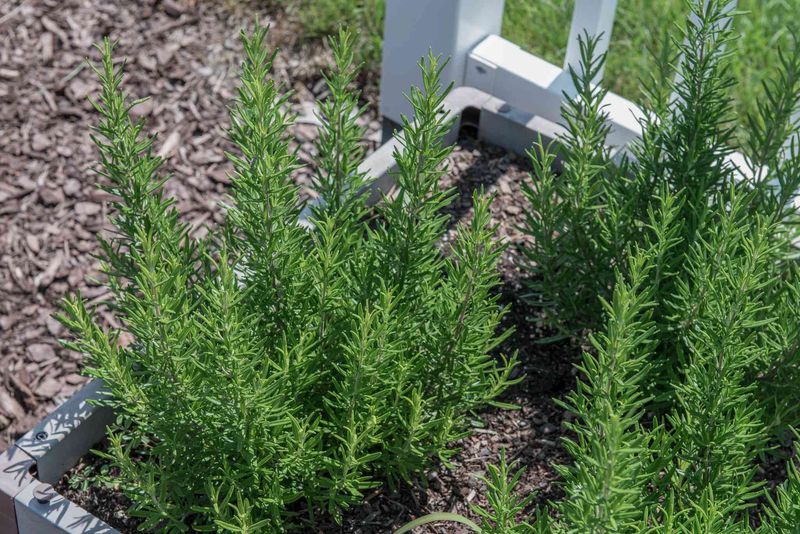
Assuming you want to grow rosemary and give it the best chance to thrive, the growing requirements are straightforward and well-documented.
Texas A&M AgriLife Extension’s rosemary guide calls for at least 6 hours of full sun daily, well-drained soil, and a preferred soil pH of approximately 6.0 to 7.0.
Get those three things right and rosemary is a remarkably tough plant for many parts of the state.
Watering about every 1 to 2 weeks on average, while allowing the soil to dry between sessions, keeps root problems at bay.
Overwatering is actually the most common way rosemary dies in Texas, not heat or drought.
The exact interval will shift depending on pot size, rainfall, soil type, and whether the plant is newly established or settled in.
Where foundation soil stays wet, heavy blackland clay in North and Central Texas being a prime example, a slightly raised or mounded bed can change the drainage picture completely.
Texas A&M recommends adding about 4 inches of compost or organic matter and working it 4 to 6 inches deep before planting.
A container is a practical alternative where the ground stays wet or where caliche and shallow alkaline soil in the Hill Country or West Texas make digging a full bed impractical.
For planting material, a healthy nursery transplant is more reliable than starting from seed.
Rosemary seed germination runs only about 15 percent, which means most seeds simply will not sprout.
Cuttings are a workable middle option: take a 3-inch branch, root it in a 3-inch pot, and keep it around 60 to 70 degrees Fahrenheit.
After roughly 8 weeks it may be ready to transplant.
Cultivar selection matters more than many people realize.
Texas A&M lists options including ‘Arp,’ ‘Dancing Waters,’ ‘Golden Rain,’ ‘Pine Scented,’ ‘Prostratus,’ and ‘Roseus’ as suitable for Texas gardens. ‘Arp’ is often recommended for colder parts of the state, including the Panhandle and parts of North Texas, but no rosemary cultivar is freeze-proof.
The plant can die when temperatures drop below about 10 degrees Fahrenheit, so a hard winter in the northern zones remains a real risk.
Place It Near the Foundation, Not Against It
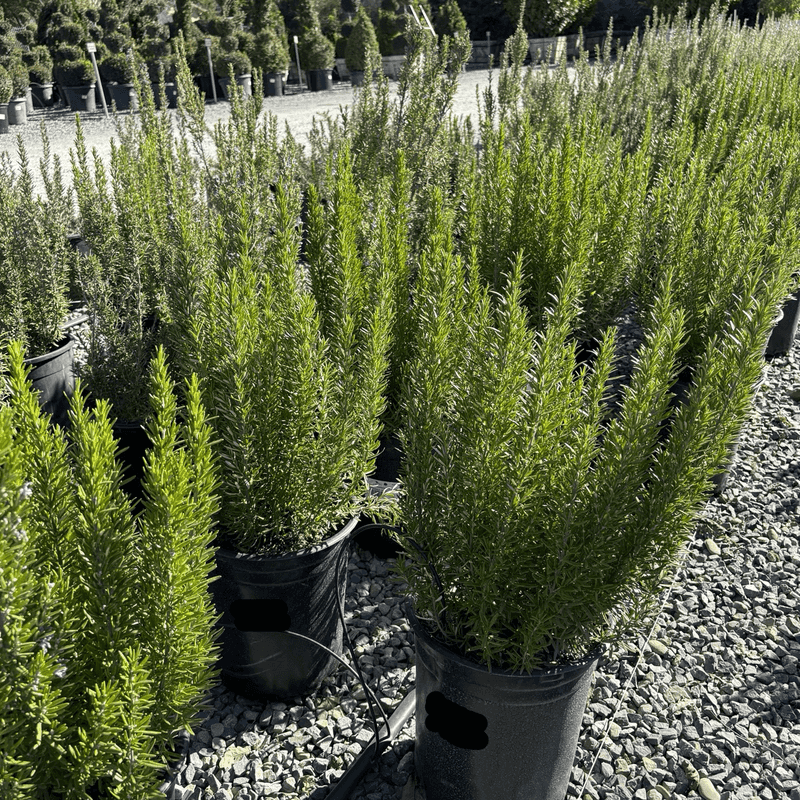
Placement is where a lot of well-meaning gardeners accidentally create the opposite of what they want.
Dense, low-growing vegetation pressed directly against a foundation gives scorpions exactly what they look for: cover, moisture, and something to hide under.
Texas A&M’s bark scorpion management guidance recommends minimizing low-growing vegetation near buildings and keeping bushes pruned back away from the structure.
A porch or patio container is often the cleanest solution.
It lets you move the plant for inspection, brings it in during a hard freeze, and keeps the foundation edge accessible for sealing, cleaning, and monitoring.
If you prefer an in-ground planting, leave enough clear space between the plant and the slab that you can walk the perimeter, look for cracks, and reach pipes and flashing without fighting through branches.
The goal is an accessible, tidy edge rather than a dense, leafy border.
Fallen rosemary debris, dead branches, and accumulated mulch close to the slab can become harborage spots.
The Texas A&M rosemary guide notes that the plant benefits from good air circulation, which also happens to keep the foundation edge more open and easier to inspect.
Trim the plant regularly so it stays compact, and rake out any dropped material.
In humid East Texas or along the Gulf Coast, where drainage is often poor and the air stays damp, rosemary near the foundation may struggle with root rot before it ever gets a chance to contribute anything to the scent environment.
A raised container on the porch is a more dependable choice in those conditions and keeps the plant where sun exposure and air movement are easier to manage.
Build the Recommended Foundation Routine

Rosemary is an optional layer.
The steps in this section are the ones Texas A&M actually recommends as the core of scorpion management around a home, and they work whether or not you ever plant a single herb.
Texas A&M AgriLife Extension’s scorpion guidance puts habitat modification and physical exclusion at the front of the strategy.
Start by removing everything that gives a scorpion somewhere to spend the day.
Trash, logs, boards, flat stones, bricks, excess mulch, and stacked materials near the foundation all qualify as harborage.
Scorpions are predators that spend daylight hours tucked under something and emerge at night, so eliminating hiding spots near the slab directly reduces the population that has easy access to your home.
Mow grass closely in the zone nearest the structure.
Prune any bushes or overhanging branches away from the exterior walls, since branches touching the roofline or siding give scorpions a bridge above the ground.
Repair torn or bent window screens and weather-strip doors and windows so gaps do not serve as open invitations.
Sealing cracks deserves its own focused pass around the entire exterior.
Texas A&M’s bark scorpion action plan identifies gaps of 1/8 inch or larger along flashing, wall joints, eaves, and pipe penetrations as entry points worth sealing.
That is a smaller gap than most people picture.
Work around the foundation methodically, checking where pipes enter the wall, where the slab meets the framing, and anywhere utility lines come through.
These steps are not presented as a scientifically measured comparison against rosemary or any other plant.
They are the practical exclusion and habitat-modification measures that extension specialists recommend as the foundation of scorpion control, and they address the actual pathways scorpions use to get inside.
Monitor Activity and Use Products Carefully
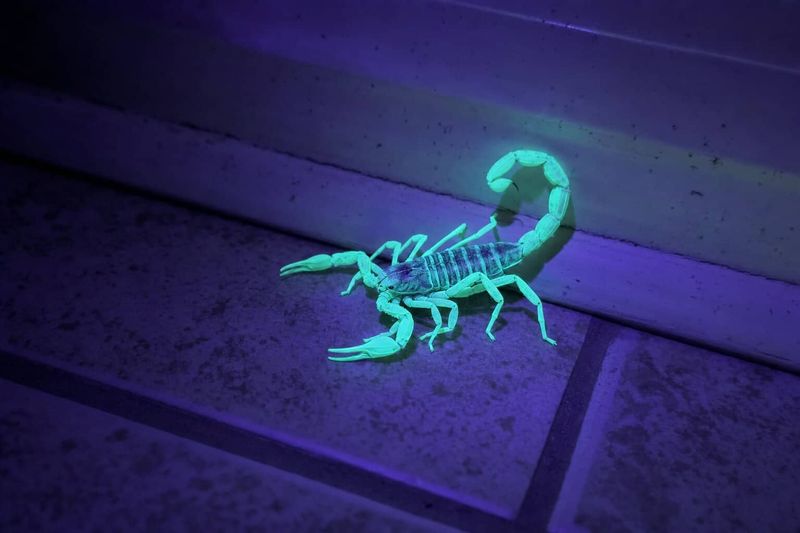
Knowing where scorpions are moving is more useful than guessing.
Sticky traps placed along the foundation, in garage corners, and near entry points can show you which areas have the most activity.
Pair that with a UV black light inspection after dark, since scorpions fluoresce under ultraviolet light and become easy to spot against the ground or wall.
Texas A&M’s bark scorpion management plan recommends both methods for tracking movement.
Wear closed-toe shoes during any nighttime inspection and do not pick up a scorpion by hand.
Reducing the insects near your foundation also matters, because scorpions follow their food.
Texas A&M Facilities Services integrated pest management guidance recommends reducing outdoor lighting that draws insects to the structure and switching to yellow bulbs instead of blue or white bulbs where practical.
Yellow bulbs attract fewer insects, which may reduce the prey available to scorpions patrolling near the slab.
That is not a guarantee, but it is a low-cost adjustment that supports the broader strategy.
If a pesticide becomes part of the plan, use only products with scorpion control listed on the label and follow that label exactly.
Texas A&M AgriLife Extension’s scorpion publication describes foundation applications and lists active ingredients used in scorpion products, but it also makes clear that insecticides should not be the only control method.
Exclusion, cleanup, and habitat reduction come first.
A pesticide application without those steps in place tends to produce short-lived results.
Every plan should include knowing what to do if someone gets stung.
The Texas Poison Center Network recommends washing the sting site with soap and water and applying a cool compress.
Reactions vary from person to person, and most Texas scorpion stings produce moderate discomfort.
Difficulty breathing or a spreading rash are emergency warning signs that warrant calling 911 or going to an emergency room immediately.
Rosemary on the porch is a pleasant addition to a thoughtful yard, but a locked-down foundation and a clear sting plan are what actually keep a Texas home safer after dark.