
Skip The Fussy Hydrangeas And Grow These 8 Texas Perennials That Bloom All Summer Long
Follow us on Google
You step outside in July before the coffee cools and the air already sits on your shoulders like a wet towel.
Over in the corner, the hydrangea you babied all spring hangs limp and brown, sulking again.
Hydrangeas want cool, damp, gentle weather, and Texas hands them none of that.
So skip the drama.
There are eight tough native perennials that shrug off triple-digit heat, drink almost nothing, and keep blooming from May clear into November while your neighbor is still hauling water to a plant that will not cooperate.
1. Turk’s Cap Wins In Deep Shade
Most flowering plants pout the second you tuck them under a tree.
Turk’s Cap does the opposite.
It genuinely thrives in the dry shade beneath a live oak, where almost nothing else will bloom.
Here is the turn.
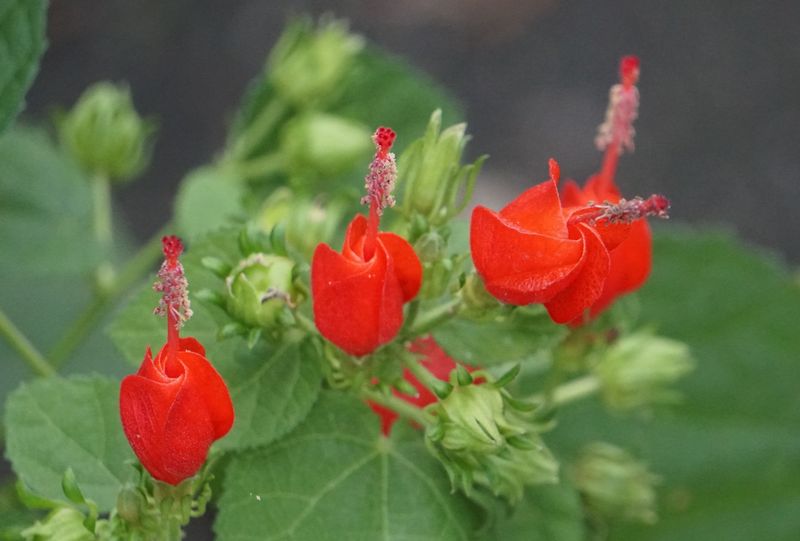
Malvaviscus arboreus var. drummondii is native from Central Texas south into Mexico, so it treats our heat as home.
Those little red flowers never fully open, staying curled like a turban, and hummingbirds work them from May until the first frost.
Plant it in full sun for the heaviest bloom or in part shade for the prettier leaves.
It grows 2 to 3 feet tall in most yards but can stretch toward 9 feet in the Lower Rio Grande Valley, where it stays evergreen.
In colder North Texas it dies to the ground and pops back in spring.
For a tidy shape, cut the whole plant back to about 5 inches at the end of winter.
Once established, it needs almost no extra water.
The red fruit is edible and tastes faintly of apple, and the birds get to it before you do.
You get color in the one spot you thought was hopeless, and that feels like a small win every single morning.
2. Autumn Sage Blooms Nine Months Straight
Nine months of flowers from one modest shrub sounds like a stretch.
Autumn Sage delivers it anyway.
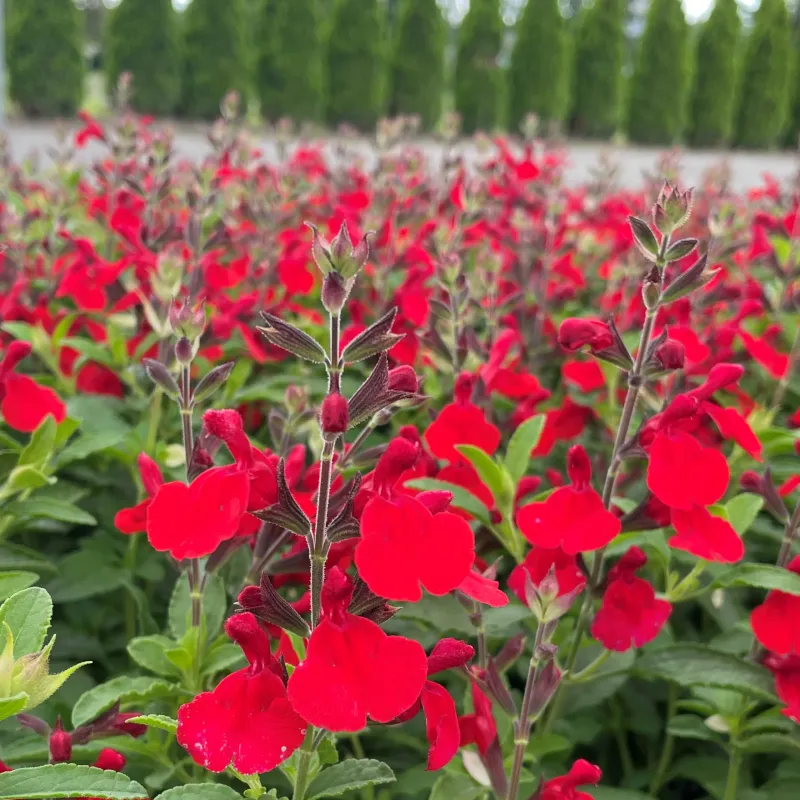
Salvia greggii comes from the Hill Country, the Edwards Plateau, and parts of West and South Texas, so alkaline, rocky ground suits it fine.
It flowers from March through November, in red, coral, pink, and white, slowing down only during the meanest stretch of summer heat.
Give it full sun, though a little afternoon shade helps in the hottest South Texas yards.
It mounds up 2 to 4 feet tall and about as wide, and it wants sharp drainage above all else.
Soggy roots are the one thing that will kill it.
Texas A&M AgriLife Extension recommends a simple rhythm.
Prune it back by half in mid-February, then by a third in mid-August, and you reset it for a fresh flush of blooms each time.
Water about once a week in summer only if rain drops below one inch.
Bees and hummingbirds treat it like a corner diner that never closes.
You get steady color for the price of two haircuts a year, and that is a fair trade in any part of the state.
3. Flame Acanthus Turns On After Rain
A sudden August downpour usually just floods the driveway.
Flame Acanthus reads it as a starting gun.
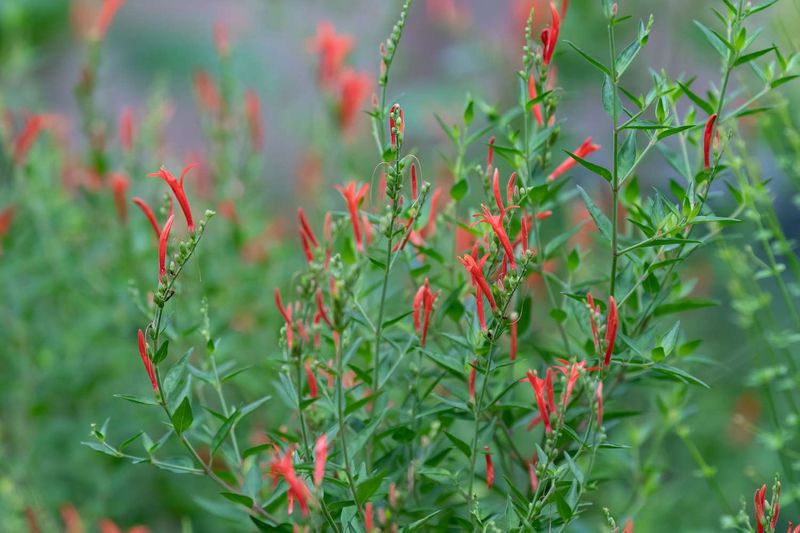
Also called Hummingbird Bush, Anisacanthus quadrifidus var. wrightii is native to south-central and West Texas.
After a good rain it throws out a fresh wave of skinny, orange-red tubes, and hummingbirds show up like they got a text.
It handles the worst dirt we have, including caliche, heavy clay, and rocky West Texas ground, as long as water drains away.
Full sun brings the most flowers.
Plan for a plant 3 to 5 feet tall and about 4 feet wide, sometimes reaching 6 feet in warmer country.
This one is genuinely tough.
It survives temperatures near 5 degrees Fahrenheit, dying back in North Texas and re-emerging from the roots in spring.
Deer tend to leave it alone, which is no small thing in the Hill Country.
Prune it back by a third in early winter, or cut it hard in early spring for a fuller, bushier shape.
Then let the summer storms do the rest.
You end up with a plant that celebrates the same rain that ruins everyone’s cookout plans.
4. Gregg’s Mistflower Feeds The Monarchs
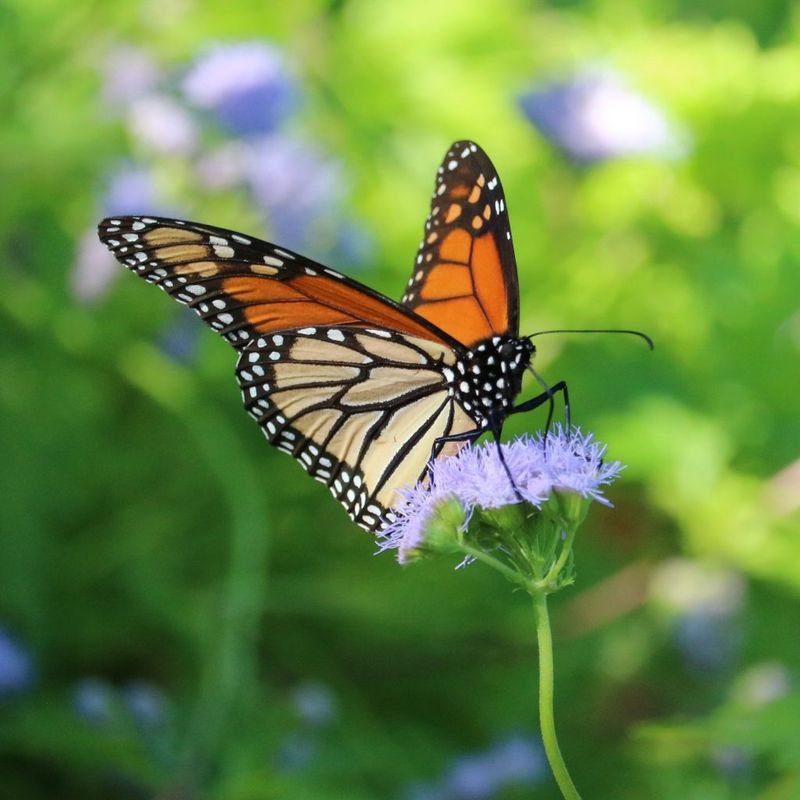
Come the fall monarch migration, one plant in the yard turns into a butterfly stampede.
That plant is Gregg’s Mistflower.
Conoclinium greggii sends up fuzzy, powder-blue flower clusters from late spring through fall, peaking right as Queens and migrating Monarchs pour through Texas in September and October.
The show is honestly a little unreal.
Native to Texas, New Mexico, and Arizona, it stays low at 1 to 2 feet tall and spreads by rhizomes, which are underground runners.
So think of it as a flowering groundcover rather than a tidy clump.
It tolerates clay and a wide range of soil, needs little water once settled, and is root-hardy down to 0 degrees Fahrenheit.
Here is where it gets tricky.
It spreads, and it means it.
Divide the clumps every two years to keep it in bounds, and cut it to the ground in early spring for strong new growth.
Plant it near a porch or path where you sit in the cool of an autumn evening.
Watching that blue haze shiver with wings during the migration is the kind of wonder a hydrangea will never buy you.
5. Texas Lantana Loves The Worst Heat
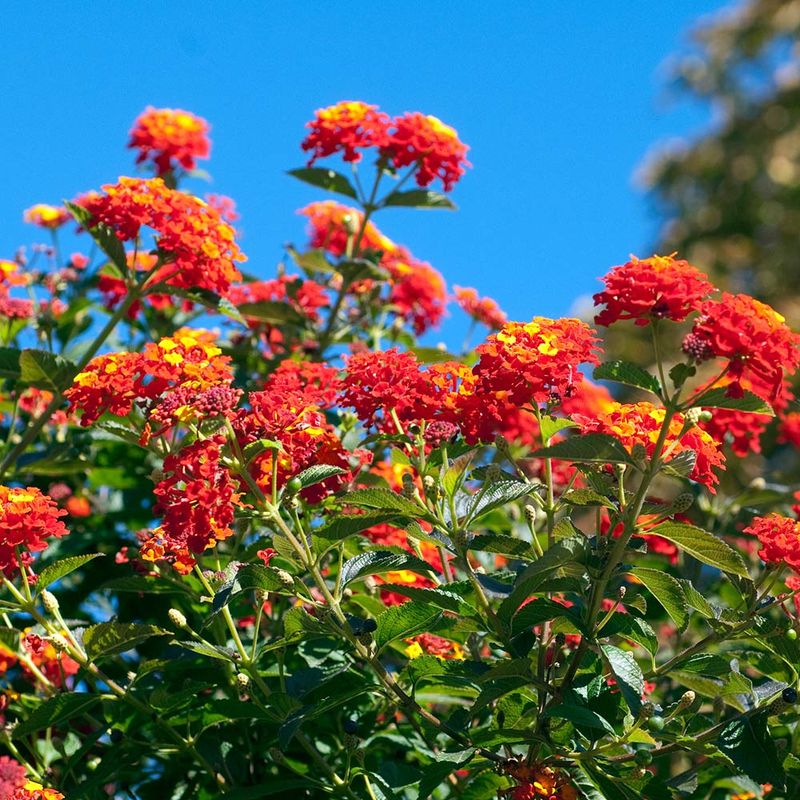
Most plants wilt when the thermometer parks above 100.
Texas Lantana just blooms harder.
Lantana urticoides is the true native, not one of the fussy hybrids at the big box store.
Its red, orange, and yellow clusters get more generous as summer bakes on, running from April through November without a fuss.
Give it full sun and forget about it.
It grows 3 to 6 feet tall and 3 to 5 feet wide, drinks almost nothing once established, and thrives in poor, gravelly, or dry ground from East Texas westward.
The one rule is drainage, because wet roots do it in.
Since flowers form on new wood, cut it all the way to the ground after the last frost, and it comes roaring back.
If the leaves droop in a brutal stretch, one deep watering a week is plenty.
One honest warning.
The dark berries are poisonous to people and livestock, so keep that in mind around kids and grazing animals.
Butterflies and bees mob the flowers all day.
You get a plant that treats a South Texas heat wave like a personal invitation, and that is exactly the ally you want.
6. Rock Rose Opens Fresh Every Morning
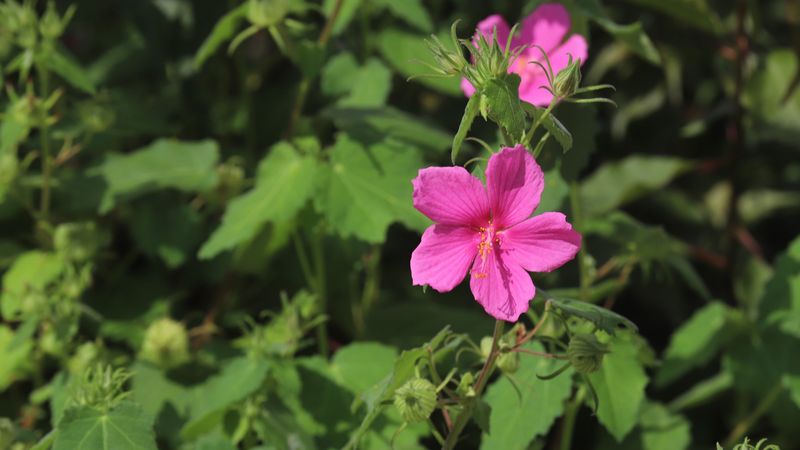
Picture stepping onto the patio at 7 a.m. and finding a plant covered in soft pink blooms that were not there the night before.
Rock Rose does that daily.
Pavonia lasiopetala grows wild on the Edwards Plateau and the Rio Grande Plains, so shallow, rocky, limestone soil is its comfort zone.
Each little hibiscus-like flower opens in the morning and closes by afternoon, then a whole new batch arrives tomorrow.
Late spring through frost, it keeps a steady rhythm going.
It stays compact at 2 to 4 feet tall and 2 to 3 feet wide, rounding into a soft mound.
Full sun gives the most flowers, but afternoon shade in a hot West Texas yard actually keeps those blooms open longer.
Drought tolerance is excellent once the roots take hold.
Light trimming through the season keeps it bushy, and a hard cut in February refreshes the shape.
It only lives about 3 to 6 years, but here is the kicker.
It self-sows freely, so new seedlings quietly take the place of the old plants without you lifting a finger.
Morning coffee just got a lot prettier.
7. Zexmenia Handles Caliche Without Complaint
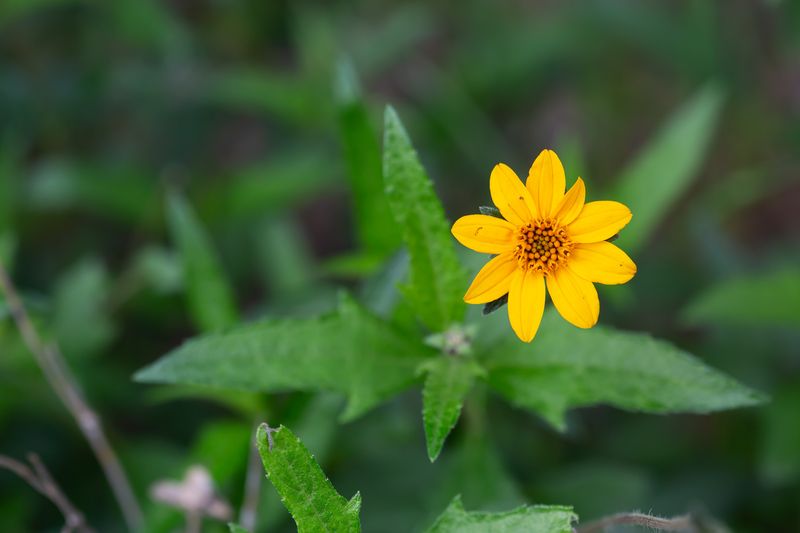
Ask any Hill Country gardener about caliche and watch the shoulders slump.
That chalky, cement-hard layer defeats most plants.
Zexmenia treats it like a mattress.
Wedelia acapulcensis var. hispida, sometimes called Hairy Wedelia, is native to the Edwards Plateau, the Rio Grande Plains, and the Trans-Pecos.
It puts out cheerful yellow to golden-orange daisies from May through November, cranking out color right through the hottest months.
Small and rugged, it grows 8 inches to 3 feet tall and 2 to 3 feet wide.
Full sun is best, though it tolerates a little shade.
It handles caliche, clay, gravel, limestone, loam, and sand, basically whatever your patch of Texas throws at it, so long as it drains.
Deer walk right past it, and native bees and butterflies pile on.
Too much water or shade makes it leggy, so if that happens, cut it back and it firms right up.
To start new plants, sow seeds a quarter to a half inch deep in late winter.
You end up with dependable gold in the one spot where nothing else agreed to live, and that is a quiet kind of victory.
8. Mealycup Sage Sends Up Blue Spikes
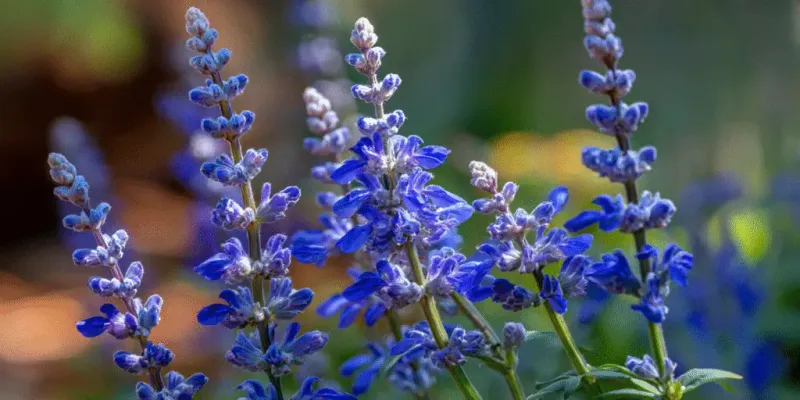
There is a reason you spot the same blue-spiked salvia in gas station medians and grand estate gardens alike.
Mealycup Sage simply refuses to quit.
Salvia farinacea is native to Texas and New Mexico, and the Texas Superstar cultivars Henry Duelberg in blue and Augusta Duelberg in white are the ones to hunt for.
Both send up fragrant flower spikes from spring until the first hard frost, holding steady all summer long.
Henry runs about 3 feet tall and wide, while Augusta stays a touch shorter at 18 to 30 inches.
Full sun suits them, with a little afternoon shade welcome in the hottest zones.
They handle sandy, rocky, or limestone soil and stay drought tough once established.
Cut them back in mid-summer for thicker fall growth, then to the ground after the first frost.
In a dry spell, a deep soak once a week if rain falls short of one inch keeps them happy, and 2 inches of mulch at the base holds the moisture in.
Bees and hummingbirds love them, and deer do not.
Line a walk with these blue spikes and, come evening, the whole bed hums softly while you sit on the porch feeling like you finally got this Texas gardening thing right.