
The Meaning Behind Hearing Barred Owls Call Across Your Florida Yard At Dusk
Follow us on Google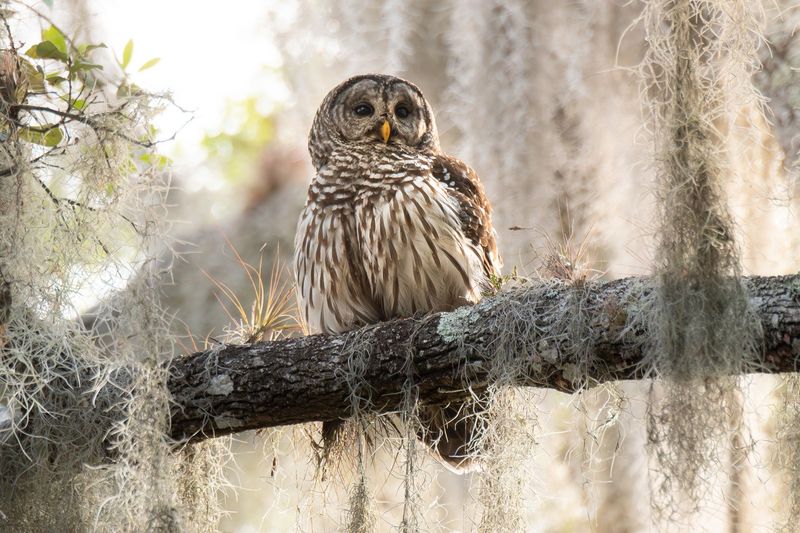
You step onto the back porch as the sun drops behind the tree line, and suddenly the neighborhood goes quiet for just a second before it starts. “Who cooks for you?
Who cooks for you-all?” That rolling, eight-note call carries across your Florida yard like something straight out of a swamp, and it stops you cold.
What you’re hearing is a barred owl, and that sound is actually telling you something useful about your property, your trees, and yes, your rat situation too.
The Voice Belongs To A Barred Owl
That call you heard is one of the most recognizable sounds in Florida wildlife.
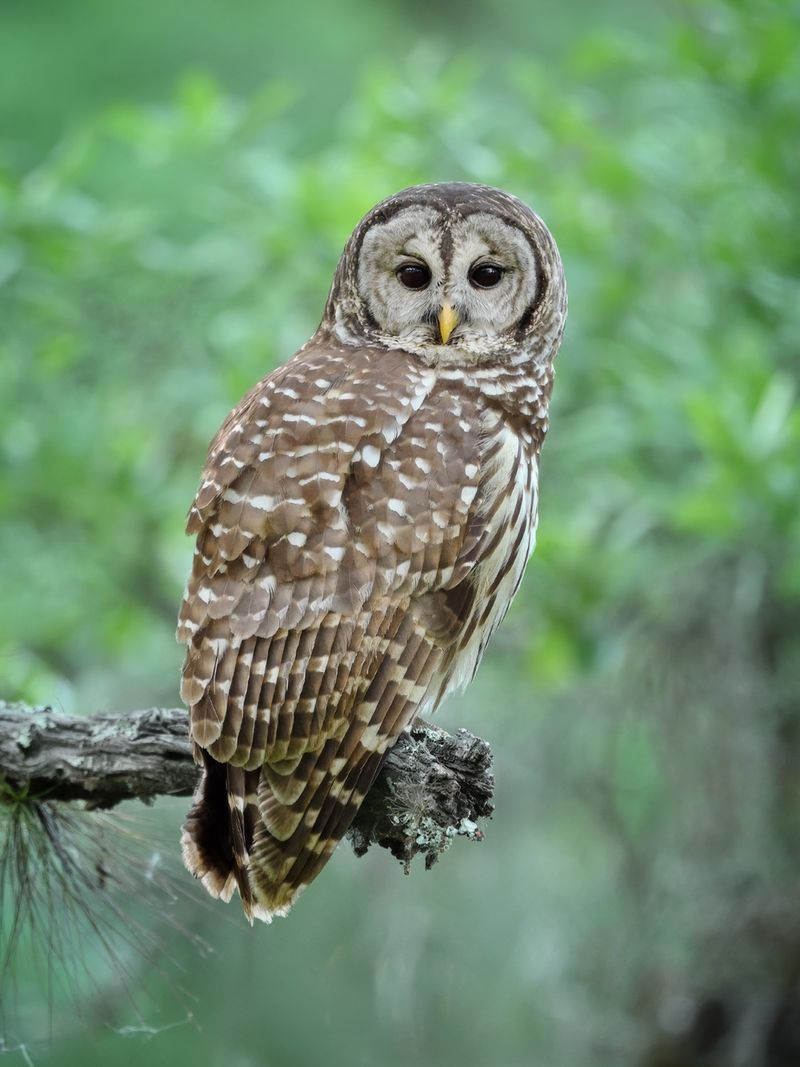
Barred owls, known to scientists as Strix varia, deliver a loud, rhythmic phrase that many people hear as “Who cooks for you?
Who cooks for you-all?” and once you know it, you will never mistake it for anything else.
Audubon’s field guide to the barred owl describes the call as a series of accented hoots ending in a downward slur, a pattern distinct enough to identify the species by ear alone.
Unlike some birds that drift south for the winter, barred owls are permanent Florida residents.
They do not migrate.
UF/IFAS Extension notes that barred owls are among the most commonly encountered owls in Florida, showing up in wooded neighborhoods, swamp edges, and creek-lined corridors across the state year-round.
Nesting generally runs from late January through March, though the exact window can shift depending on location and local conditions.
Identifying the caller is only the first step.
Hearing a barred owl at dusk means a bird is somewhere nearby and using the landscape around your property, but it does not mean the owl lives in your yard, nests in your trees, or arrived specifically because rats are running your roofline.
UF/IFAS research on barred owls in Florida makes clear that these birds occupy territories that often extend well beyond any single yard.
The sound is a starting point, not a diagnosis.
Your Yard Offers Usable Owl Habitat
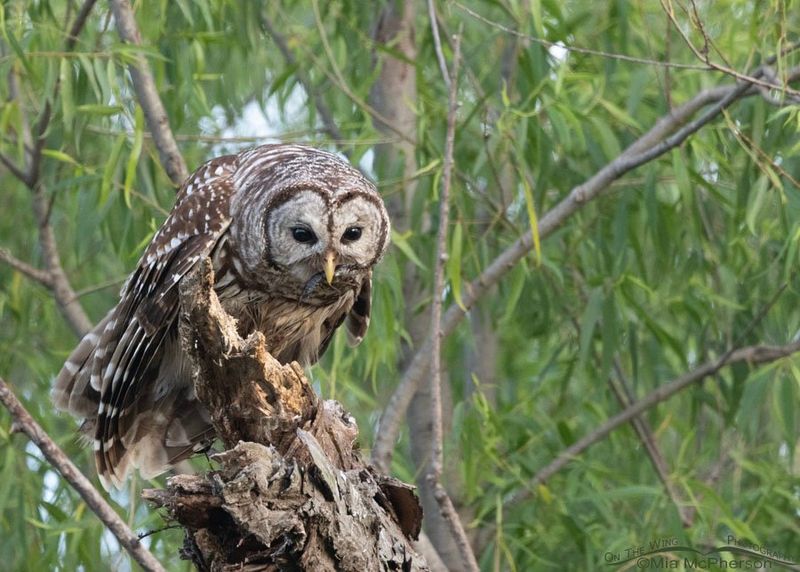
When a barred owl calls from or near your yard, the most honest thing you can say is that the surrounding area offers at least some of what the bird needs.
Barred owls gravitate toward mature trees, wooded edges, open understory where they can watch and hunt, reliable perches, and landscapes that support small mammals, frogs, and other prey.
UF/IFAS identifies large trees, typically with trunks exceeding 20 inches in diameter, as especially important habitat features for this species.
A yard near a live oak canopy, a swamp edge, a creek, a retention pond, or a wooded neighborhood strip may sit squarely inside a barred owl’s broader hunting or territorial range.
Recent ornithological research confirms that barred owls can adapt to urban and suburban settings when mature tree cover and nearby natural areas remain intact.
The bird may be using a perch two or three properties away and calling across your yard as part of a territory that covers dozens of acres.
Here is where people sometimes read too much into one wildlife sighting.
Hearing a barred owl does not mean your property is pesticide-free, rich in native plants, or especially biodiverse.
UF/IFAS habitat guidance points to specific structural features, like canopy height, cavity availability, and prey density, as the real drivers of owl presence, not a general yard health score.
One observation at dusk is a wildlife sighting, a useful clue, not an ecological report card.
What Does The Call Actually Mean?
Barred owls are not quiet birds, and their calls do more than one job.
Research published in The Condor documents multiple call types in barred owls, ranging from the familiar “Who cooks for you?” series to duets, caterwauling exchanges, and contact calls, each associated with different social contexts.
Assigning a single meaning to a dusk call without watching the bird’s surrounding behavior is a shortcut that the science does not support.
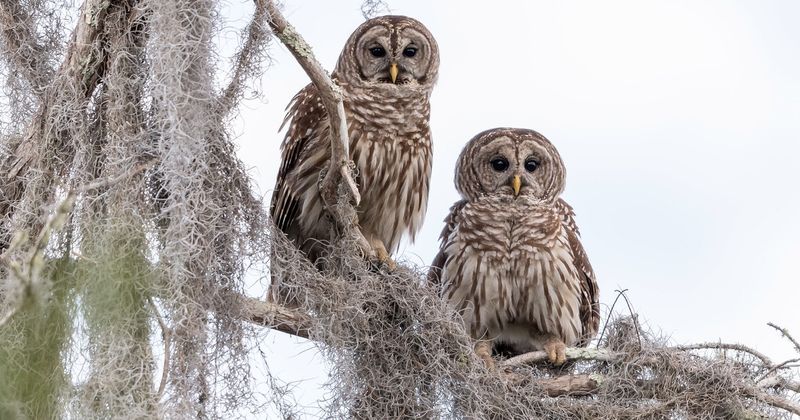
A pair calling back and forth across your yard is more consistent with mate communication or territorial interaction than with a direct response to prey.
Additional vocalization studies show that barred owl pairs use duets to reinforce pair bonds and signal territory boundaries to neighboring birds, especially during and around the breeding season.
A lone call may be contact behavior, a reply to a distant owl, or simply the start of an evening patrol.
The call does not mean rats are on your roofline.
The bird may be hunting anything from frogs and crayfish to small rabbits and mice, or it may not be actively hunting at all during those first few minutes of calling.
Barred owls are territorial year-round, and evening vocal activity is as ordinary for them as a neighbor’s dog barking at sundown.
The sound tells you a bird is present and using the landscape, and that is genuinely useful information, but it stops well short of a pest diagnosis.
Florida Habitat Changes By Region
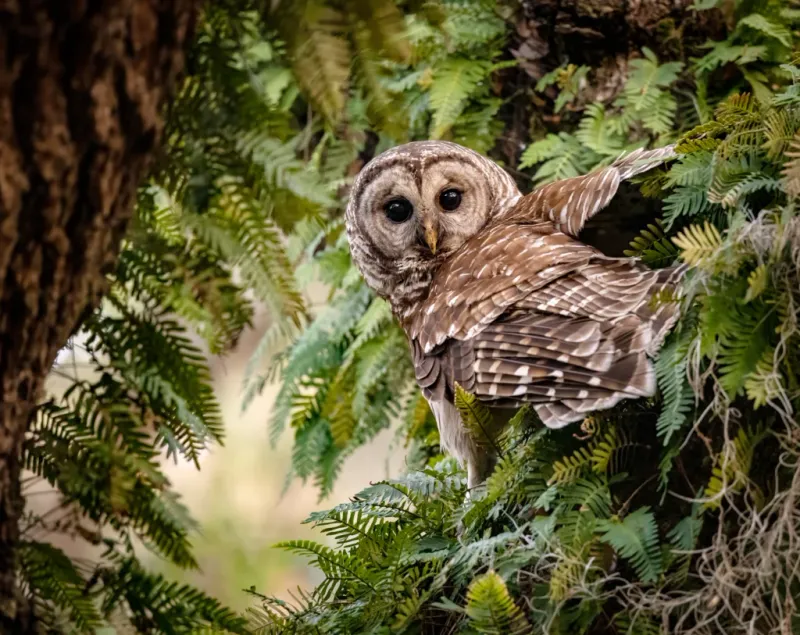
Florida is not one habitat, and where you live shapes what a barred owl call actually says about your surroundings.
In the Panhandle and North Florida, the bird is closely tied to mature hardwood forests, creek corridors lined with beech and magnolia, and bottomland swamps where large trees and open water come together.
UF/IFAS barred owl habitat guidance points to these mature forested landscapes as core territory, where trunks over 20 inches wide and natural cavities give the species everything it needs.
Move into Central Florida and the picture shifts.
A call here may be coming from a wooded drainage ditch behind a subdivision, a cypress dome inside a preserve, a mature neighborhood canopy of live oaks and laurel oaks, or a wetland edge along a retention system.
UF/IFAS Polk County Extension identifies barred owls as regular residents across Central Florida’s mixed woodland and suburban areas, particularly where large trees remain.
South Florida presents more variation.
Wooded preserves, cypress strands, and mature residential canopies can still support a barred owl, but heavily developed coastal areas and the Keys offer far less suitable habitat unless substantial mature vegetation is present.
UF/IFAS habitat documentation for this species does not extend its core range to the most densely built or vegetation-poor parts of the southern peninsula.
If you hear the call in one of those areas, look for a nearby park, canal edge, or old neighborhood tree line, something close by is providing the cover.
Healthy Trees Matter More Than A Nest Box
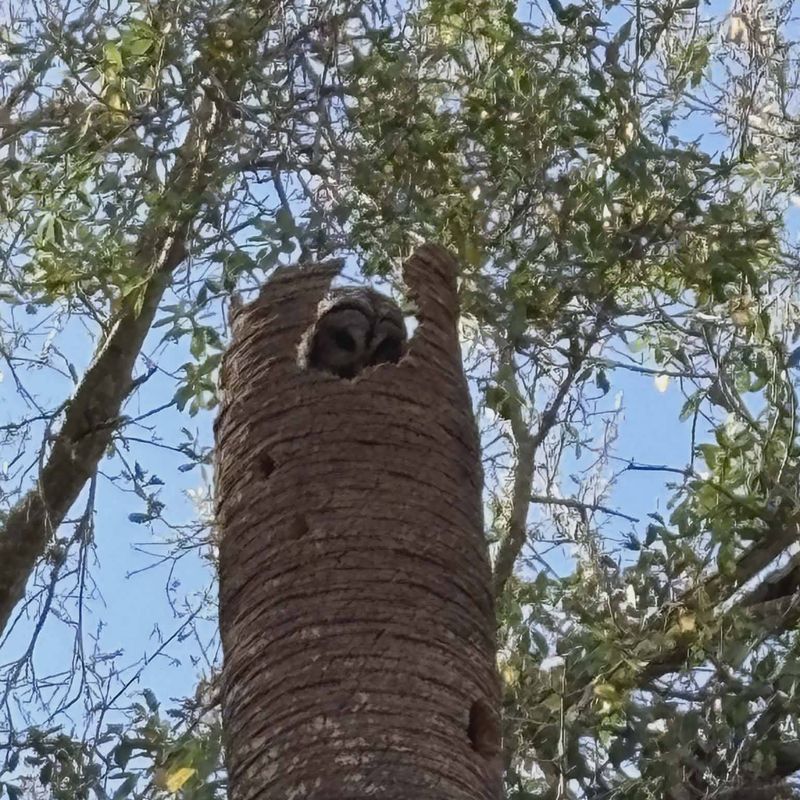
The single most effective thing you can do after hearing a barred owl is look up at your trees and decide to keep them.
Mature canopy trees, especially live oaks, laurel oaks, and other large-trunked species, provide the perches, cavities, and sheltered hunting lanes that barred owls actually use.
UF/IFAS notes that barred owls nest in natural cavities, old hawk or crow nests, and snags, making large, established trees far more valuable than any accessory you could install.
Retaining wooded edges along property lines, leaving open flight space beneath the canopy, and avoiding unnecessary clearing all support the habitat conditions that brought the owl close in the first place.
UF/IFAS forestry guidance recommends leaving suitable snags standing when they do not pose a fall hazard to people or structures.
A dead tree over the driveway or roof is a different situation, and qualified tree work is the safer call there.
A barred owl nest box is an optional supplement, not a guaranteed fix.
UF/IFAS nest box specifications for barred owls call for a box approximately 12 inches wide by 24 inches high, with a 7-inch entrance hole, mounted 20 to 30 feet above ground.
Add about 3 inches of wood chips inside and position a nearby perch that does not block the opening.
The box works only where broader habitat already supports the species, and even then it may attract squirrels or other wildlife before an owl ever investigates.
Think of it as setting an extra chair at the table, not sending a dinner invitation.
Fewer Rats Require More Than Owls
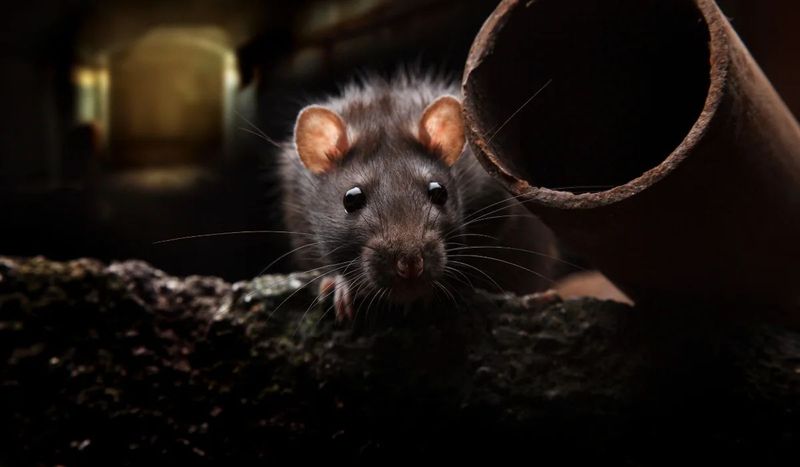
Barred owls do eat small mammals, and rats are part of that menu.
But their diet is wide and shifts with whatever prey is most available, ranging from frogs and crayfish to mice, voles, and occasionally a rat.
UF/IFAS barred owl documentation lists small mammals among their prey without making roof-rat control a reliable outcome for any single Florida property.
Predation is one layer of natural pressure, not a dependable standalone solution.
Roof rats are skilled climbers.
They travel utility lines, shimmy up vines, run fence tops, and use overhanging tree branches as a highway straight to your soffit.
UF/IFAS roof rat guidance explains that removing food and shelter is the foundation of control, because killing rats without cutting off what draws them in simply creates a vacancy that new animals fill.
Practical steps matter more than hoping a predator shows up on schedule.
Secure garbage can lids, pick up fallen citrus and avocados within 24 hours, sweep spilled birdseed, and bring pet food inside before dusk.
Enclose compost bins completely.
UF/IFAS integrated pest management guidance also recommends trimming any tree limb or vine within 3 to 4 feet of the roofline and cutting back contact points along fences and utility lines.
Then seal openings.
UF/IFAS farm and residential rat control resources point to gaps around pipes, wires, roof vents, and fascia boards as common entry points, and UF/IFAS exclusion guidance recommends sealing any opening larger than a quarter-inch with hardware cloth, steel wool, or caulk rated for exterior use.
An owl hunting your yard three nights a week is genuinely helpful, but it cannot outpace a property that keeps feeding and sheltering new rats every day.
Let The Owl Hunt Without Interference
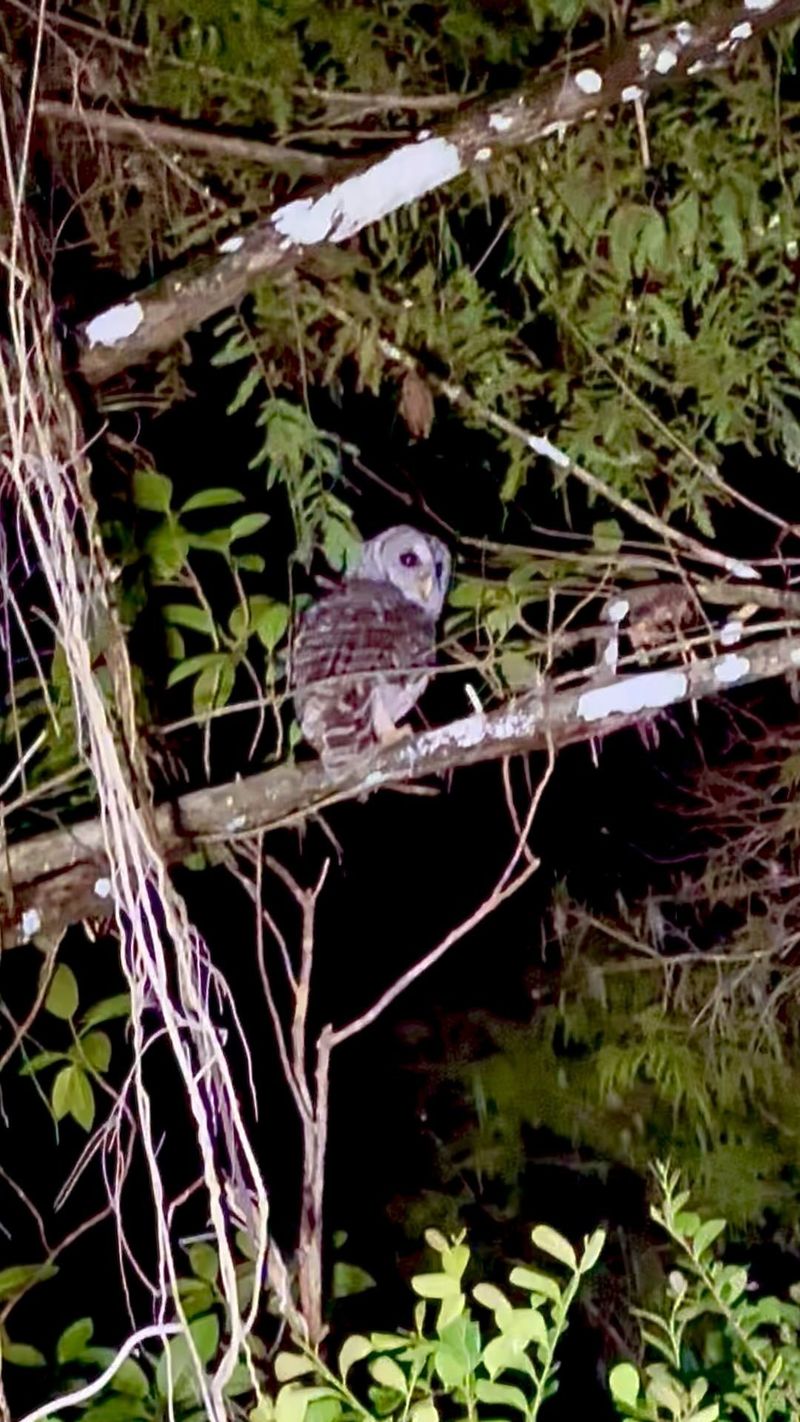
Passive listening is the best thing you can do for a barred owl working your neighborhood.
Playing recordings to summon the bird may seem harmless, but Audubon’s guidance on birding apps cautions that repeated playback can trigger territorial responses that pull adults away from eggs or young and cause unnecessary stress, especially during the January-through-March nesting window.
Audubon also advises against field playback for the same reasons, so leave the phone in your pocket and let the owl do its own announcing.
Food, live bait, meat scraps, and decoys are equally off the table.
Audubon’s ethical wildlife photography guide warns that baiting predatory birds can alter their natural behavior and create risks for the bird and other wildlife.
Bright lights and camera flash are also a problem, as flash can temporarily limit an owl’s ability to hunt or navigate safely in the dark.
Rodenticide is another risk worth taking seriously.
EPA’s rodenticide safety review identifies second-generation anticoagulant rodenticides as posing particular risks to predators and other nontarget wildlife through poisoned prey.
Fish and Wildlife Service documentation further underscores the threat these products pose to birds of prey.
If you do find a young owl on the ground, do not assume it is abandoned.
FWC guidance says to leave young wildlife alone unless injury is obvious and to contact a licensed wildlife rehabilitator when help is genuinely needed.
Active nests with eggs or dependent young are protected under the Migratory Bird Treaty Act, so keep a respectful distance from any nest you find.
Your real job is simpler: protect the trees, remove what draws rats in, seal the house, and treat that call at dusk as a useful clue from a bird that is already doing its part.