
The Only Native Texas Wildflower You Plant Once For A Bed That Reseeds Itself Every Year Forever
Follow us on Google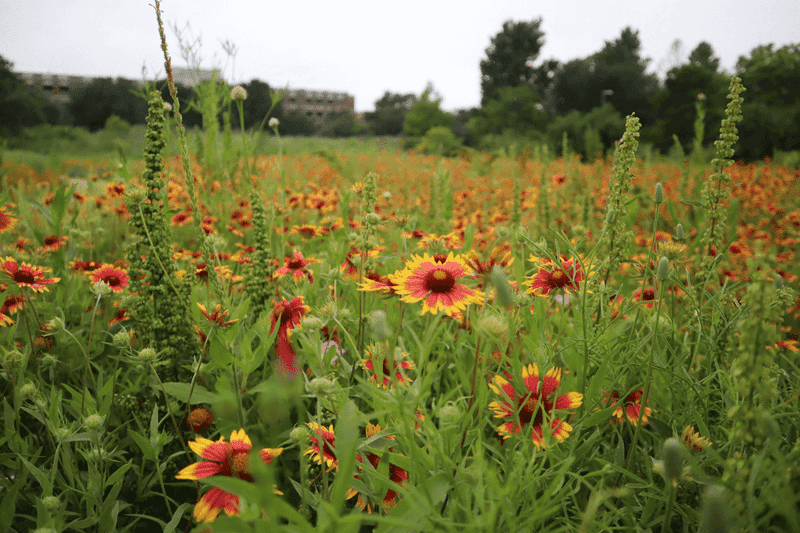
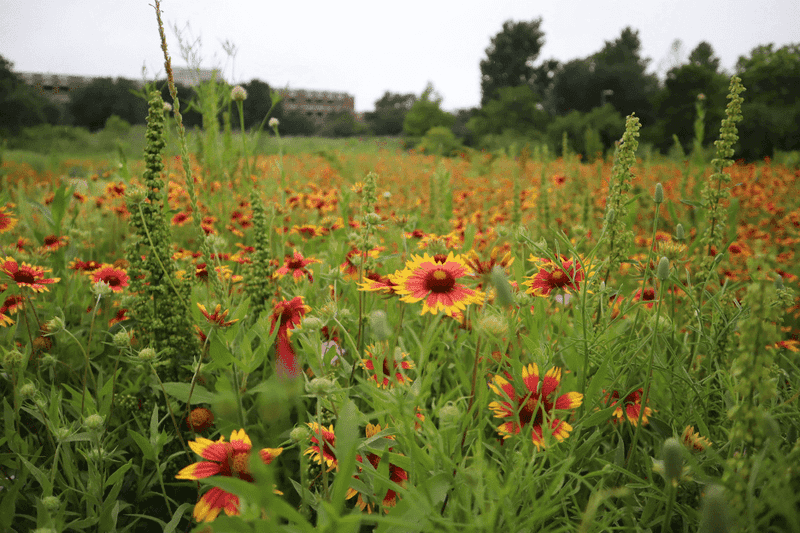
Somewhere along a Texas back road every spring, a wash of red and orange flowers takes over a sunny patch of ground like it owns the place.
That flower is Indian blanket, and it earned that confidence by dropping its own seed and coming back through new plants the following year.
The headline that brought you here makes a bold promise, and the truth is genuinely close to it, but a little more honest: Indian blanket can fill a sunny bed and return for years through self-sown seedlings when you give it the right conditions and stay out of its way at the right moment.
Meet Indian Blanket, A Self-Sowing Texas Native
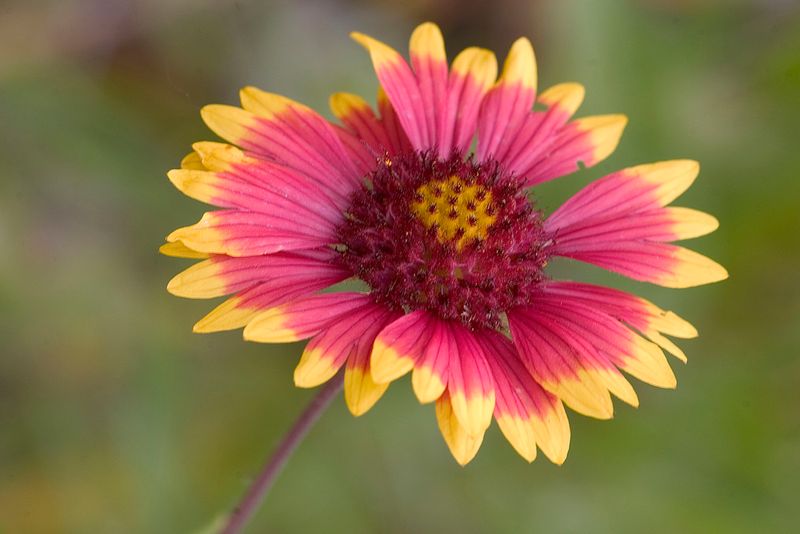
The flower hiding behind that headline is Indian blanket, also called firewheel, known botanically as Gaillardia pulchella.
Texas A&M AgriLife lists it as a Texas-native annual suited to full sun and well-drained soil.
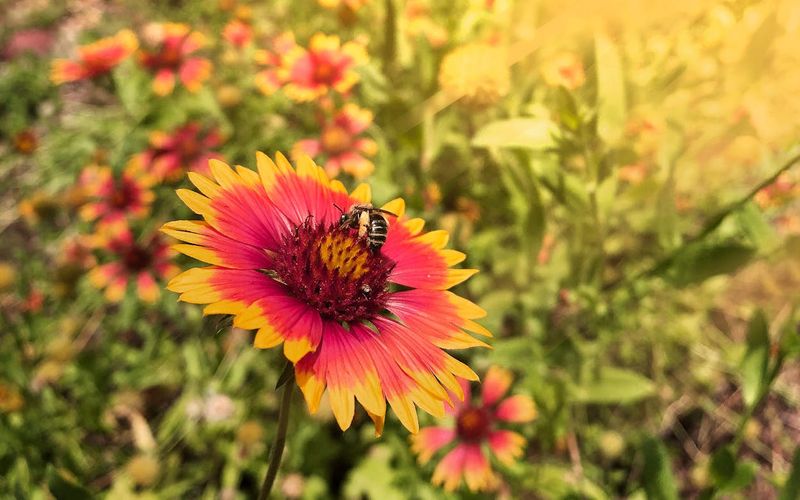
Its flowers are hard to miss: bold rings of red and burnt orange tipped with yellow, sitting on stems that reach about 1 to 1.5 feet tall and bloom from late spring well into summer.
The Native Plant Society of Texas is clear that Indian blanket must be allowed to reseed in order to produce an abundant display the following year.
That single sentence explains almost everything about how this plant works.
The original plants finish their season and die, but the seed they dropped is already waiting in the soil for cooler weather and a little moisture.
Before going further, the headline deserves a correction.
Indian blanket is not the only Texas-native wildflower that reseeds.
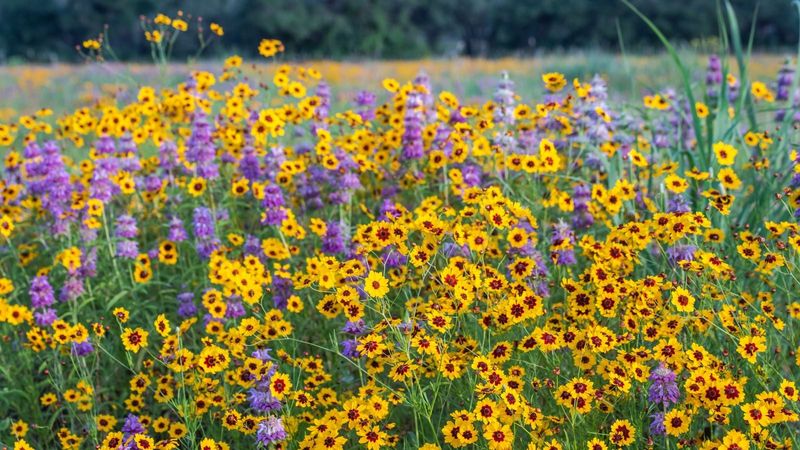
Bluebonnets, coreopsis, black-eyed Susan, and several others can do the same under good conditions.
And TPWD guidance describes a seed bank that can supply plants for years, not a permanent guarantee.
The value of Indian blanket is that it reseeds readily in a sunny, well-drained spot and asks very little once it is established, making it a practical and colorful option for Texas homeowners who want a recurring flower bed without starting over every spring.
Annual Does Not Mean You Must Replant
Here is where a lot of gardeners get tripped up.
The word “annual” sounds like a sentence: plant it this year, buy more next year.
But that is not what it means for a self-sowing species.
An annual simply completes its full life cycle, from germination to seed drop, within a single growing season.
University of Florida IFAS notes that Gaillardia pulchella is described as an annual or short-lived perennial depending on conditions, so a few individual plants may occasionally survive into a second season, but the real engine of the bed is new seedlings, not the same clump persisting forever.
Think of it less like a perennial clump that spreads and more like a quiet agreement between the plant and the soil.
The parent plant flowers, sets seed, and drops it onto the ground.
Those seeds sit through summer heat and wait for fall temperatures and moisture to trigger germination.
Harris County Master Gardeners describe this cycle as the mechanism behind recurring self-sowing displays.
What the seed bank needs to work is straightforward: mature seed that actually reached the ground, open soil with reasonable light, timely moisture during germination, and reduced competition from weeds or turf.
TPWD recommends waiting until plants have flowered, dried, and dropped seed before mowing or trimming, because cutting too early removes the very seed that would become next year’s plants.
That one management decision, when to mow, turns out to matter more than almost anything else you do after the first sowing.
Match The Site To The Plant
Firewheel does not negotiate on sunlight.
The Native Plant Society of Texas defines full sun as at least 6 hours of direct sunlight daily, and Indian blanket genuinely needs that minimum to bloom well and set strong seed.
A spot that gets afternoon shade from a live oak or a fence will produce thinner plants that drop less seed, which means a weaker return the following year.
Drainage matters just as much.
Audubon’s firewheel profile notes that this plant is especially well suited to dry, open areas.
Soil that stays wet after rain is a poor match, and no amount of extra irrigation fixes a low spot that puddles.
If your intended bed holds water for more than a few hours after a heavy rain, move the bed or raise it before you buy a single seed packet.
Texas contains multiple ecoregions with genuinely different site conditions, and TPWD’s ecoregion-specific plant guidance makes clear that what works in the Hill Country may not translate directly to East Texas or the Gulf Coast.
Your county’s Texas A&M AgriLife Extension office is the most reliable local resource for matching seed sources and soil preparation to your specific area.
Dense turf is the other enemy of a new wildflower bed.
Grass roots compete hard for moisture and space, and thick thatch physically blocks seedlings from reaching soil.
Choose a spot with open ground, or plan to clear existing turf before you sow.
Picking the right site from the start will do more for your recurring bed than any watering schedule or soil amendment you apply later.
Sow In Fall On Prepared Soil
Fall is the right season to sow Indian blanket across most of Texas.
TxDOT recommends September 1 through November 30 as the broad planting window for most Texas wildflowers.
Local weather shifts that window a little depending on where you live: North Texas gardeners often aim for October, while South Texas gardeners near the Gulf Coast may have more flexibility into November.
When in doubt, check with your county extension office for the timing that suits your ecoregion.
Before seed goes down, the soil needs to be ready to receive it.
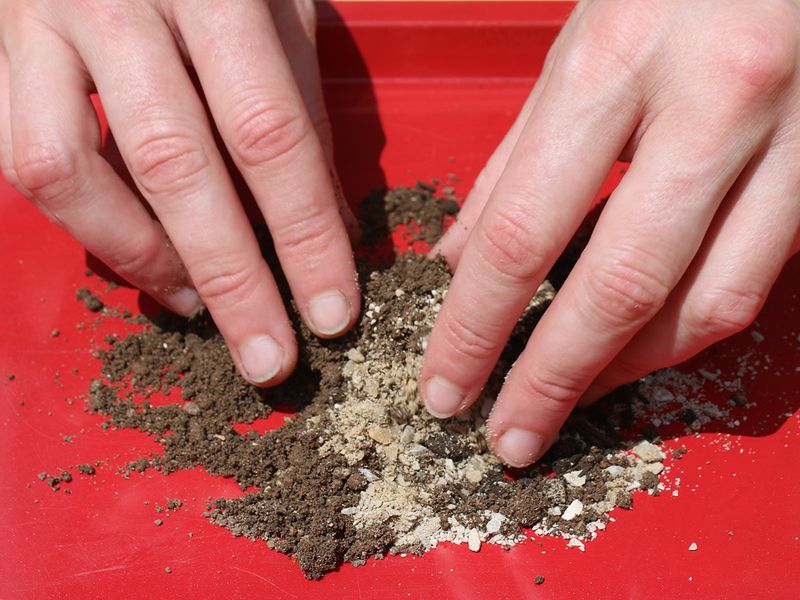
TxDOT says seed-to-soil contact is essential, and the preparation method is simple: mow existing turf as low as possible, or loosen the top inch of bare soil without deep tilling that buries weed seed.
Rake out debris so the surface is fairly clear.
TPWD recommends mixing small seed with sand at a ratio of 1 part seed to 4 parts sand to help distribute it evenly across the bed.
Broadcast the mixture by hand, then rake or tamp it lightly to a depth of about 1/8 inch.
Firewheel seed needs light to germinate, so burying it deeper than that, or covering it with thick mulch, can prevent emergence entirely.
If you are planting starts rather than seed, Texas A&M AgriLife recommends spacing plants about 12 inches apart.
With broadcast seeding you do not need to measure individual spots, but that 12-inch figure gives you a sense of the elbow room each plant eventually wants.
A thin stand in the first season is normal and does not mean the planting failed.
NPSOT notes that some seed germinates in the planting season and some waits for spring, so patience in year one is part of the plan.
Water During Establishment, Then Step Back
Seed in the ground still needs moisture to wake up.
TPWD recommends keeping newly planted seed suitably moist for the first several days after sowing.
After that initial period, watering every 2 to 3 weeks during prolonged winter dry spells can help seedlings push through.
These are general guidelines, not a prescription that fits every soil type and region equally.
TxDOT’s establishment guidance describes short waterings roughly every 3 days for about 3 weeks after sowing as a general schedule for getting wildflower seed started.
In practice, rainfall does some of that work for you in a typical Texas fall, but if October and November run dry, which they can in West Texas, the Panhandle, and parts of Central Texas, light supplemental watering keeps germination moving.
Once Indian blanket is established, its drought tolerance is genuine.
Texas A&M AgriLife lists it as suited to dry to medium moisture conditions, and most gardeners find they can step back from irrigation once plants have several true leaves and a developing root system.
The key distinction is between establishment moisture and long-term maintenance: the plant earns its low-water reputation after it is rooted, not before.
A poorly drained site is not a problem that extra watering solves.
If water sits on the surface after rain, more irrigation makes the situation worse, not better.
Adjust the site before assuming the plant needs more water.
Let Flowers Mature Before You Mow
The single action that most determines whether your bed returns next year happens after the flowers fade.
TPWD recommends waiting until plants have fully flowered, dried, and dropped their seed before mowing or trimming, citing late June or early July as a typical reference point for many spring wildflower displays.
That date shifts depending on your region and the season’s weather, so watch the plants rather than the calendar.
Early mowing cuts off the seed before it matures and falls.
Consistent deadheading, removing spent blooms to encourage more flowers, has the same effect: it keeps the plant flowering longer but reduces the seed that reaches the ground.
TxDOT delays mowing on roadsides specifically because annual wildflowers must set seed to return the following year, and the same logic applies to your backyard bed.
After seed has dropped, maintenance still exists.
NPSOT recommends removing unwanted plants and limiting conditions that suppress desirable seedlings.
Keep foot traffic light across the seed bed.
Avoid applying dense mulch over areas where seed has fallen, since it can block light and prevent germination.
Herbicide drift from nearby lawn treatments can also kill seedlings before you realize what happened, so be careful with any spraying near the bed edges.
Rockwall County Master Gardeners note that self-sown volunteers often appear in unexpected spots, including paths, gravel edges, and cracks in pavement.
That wandering behavior is actually a sign the seed bank is working.
Plan to guide the planting each year rather than expecting it to stay inside tidy borders.
Expect Gaps, Delays, And Changing Edges
A self-sowing bed is not a carpet you roll out once and walk away from.
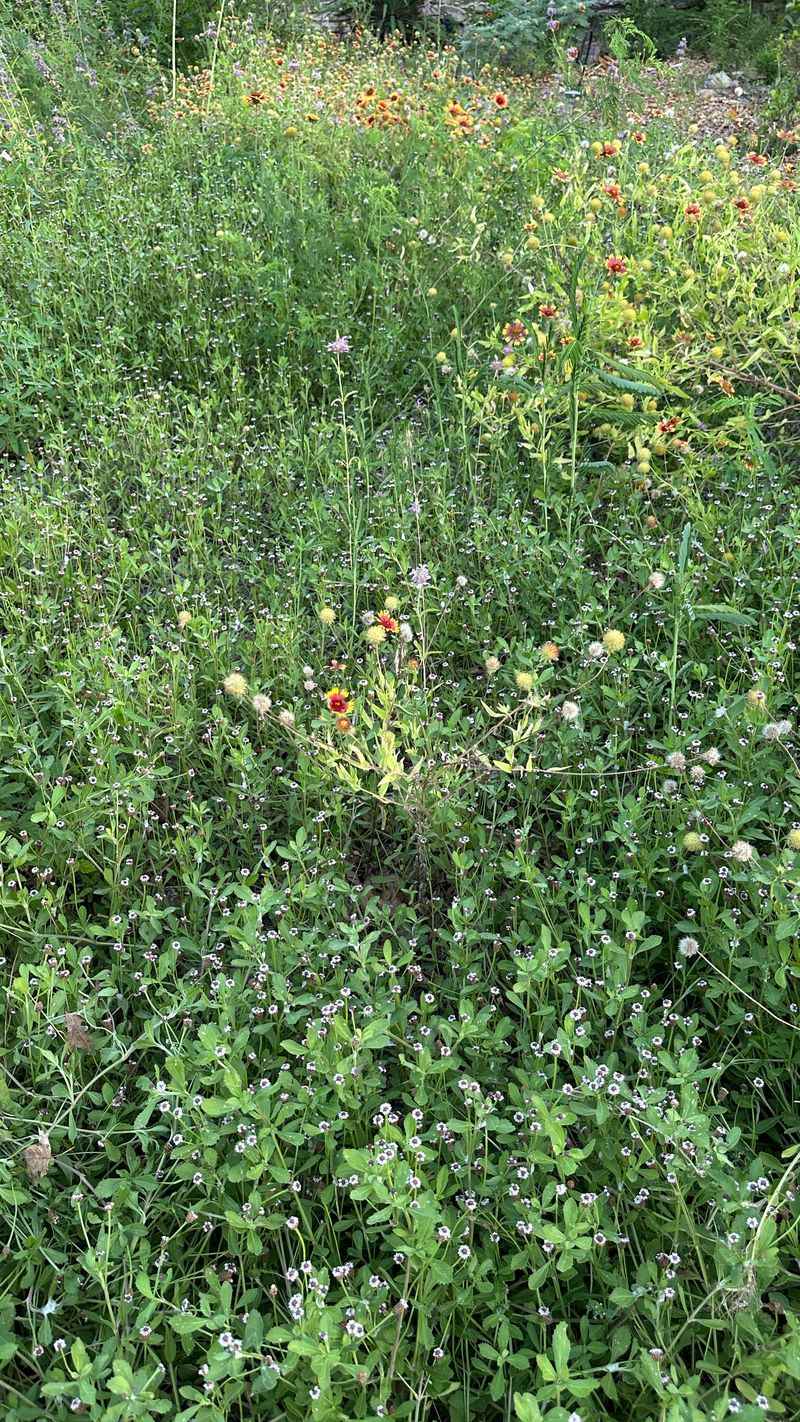
Seedlings may appear unevenly across the bed, migrate toward the edges where soil is more open, or leave bare patches after a season with poor germination conditions.
That is normal, and it does not mean the planting failed.
TxDOT notes that certain wildflower seeds may take more than one season to germinate.
A thin first-year display often improves in year two as the seed bank builds.
Some seed germinates in fall, some waits for spring warmth, and some sits dormant through conditions it does not find favorable.
Patience is a genuine part of the strategy, not just a consolation.
When gaps appear, run through a short checklist before giving up.
Confirm that bare soil is still open and not covered by encroaching turf or thick debris.
Check that mature seed was actually allowed to fall before mowing.
Consider whether drought during germination, unusually heavy rain that washed seed, or weed competition could explain the thin coverage.
TPWD describes the seed bank as capable of supplying plants for multiple years, but it also depends on those conditions cooperating.
TxDOT and NPSOT guidance both acknowledge that competition, drought, and local site variation affect outcomes.
The bed may return reliably for several years in a favorable spot, or it may need a fresh round of seed after a difficult season.
No source supports “forever” or guarantees uniform annual coverage, and any advice promising otherwise is overselling what is genuinely a rewarding but variable plant.
Build A More Diverse Native Bed
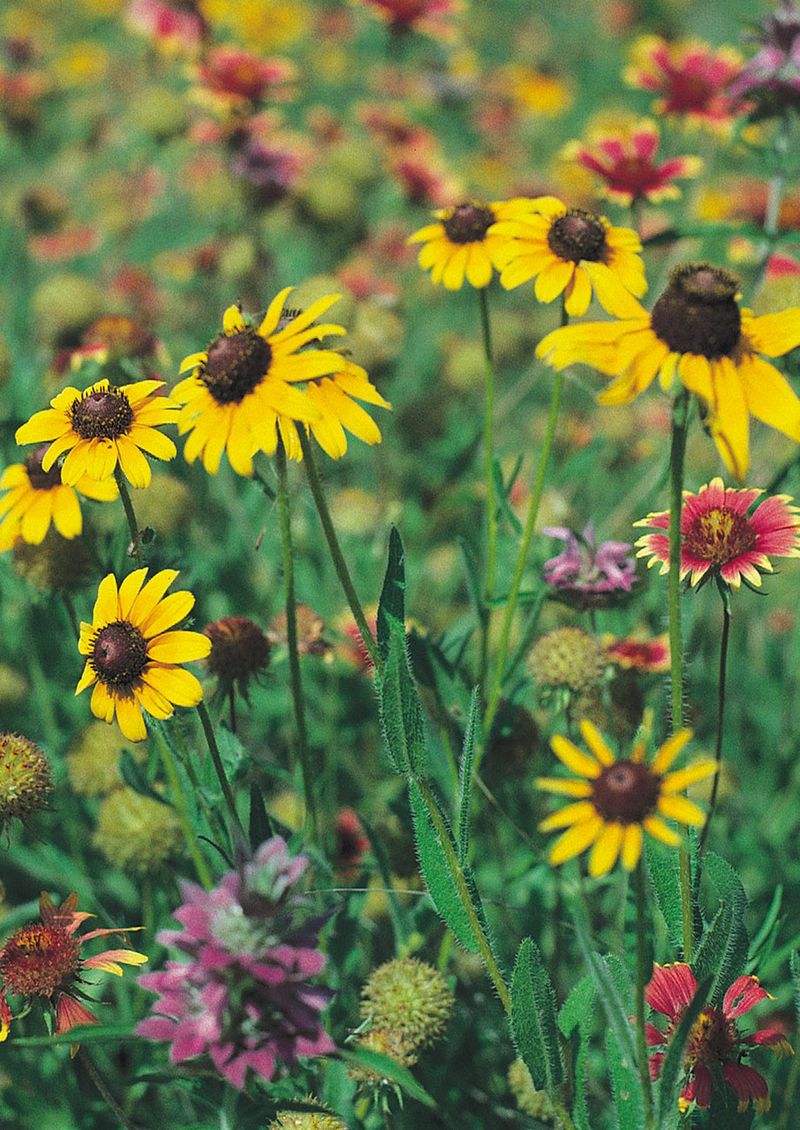
Indian blanket is a strong starting point, but a bed built around a single species leaves gaps in the calendar and on the plate for pollinators.
TPWD recommends floral diversity across spring, summer, and fall, and suggests at least 3 flowering plant species in each season as a starting point for supporting native bees and other pollinators.
A pure firewheel bed looks spectacular in late spring but goes quiet after seed drop, leaving summer and fall visitors with nothing.
Adding regionally appropriate natives, such as coreopsis, black-eyed Susan, autumn sage, or Gregg’s mistflower, extends the bloom season without complicating the management much.
If you want to use a seed mix rather than individual species, TPWD advises checking the species list on any commercial packet before buying.
Not every mix sold as a “wildflower blend” contains species native to Texas, and non-native introductions can outcompete the plants you actually want.
TxDOT’s seed-sourcing guidance recommends regionally adapted or local-ecotype seed when available, because plants grown from seed collected near your ecoregion tend to be better suited to local rainfall patterns, soil, and temperature swings.
NPSOT’s Texas native wildflower seed mix is one example of a regionally vetted option worth looking at.
The practical rhythm stays the same whether you grow firewheel alone or alongside companions: choose a sunny, well-drained site, protect establishment with timely moisture, allow seed to mature and fall before mowing, and pull unwanted plants before they crowd out the good ones.
Indian blanket can serve as a colorful, self-sowing anchor in that mix, and a diverse planting around it will offer more seasonal life than firewheel alone ever could.