
Spiders May Add Natural Pressure Against Spotted Lanternflies, But Here Is What That Actually Means For Your Yard
Follow us on Google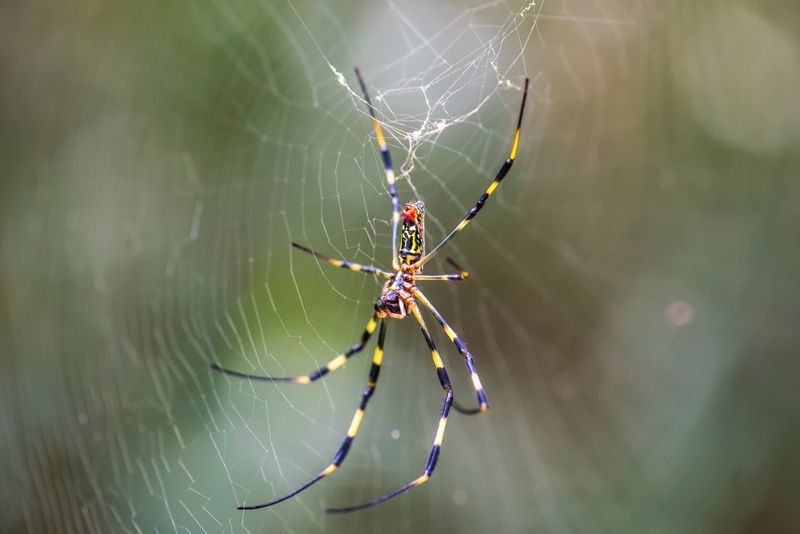
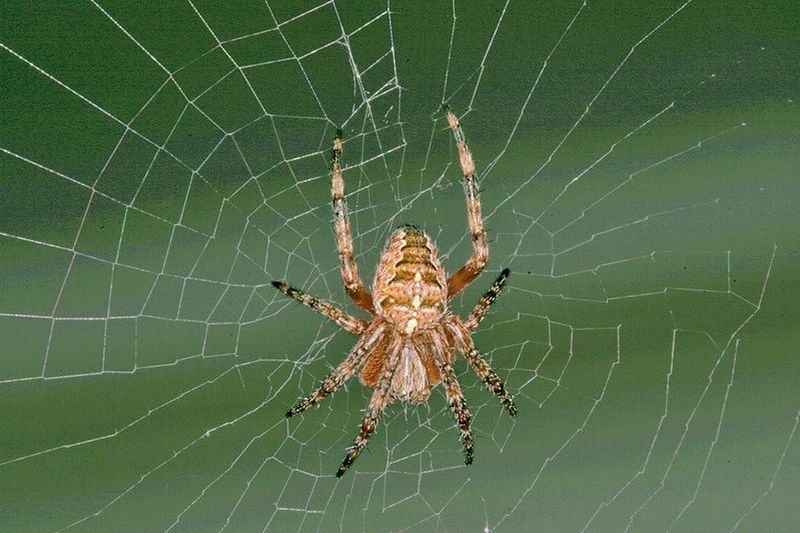
Walk out to your garden on a late July evening in Pennsylvania and you might spot a fat orb-weaver hanging in a dewy web between the shrubs, completely unbothered.
Somewhere nearby, spotted lanternflies are likely working their way up a maple or black walnut trunk, feeding on sap and leaving a sticky mess behind.
The good news is that the spiders already living in your yard may occasionally add some natural pressure on those lanternflies, and you do not have to buy a thing to support them.
The honest version of that promise is a little smaller than the headline suggests, and understanding exactly what spiders can and cannot do will help you protect your trees more effectively this summer.
The Useful Answer Is Spiders—With a Smaller Promise
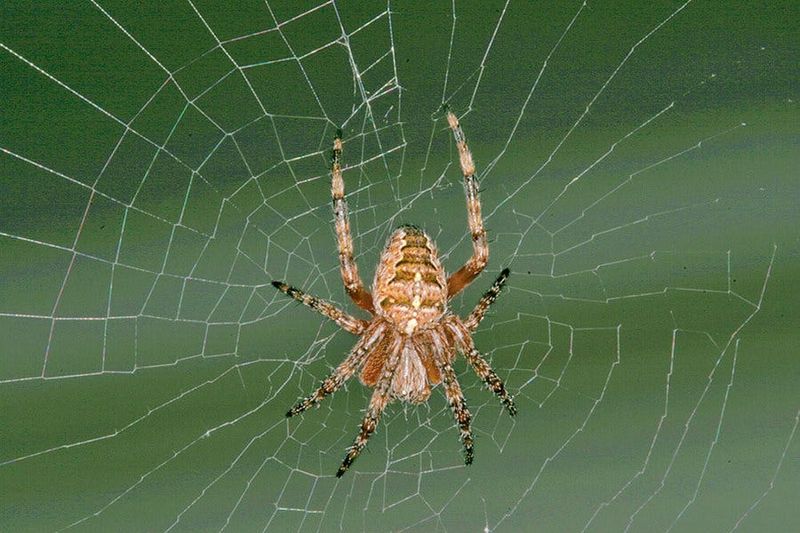
Spiders are the quiet garden predator worth paying attention to here, and Pennsylvania yards are genuinely full of them.
Penn State Extension notes that Pennsylvania spiders consume many arthropods and that most species encountered outdoors are harmless to people.
Orb-weavers, grass spiders, funnel weavers, and wolf spiders all live in typical Pennsylvania backyards, hunting or trapping whatever prey crosses their path.
Penn State’s spotted lanternfly management guide lists spiders among the generalist predators that may attack spotted lanternflies.
That word “may” is doing real work in that sentence.
Spiders can and do eat lanternflies when the two cross paths, but no study has shown that simply having more spiders in a backyard produces a measurable drop in lanternfly numbers across a whole summer season.
The practical promise is still worth your attention, though.
Penn State’s guidance on conserving natural enemies recommends supporting spiders as one useful layer of natural control, not as a replacement for active management.
You do not need to purchase, release, or import any spiders.
The ones already living in your shrubs, ground cover, and grass edges are the ones doing whatever work gets done.
One more thing worth saying clearly: spiders are generalists.
They eat lanternflies when opportunity arises, but they also eat pollinators, parasitoid wasps, and other beneficial insects.
A yard with more spiders is not automatically a yard with fewer pests overall.
Think of them as one useful neighbor on a street full of neighbors, each playing a small role.
What Researchers Actually Confirmed
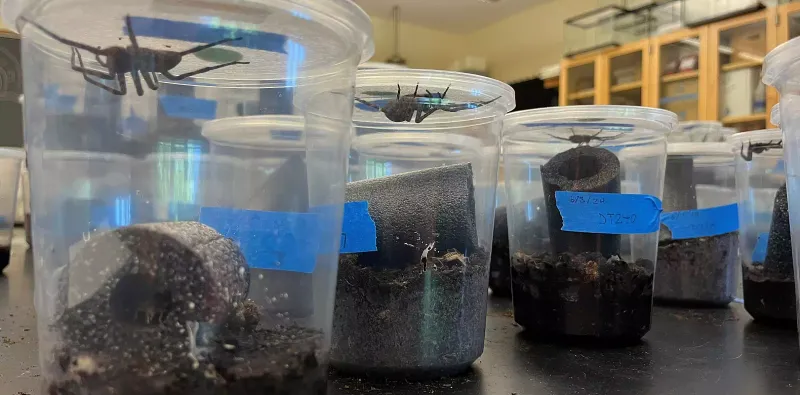
A peer-reviewed study published in 2025 put 10 generalist arthropod predators head to head with spotted lanternflies under laboratory conditions.
Rabid wolf spiders did consume spotted lanternflies during the trials.
That is confirmed.
Here is where it gets tricky, though.
The strongest laboratory reductions came from spined soldier bugs and from Carolina and Chinese mantises, not from the tested wolf spiders.
The researchers described those results as promising for future conservation or augmentation biological control programs.
They did not claim the findings proved that any of these predators could suppress lanternfly populations in an ordinary backyard.
Laboratory feeding trials answer one specific question: can this predator eat this prey under controlled conditions?
They do not tell you how many lanternflies a spider removes outdoors over a season, whether the spider can survive long-term on lanternflies as a primary food source, or whether the effect ever reaches the level of a tree, a yard, or a neighborhood.
Separate community-science observations have found spiders among the most frequently reported arthropod predators of spotted lanternflies in the field.
That kind of observational data is genuinely useful as a signal, but it is not the same as a controlled measurement of population reduction.
Penn State’s management guide states plainly that no known natural enemies are currently expected to reduce spotted lanternfly populations significantly in the United States.
That applies to spiders too.
How Garden Spiders Might Meet Lanternflies
Picture a spotted lanternfly nymph moving through low vegetation toward a tree trunk.
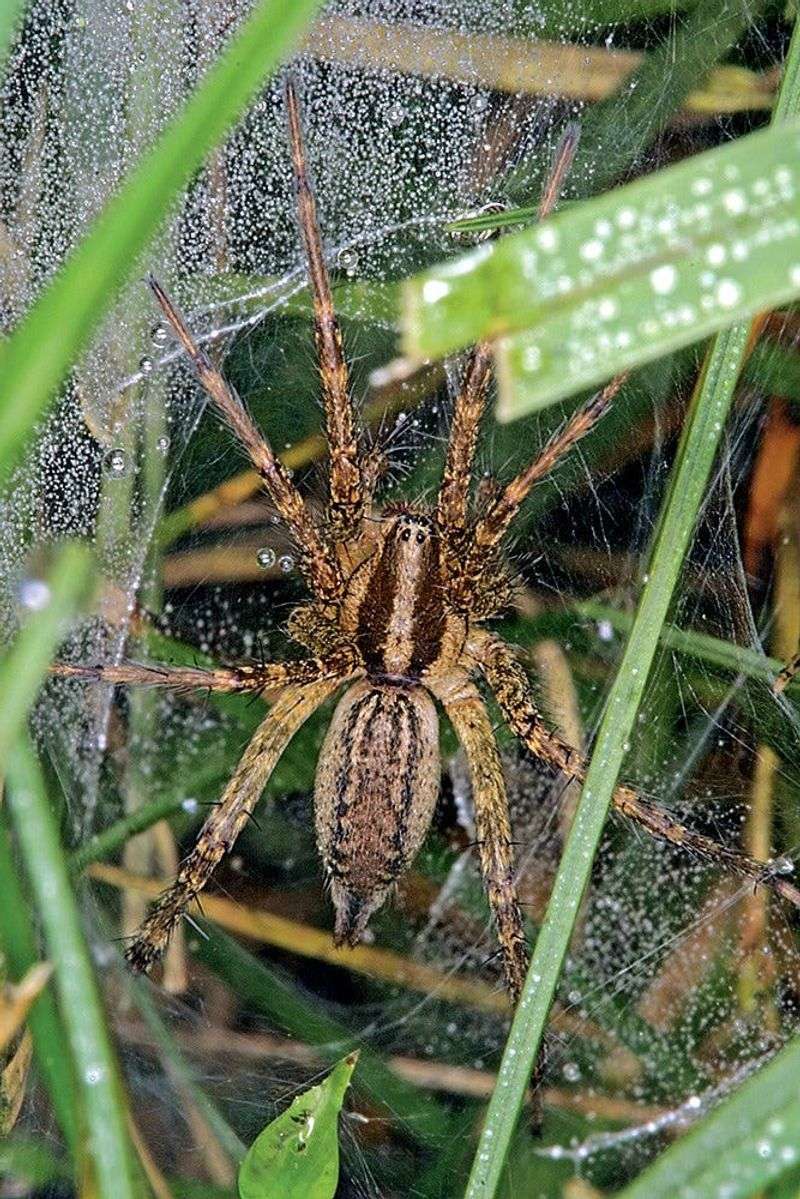
Somewhere in that path, a grass spider in the genus Agelenopsis has built a flat, sheet-like web with a funnel retreat tucked into the weeds or ground cover nearby.
Penn State describes grass spider webs as nonsticky sheets stretched across grass, weeds, shrubs, brush piles, and fencerows, designed to intercept insects that stumble across the surface.
A lanternfly crossing that sheet could become a meal, though that outcome is plausible rather than guaranteed.
Orb-weavers work a different angle.
Penn State notes that orb-weaver webs are sticky and designed to catch flying insects, with many species rebuilding their webs regularly.
A lanternfly taking flight between host plants could theoretically hit one of those webs.
That is a real encounter route, not a proven hunting strategy targeting lanternflies specifically.
Wolf spiders are the clearest named example from the research.
University of Minnesota Extension explains that wolf spiders do not rely on webs at all, instead roaming actively to hunt prey.
That roaming style means a wolf spider moving through a garden bed could run directly into a lanternfly resting on the ground or low on a trunk.
The 2025 laboratory study confirmed that rabid wolf spiders will consume spotted lanternflies when the two meet.
A web near your maple tree proves one thing: a spider is present and hunting.
Penn State’s management guidance does not suggest that spider webs near host trees measurably reduce feeding damage.
Think of each web as a small trap set by a resident hunter, not a defense system protecting the whole tree.
Nighttime Creates Opportunity, Not a Control Service
Spotted lanternflies have a habit of moving up and down tree trunks and becoming noticeably active around dusk.
Washington State’s spotted lanternfly identification guidance confirms that nymphs and adults are often easier to observe in the evening as they congregate on trunks and stems.
That visibility at dusk is partly why the “night shift” framing feels intuitive.
Wolf spiders can hunt during warm nighttime conditions, and orb-weavers often rebuild their sticky webs overnight, making fresh traps available by early morning.
Those overlapping behaviors do create real opportunities for encounters between spiders and lanternflies after dark.
The timing lines up in a way that is genuinely interesting.
What the evidence does not show is that most predation happens at night or that nighttime spider activity suppresses lanternfly populations at any meaningful scale.
An encounter is not the same as population control.
Many lanternflies are also active during daylight hours, and spider behavior varies by species, temperature, and the specific conditions in your part of the state.
If you garden in the Poconos or the northern tier, your evenings cool off faster in late summer, which can affect how long both spiders and lanternflies stay active outdoors.
In the warmer parts of southeastern Pennsylvania, warm nights stretch later into fall, potentially extending the overlap window.
Adapt your observations to what you actually see in your own yard rather than assuming any single pattern holds statewide.
Make Room for Spiders in Low-Traffic Areas

Spiders do not need a fancy setup.
What they actually need is a patch of your yard that does not get disturbed every weekend.
Leaf litter under shrubs, a section of unmowed grass at the garden edge, a brush pile tucked behind the garage, and native ground covers left alone through winter all provide exactly the kind of layered structure where spiders hunt, shelter, and overwinter.
Penn State’s guidance on conserving natural enemies describes complex landscapes containing ground covers, shrubs, and trees as genuinely useful habitat for beneficial predators, including spiders.
A mix of native shrubs, flowering perennials like bee balm (Monarda didyma) or goldenrod (Solidago spp.), ornamental grasses like switchgrass (Panicum virgatum), and Pennsylvania sedge (Carex pensylvanica) can provide web attachment points, overwintering cover, and the kind of insect prey that keeps spider populations fed through the season.
No single plant reliably attracts spiders or controls spotted lanternflies on its own.
Penn State’s beneficial insect guidance frames diverse, layered plantings as general habitat support rather than a targeted pest-control recipe.
The goal is reducing unnecessary disturbance and preserving what is already there, not installing a new garden from scratch.
Watering and maintenance habits matter too.
A low-traffic garden edge that stays reasonably moist in the Laurel Highlands may dry out quickly during a summer drought in the Susquehanna Valley.
Work with what your specific yard offers rather than following a one-size prescription.
Leaving even a 10-foot strip of undisturbed native plantings along a fence line costs almost nothing and gives resident spiders a place to do their work without any further effort from you.
Protect People and Beneficial Wildlife Too
Garden habitat for spiders belongs in low-traffic corners of the yard, not across the door you use every morning.
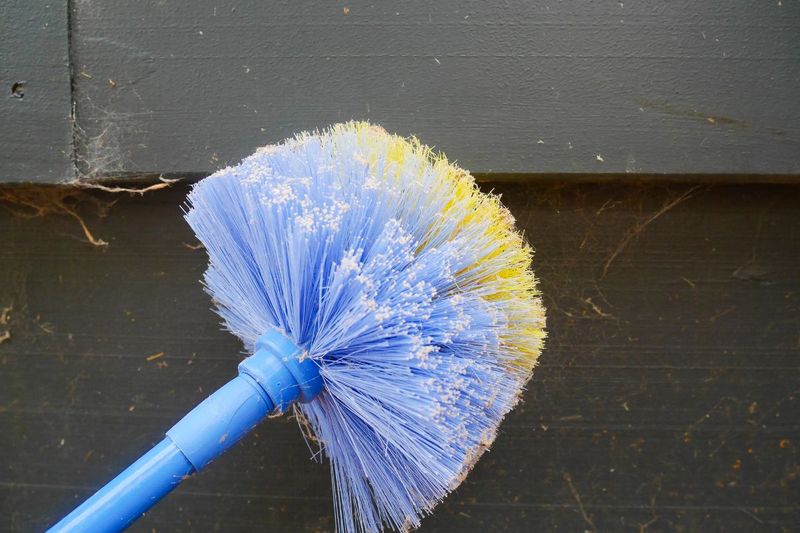
Webs around entry doors, along walkways, near patio seating, and on children’s play equipment are reasonable to remove.
A broom sweep or a quick spray from the hose takes care of them without harming the spider or requiring any pesticide at all.
Penn State’s guide to Pennsylvania spiders recommends wearing gloves when working around woodpiles, rocks, logs, brush, and other undisturbed areas where spiders shelter.
Black widows do occur in Pennsylvania, though they are uncommon.
Brown recluse spiders generally cannot survive outdoors in Pennsylvania’s climate, but caution around dense, undisturbed shelter is always reasonable.
Do not handle unidentified spiders with bare hands.
Spiders are generalists, which means protecting them in garden areas also means accepting that they eat some beneficial insects alongside pests.
That tradeoff is worth knowing.
Penn State’s natural-enemy conservation guidance and its beneficial insect resources both emphasize that unnecessary broad-spectrum insecticide applications can kill spiders, pollinators, parasitoid wasps, and other natural enemies right alongside the target pest.
If a pesticide application is genuinely needed for a correctly identified pest, use a product labeled for that pest and follow the label exactly.
The practical dividing line is simple: preserve spiders where they do not interfere with household use, remove them where they do, and avoid blanketing the yard with chemicals that wipe out the beneficial community you are trying to support.
Use Proven Lanternfly Controls Alongside Habitat
Spider conservation is one layer of a broader plan, and it works best when paired with the steps that actually have demonstrated results.
Pennsylvania’s official spotted lanternfly guidance recommends physically removing lanternflies when you see them, scraping and destroying egg masses between October and late spring, and removing tree-of-heaven (Ailanthus altissima) from your property where practical, since it is the preferred host plant.
Spotted lanternfly was first found in Berks County in 2014 and has now spread to 57 Pennsylvania counties as of 2026, so the chances are real that your yard is already in affected territory.
Pesticide applications are an option when appropriate for the identified pest, used according to the product label, and timed to minimize harm to pollinators and other beneficial organisms.
Broad-spectrum applications used unnecessarily are counterproductive because they kill the same spiders, predatory insects, and natural enemies you are trying to conserve.
Penn State’s management guide walks through current pesticide options and timing guidance for homeowners.
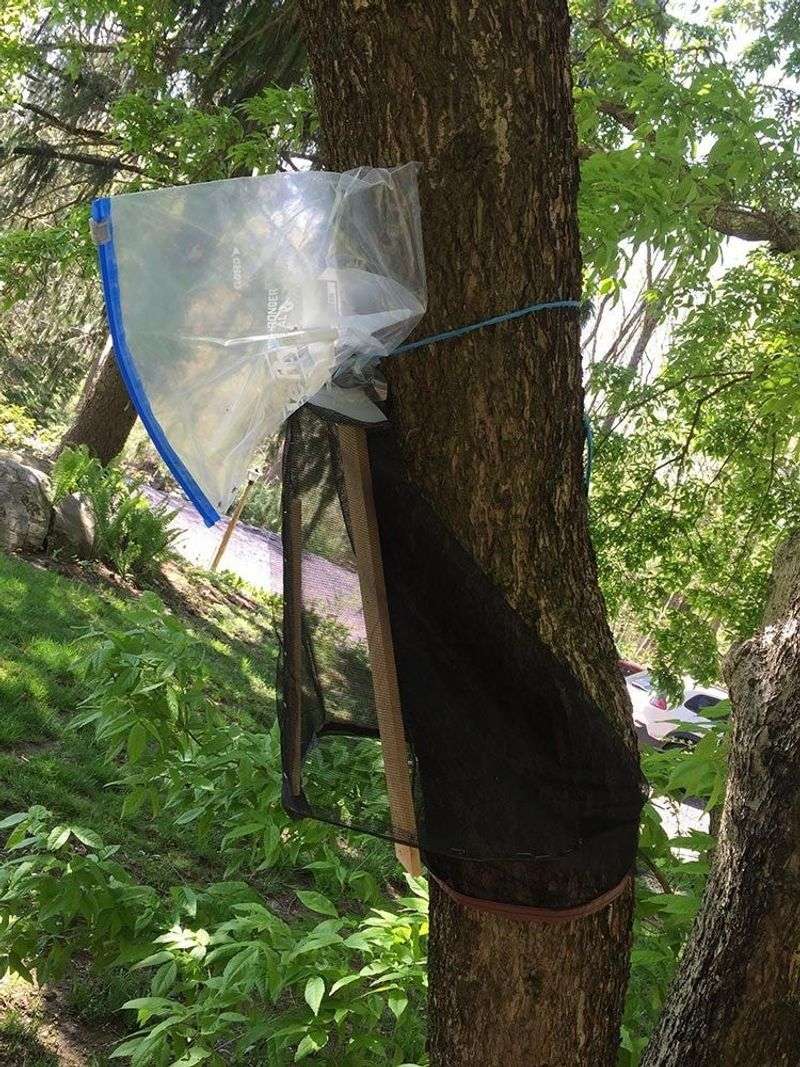
For trapping, Penn State prefers funnel-style circle traps over exposed sticky bands.
Exposed adhesive on sticky band traps can capture birds, bats, squirrels, lizards, pollinators, and beneficial insects, including the very spiders and predatory bugs you are hoping to support.
Penn State’s wildlife barrier instructions explain how to add a protective cage around a sticky band if you choose to use one.
Daily inspection is required for any sticky band trap, no exceptions.
Penn State’s spotted lanternfly FAQ also reminds residents in quarantine areas to inspect vehicles, trailers, firewood, outdoor furniture, and any other items before moving them out of the area, since egg masses can hitchhike almost anywhere.
Spider habitat in your garden adds a small but real layer of natural pressure to all of that work.
It does not replace any of it, but a yard that supports both active management and a healthy predator community is genuinely better positioned than one that relies on either approach alone.