
Why This Native Florida Sage Handles The Heat And Feeds Pollinators While Asking For Very Little
Follow us on Google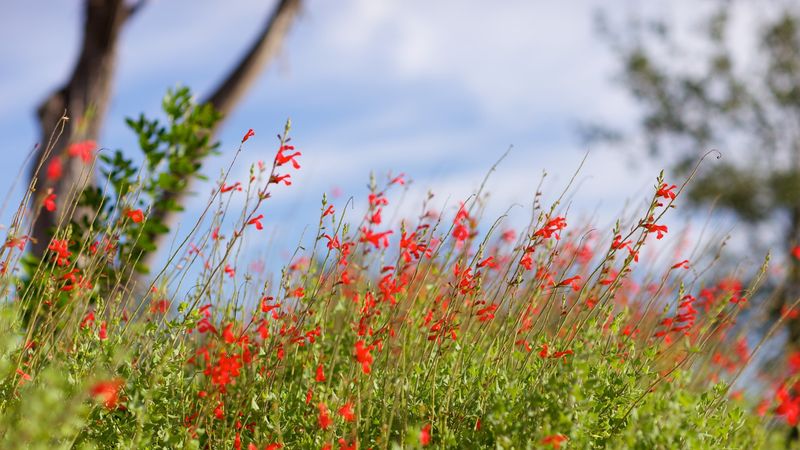
Step outside on a July morning in Florida and the heat hits you before you even reach the garden bed.
Most flowering plants are already struggling, dropping blooms or burning at the edges, and you’re wondering why you bothered.
Tropical sage, Salvia coccinea, is one of the few native plants that genuinely perks up when summer gets brutal, pulling in butterflies and hummingbirds while you focus on staying cool.
It is not a zero-care plant, but with a little help at the start, it earns its place with almost no fuss after that.
Meet Tropical Sage, The Low-Effort Heat Performer
Salvia coccinea goes by several names depending on who you ask.
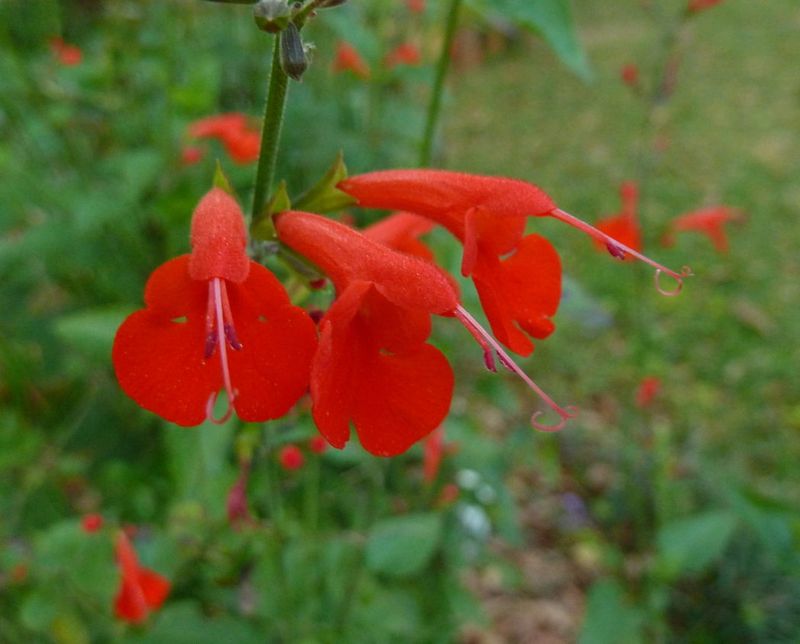
You might hear it called tropical sage, scarlet sage, or scarlet salvia, and all three point to the same upright, herbaceous perennial that UF/IFAS Extension identifies as native to Florida, heat-tolerant, and drought-tolerant after establishment.
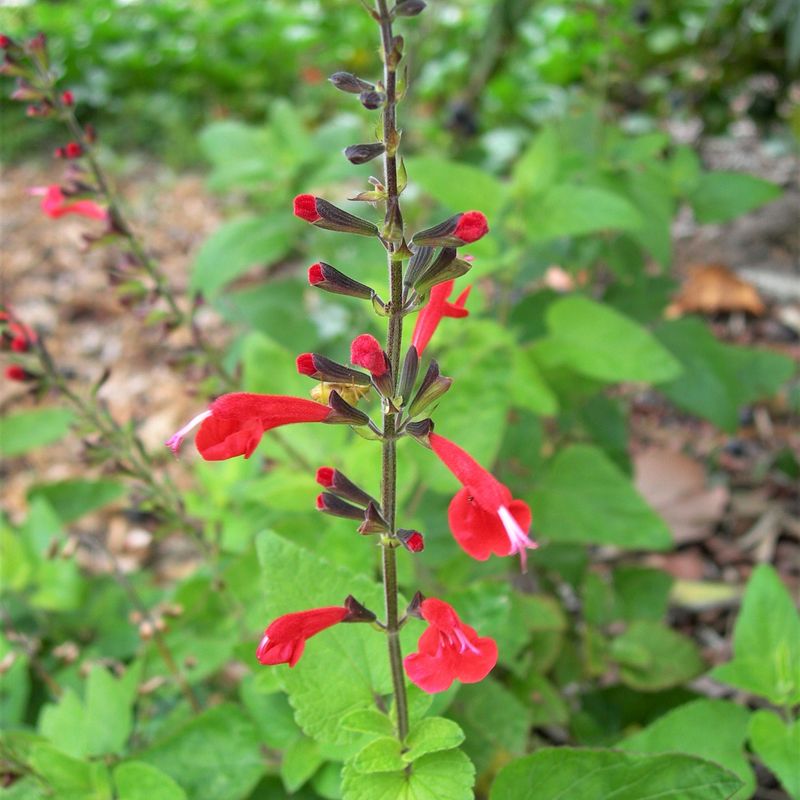
The flowers are typically a rich red and shaped like narrow tubes, though pink and white forms exist if you look around at local native plant sales.
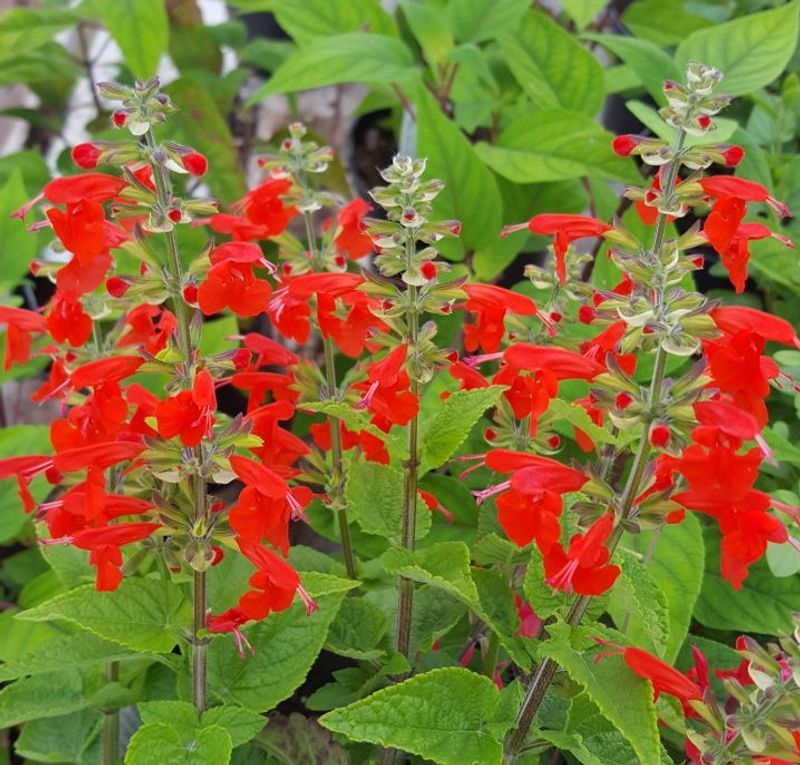
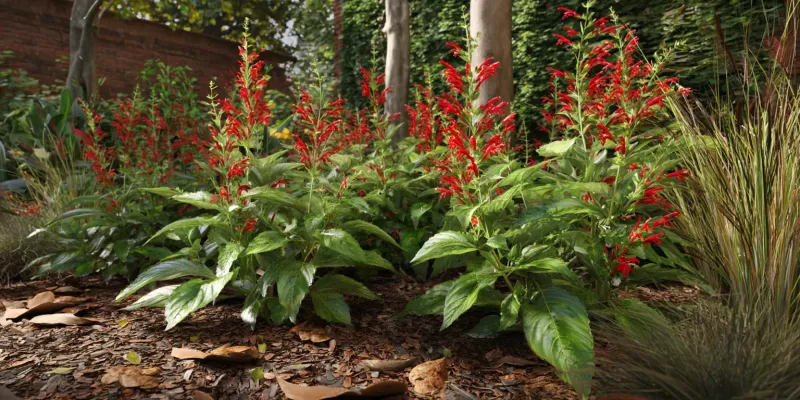
Size-wise, expect a plant that reaches roughly 2 to 4 feet tall and 1 to 2 feet wide, though site conditions, rainfall, and region can push those numbers in either direction.
The Florida Museum of Natural History notes a general maximum around 3 feet, while the Florida Native Plant Society puts the possible range at 2 to 6 feet.
In a sunny, well-drained bed in Central Florida, you can expect something solidly in the middle of that range.
UF/IFAS specifically notes that tropical sage is at its best during Florida’s hottest summer months, which already sets it apart from most flowering annuals and perennials that fade by June.
That said, relatively easy to grow does not mean maintenance-free.
New plants need regular watering while their roots settle in, the site needs decent drainage, full sun produces the strongest flowering, and some occasional cleanup keeps the plant looking sharp.
Call it low-effort, not no-effort, and you will have the right expectations from day one.
Why It Holds Color Through Florida Heat
Florida summers are genuinely brutal for most flowering plants.
Temperatures regularly climb past 90 degrees Fahrenheit, humidity stays high for weeks on end, and afternoon downpours drop a couple of inches of rain before the sun comes back out and bakes everything dry again.
Tropical sage handles that cycle better than most bedding plants you can find at a big-box store.
Part of why it performs so well comes down to placement.
UF/IFAS reports that Salvia coccinea tolerates acidic soil, alkaline soil, sand, loam, and clay, which covers most of what Florida gardeners actually deal with.
Full sun is where the plant flowers most heavily, and that lines up perfectly with the same exposure that wilts other summer color.
Give it a spot that gets at least 6 hours of direct sun and the heat becomes an asset rather than a threat.
Established plants can handle dry stretches better than many common bedding choices, but the Florida Museum describes its drought tolerance as strong while UF/IFAS rates it as moderate.
The honest answer sits somewhere in between.
During a prolonged winter dry spell, a stretch of severe heat without rain, or in unusually sandy soil that drains fast, you may still need to water even a well-settled plant.
Heat tolerance also does not cancel out the need for good drainage.
A low spot in your yard that stays soggy for two or three days after a storm can stress or rot roots even on a plant that handles dry conditions well.
The heat performance is real, it just works best when the soil drains properly between rains.
Pollinators Visit For Nectar, Not Caterpillar Food
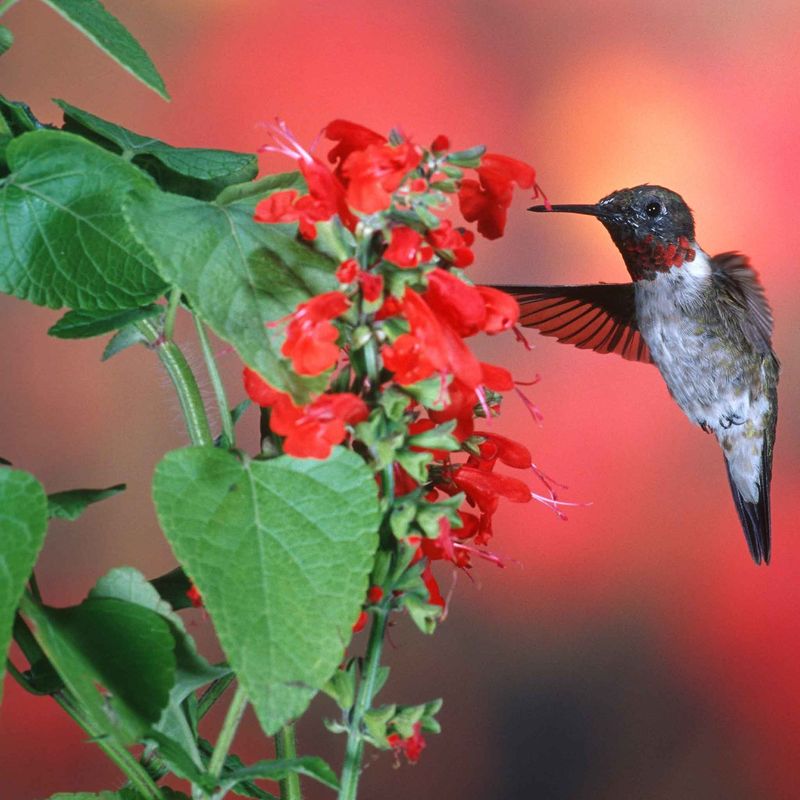
Those narrow red tubes are not accidental.
The flower shape of tropical sage is built for pollinators that can reach deep into a slim opening, and the visitor list reflects that design.
The Florida Museum documents butterflies, hummingbirds, and other pollinators as regular visitors, while the Florida Native Plant Society adds bumblebees, other bees, warblers, and nuthatches to the list of associated wildlife.
In a typical Florida backyard, a blooming tropical sage in late summer can draw zebra longwings, gulf fritillaries, and sulfurs working the flower spikes alongside native bees and the occasional ruby-throated hummingbird passing through.
A Florida horticultural study that evaluated native and nonnative ornamental plants for insect visitation included scarlet sage among the plants assessed, adding documented support for its pollinator value beyond anecdotal observation.
Here is where the boundary matters.
The Florida Museum lists no known host-plant role for Salvia coccinea.
That means adult butterflies will stop and feed on the nectar, but no butterfly species lays its eggs on the leaves or stems here.
Monarch caterpillars need native milkweeds.
Gulf fritillary caterpillars need passion vine.
Tropical sage does not replace either of those, and no source supports a claim that it attracts every pollinator or outperforms every other Florida plant.
What it does offer is a reliable nectar stop during a season when many other plants have already quit.
For adult pollinators flying through a hot Florida yard in August, that is actually worth quite a lot.
Give New Plants Water Before They Go It Alone
The first two weeks after planting are the most important stretch for tropical sage.
UF/IFAS recommends saturating the root ball and the surrounding inch of soil during that initial period to help roots reach out into the surrounding ground.
Skip this step and the plant can sit in stress even when it looks fine above the soil line.
Sandy soil, which covers a large portion of Florida’s residential landscapes, drains fast enough that a light daily sprinkle mostly evaporates before it reaches the root zone.
Deep soaking several times per week works better in those conditions, but the right frequency depends on your drainage, the weather, and how much rain actually fell.
Florida-Friendly Landscaping guidance advises adjusting irrigation to soil type, rainfall, and plant condition rather than following a fixed schedule, which is practical advice for a state where one week brings a drought and the next brings a tropical downpour.
UF/IFAS Gulf County Extension notes that deep, less frequent watering generally encourages deeper root development compared to shallow daily watering, which keeps roots near the surface where they dry out fastest.
Once the plant is established, it can handle dry periods on its own most of the time.
Space plants 24 to 36 inches apart to give each one room to fill out without crowding its neighbors.
Pruning after flowering or when foliage starts to look tired can restore a cleaner shape and may encourage new flower spikes.
Rain can knock a spike over, but replacement growth usually follows within a few weeks.
Cutting back is optional for plant health, not a survival requirement.
Choose Sun, Drainage, And The Right Coast
Location makes or breaks tropical sage more than almost any other factor.
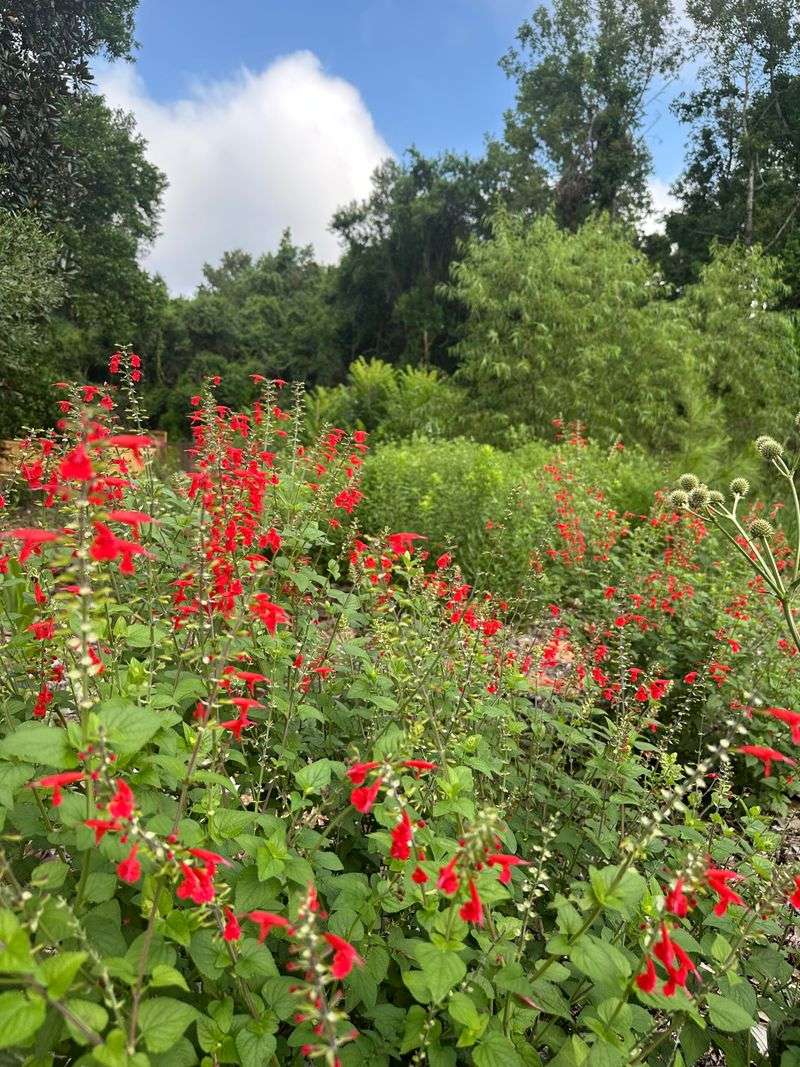
Full sun, meaning at least 6 hours of direct exposure daily, produces the strongest and most consistent flower spikes.
UF/IFAS notes that flowering declines in partial shade, so a spot that gets morning shade and afternoon sun may still work, but you will notice fewer blooms compared to a fully open bed.
Soil flexibility is one of the plant’s genuine strengths.
The Florida Museum confirms that tropical sage adapts to a range of soil conditions, and UF/IFAS backs that up with documented tolerance of acidic soil, alkaline soil, sand, loam, and clay.
A soil pH anywhere from about 5.5 to 7.5 covers most of what Florida gardeners encounter.
The plant can also handle occasionally wet soil, but that phrase does not mean a low pocket that stays flooded for days.
Permanently saturated ground is a poor choice regardless of the plant’s flexibility.
For containers, use a well-draining potting mix and make sure the pot has drainage holes at the bottom.
A container without drainage turns into a soggy trap after Florida’s afternoon downpours, and root rot can follow quickly.
Coastal homeowners should read the fine print.
The Florida Native Plant Society rates Salvia coccinea as moderately tolerant of salt spray, which means it can handle some salty wind off the Gulf or Atlantic.
That is very different from saltwater flooding.
Storm surge, brackish inundation, or prolonged exposure to salty standing water can damage or kill the plant.
If your yard sits in a flood zone or low coastal area that takes on water during tropical storms, this is not the right front-line plant for that specific spot.
Expect Different Results Across Florida
Florida is not one climate, and tropical sage behaves differently depending on where you live.
In the warmer parts of the state, including much of South Florida and the Gulf Coast south of Tampa, the plant may flower across a long season and potentially persist through mild winters with little interruption.
Performance still depends on local rainfall, drainage, sun exposure, and temperature swings, not just broad regional warmth.
North Florida and the Panhandle are a different story.
The Florida Native Plant Society describes Salvia coccinea as annual to short-lived perennial and notes that it tends to die back in northern areas after cold weather.
The University of North Florida Botanical Garden reports that winter lows around the mid-20s Fahrenheit can kill plants in the Jacksonville area, though seedlings may return in spring from seeds that overwintered in the soil.
That is a meaningful distinction: the plant may be gone above ground but not permanently out of your garden.
Central Florida gardeners sit in the middle.
A mild winter may leave plants intact enough to regrow from the base, while an unusually hard freeze can knock them back the same way it would in the north.
UF/IFAS confirms that freeze damage is a real factor in determining seasonal performance across regions.
Coastal saltwater exposure is a separate concern that applies regardless of how far north or south you live.
Any garden near tidal areas or low-lying coastal zones faces storm surge risk from June through November hurricane season, and that risk applies to tropical sage just as it does to any other landscape plant.
Native status does not equal storm-proof.
Manage Reseeding Without Turning It Into A Chore
Tropical sage has one habit that surprises a lot of first-time growers.
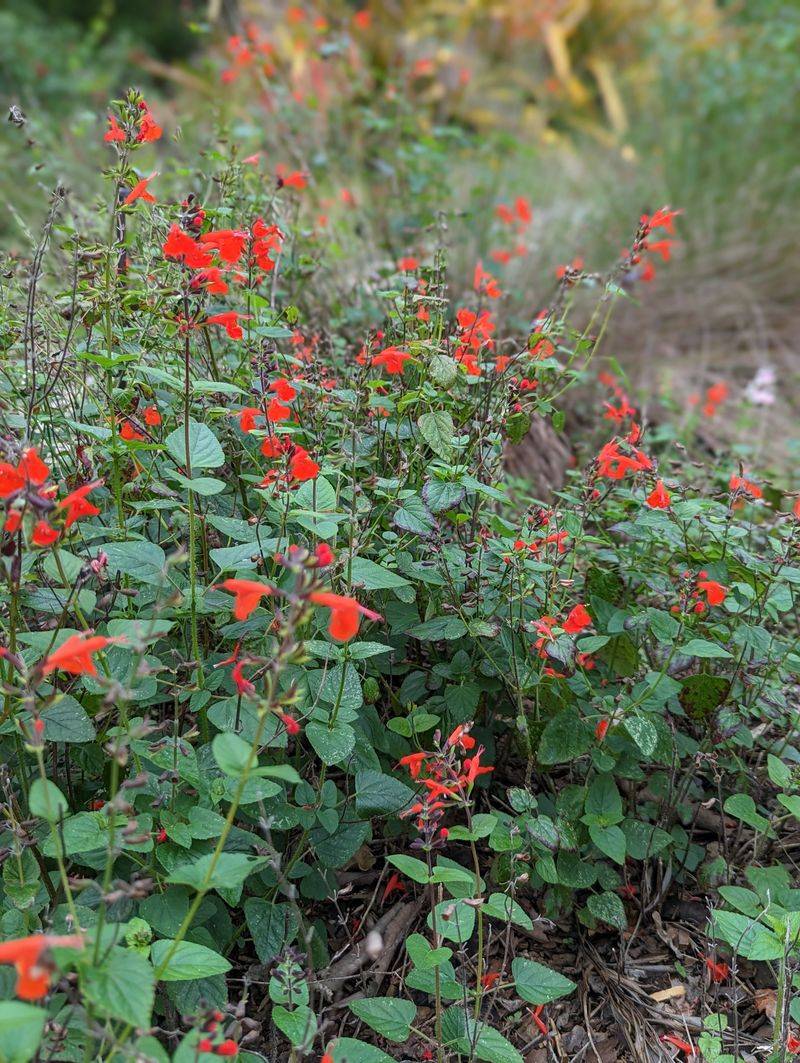
It reseeds, and it does so with enthusiasm.
The Florida Native Plant Society describes it as fairly aggressive in this regard, while the Florida Museum notes it may become somewhat weedy in favorable beds.
UF/IFAS adds that the plant often reproduces into nearby landscape areas beyond where you originally planted it.
That is not a reason to avoid it.
It is a reason to place it thoughtfully.
A bed where volunteer seedlings are welcome, such as a naturalized corner, a pollinator patch, or a mixed native planting, is a great fit.
A tidy formal border or a bed right next to a lawn edge or paved path needs more attention, because seedlings will pop up in the wrong places if you let them go too long.
Pull or transplant extras before they get established, and the reseeding becomes manageable.
UF/IFAS recommends cutting the plant back after flowering and when foliage begins to decline if you want a neater appearance.
Rain can knock flower spikes sideways, but new spikes generally follow within a few weeks, so the plant self-repairs to a reasonable degree.
The Florida Museum notes that no serious pests or diseases are typically seen on tropical sage, and UF/IFAS backs that observation.
That said, overwatering, poor drainage, crowded foliage, or nearby infected plants can still create conditions for fungal leaf spots or general stress.
Low pest pressure is a real advantage, but it is not the same as being immune to every Florida garden problem.
Build A Bigger Pollinator Benefit Around It
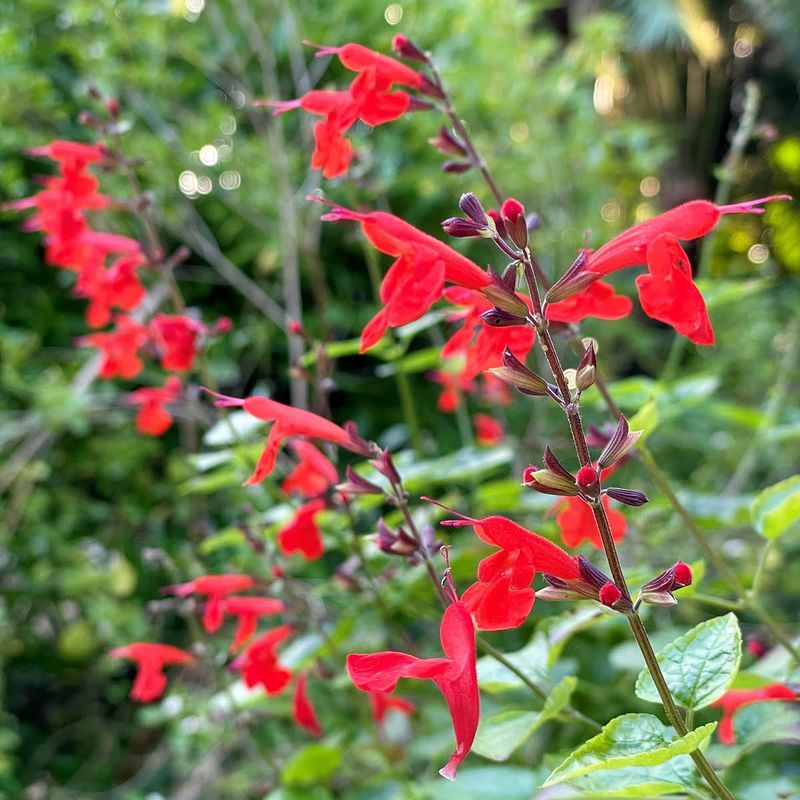
One well-placed tropical sage can pull real pollinator traffic through a hot Florida summer, but a single plant is not a complete habitat.
The Florida Museum recommends a diversity of flowering plants and habitat features rather than relying on any single species to carry the load.
Tropical sage covers the nectar side of the equation during summer, but it does not provide everything pollinators need across the year.
Pair it with host plants that caterpillars actually eat.
Native milkweeds support monarch caterpillars.
Passion vine feeds gulf fritillary caterpillars.
Plants with different bloom seasons, such as firebush in fall or blanket flower earlier in summer, keep nectar available when tropical sage is between flushes or recovering from a trim.
Shelter features like brush piles, leaf litter, and nearby trees round out the habitat side that flowers alone cannot provide.
Pesticide choices matter as much as plant selection.
UF/IFAS advises applying any treatment when pollinators are not actively foraging, following the product label carefully, and testing even natural or organic products on a small area first because they can injure foliage or harm pollinators.
UF/IFAS guidance on attracting native bees reinforces that reducing broad-spectrum insecticide use around blooming plants is one of the most direct ways to protect the visitors you are trying to attract.
A single Salvia coccinea in a sunny, well-drained spot can deliver summer color and a steady nectar supply with modest effort from you.
Build a few more layers around it, and your yard becomes a place pollinators actually come back to, not just pass through.