
The Florida Porch Plant Linked To Laboratory Cockroach Repellency (And What Actually Seals The Back Door)
Follow us on Google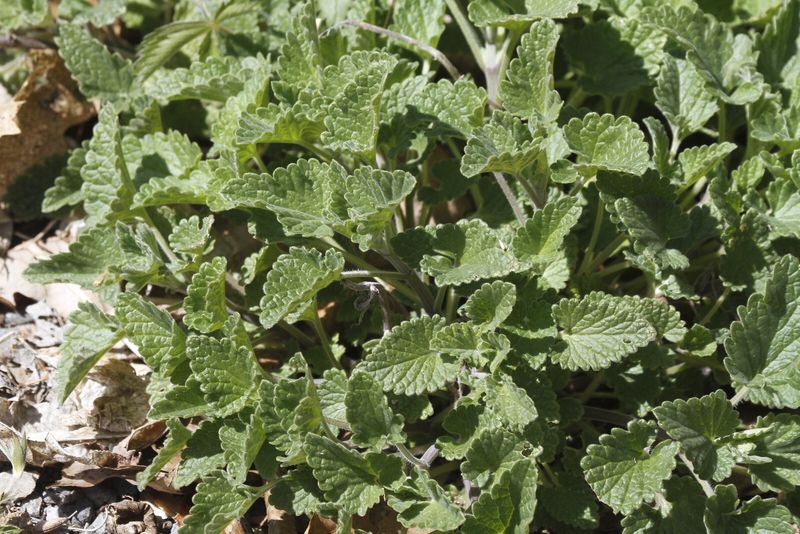
You step onto the back porch after dinner and the air already feels thick, warm, and alive with things you would rather not think about.
Then something skitters along the baseboard near the door, and suddenly the evening changes.
Florida homeowners have been sharing a tip online about a single porch plant that supposedly keeps roaches from ever reaching the back door, and the plant is real, the chemistry is genuinely interesting, but the full story is a lot more useful than the headline version.
The Plant Behind the Claim Is Catnip
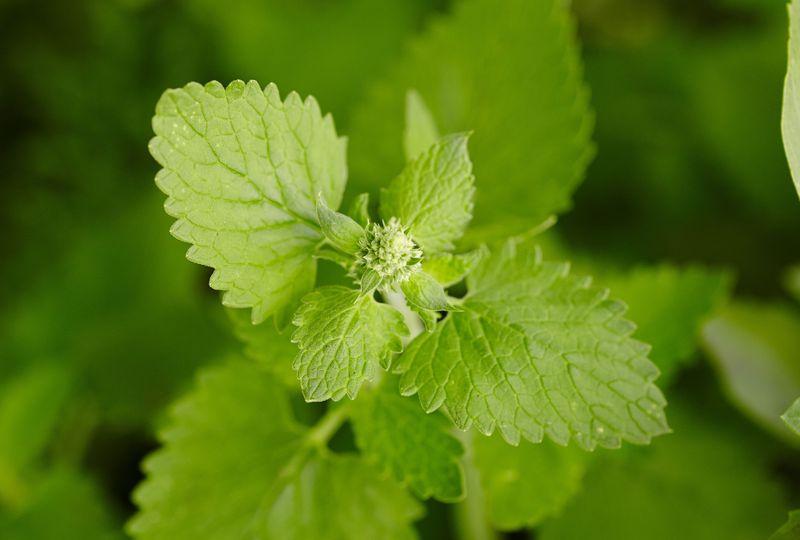
Catnip, known botanically as Nepeta cataria, is the plant behind the claim.
Researchers found something real inside its leaves, a set of chemical compounds that cockroaches respond to in a controlled setting, and that finding is what sent the story racing around Florida neighborhood groups and gardening forums.
But the headline version skips the part where the science stops and the wishful thinking begins.
Buying the right plant matters more than most people realize.
Missouri Botanical Garden’s plant profile for Nepeta cataria distinguishes true catnip from the ornamental catmints sold at most garden centers, including Nepeta x faassenii and Nepeta racemosa.
Those relatives look similar and carry the catmint name, but their compound profiles may differ, and no cockroach study has confirmed the same effect from them.
Ask for Nepeta cataria by name at the nursery, and check the tag before you leave.
What catnip actually earns is a spot as a supplemental porch experiment, not a guaranteed barrier.
No study has placed a living catnip plant beside a Florida back door and measured whether roaches stopped approaching.
The plant has interesting chemistry, and that chemistry has been tested against cockroaches under controlled conditions.
That is the honest promise this article delivers on, and the sections ahead will explain what the study actually showed, which roaches it involved, how to grow the plant without creating new problems, and what UF/IFAS Extension recommends for the back door itself.
The Evidence Shows Repellency, Not Doorway Protection
Iowa State University researchers published a study in 2002 testing how German cockroaches, Blattella germanica, responded to catnip essential oil and its purified compounds in a laboratory choice-test arena.
The cockroaches were given a treated side and an untreated side, and they consistently moved away from the catnip-treated areas.
That published study on catnip essential oil and German cockroach behavior found that the compound E,Z-nepetalactone was the strongest performer, and in that specific controlled assay, it outperformed equivalent doses of DEET.
Here is where it gets tricky.
The comparison with DEET was between one purified nepetalactone isomer and equivalent doses of DEET, tested against German cockroaches in a laboratory arena.
That is not a whole-plant comparison, not a yard comparison, and not a Florida porch comparison.
Saying catnip is generally better than DEET for roaches goes further than the study ever did.
The researchers measured behavioral repellency, meaning the cockroaches avoided the treated area.
They did not measure whether the roaches died, whether breeding slowed, whether a back door became harder to enter, or whether the effect held up over hours, days, or weeks.
Essential oil in a controlled dish and volatile compounds drifting off a living plant in 88-degree Florida heat with afternoon thunderstorms rolling through are entirely different conditions.
A live plant’s repellent output depends on how many compounds its leaves release, how much leaf damage occurs, wind direction, temperature, rain, plant age, and whether roaches even travel close enough to detect the scent.
None of those outdoor porch conditions were part of the cockroach study.
The science supports interest in catnip chemistry, and it stops there.
Florida’s Outdoor Roaches Raise A Different Question
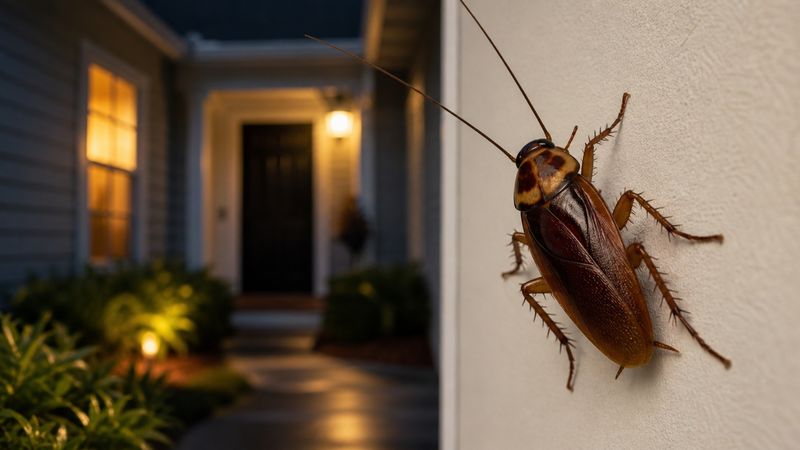
Most Floridians call the big ones palmetto bugs and leave it at that, but that nickname covers several different species and the distinction actually matters here.
The Iowa State study used adult male German cockroaches, Blattella germanica, which are smaller, typically indoor roaches that live in kitchens and bathrooms.
The roaches most Florida homeowners find near the back door on a warm night are usually something else entirely.
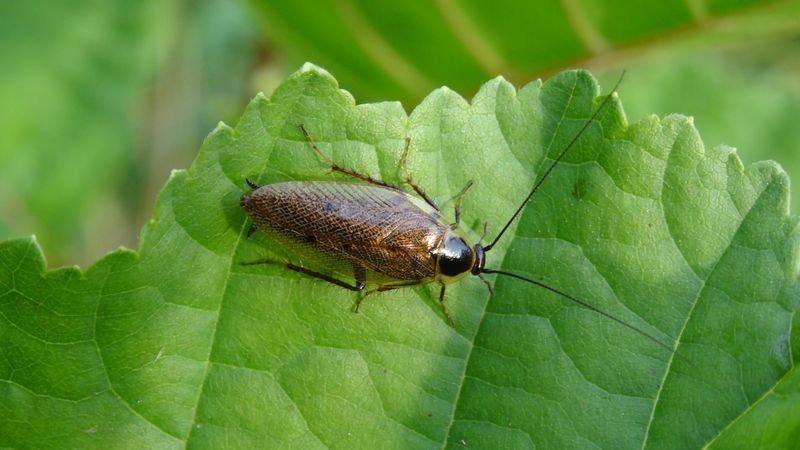
UF/IFAS Extension’s guide to cockroach management identifies American cockroaches, Australian cockroaches, brown cockroaches, smokybrown cockroaches, and Florida woods cockroaches as the larger outdoor species common around Florida homes.
These are the ones that live under mulch, inside hollow trees, beneath leaf litter, and around the foundation, then wander inside when conditions push them toward the door.
UF/IFAS notes that these outdoor species may enter buildings from outside but often do not survive well indoors for long.
None of those larger outdoor species were part of the catnip study.
Applying the German cockroach result directly to an American cockroach the size of a thumb, or to a smokybrown roach flying in off a Gulf Coast oak tree, is a leap the research does not support.
The chemistry might matter to those species too, but that has not been tested, and assuming it works the same way could give a homeowner false confidence while the actual entry points stay wide open.
Species identification changes the management approach.
A German cockroach problem calls for indoor bait and sanitation.
A yard full of American cockroaches calls for exclusion, harborage reduction, and outdoor bait stations.
Catnip fits neither scenario as a primary tool, but the larger outdoor species are the ones most likely standing between your porch light and your back door on a July evening.
Grow Catnip In A Contained, Well-Drained Pot
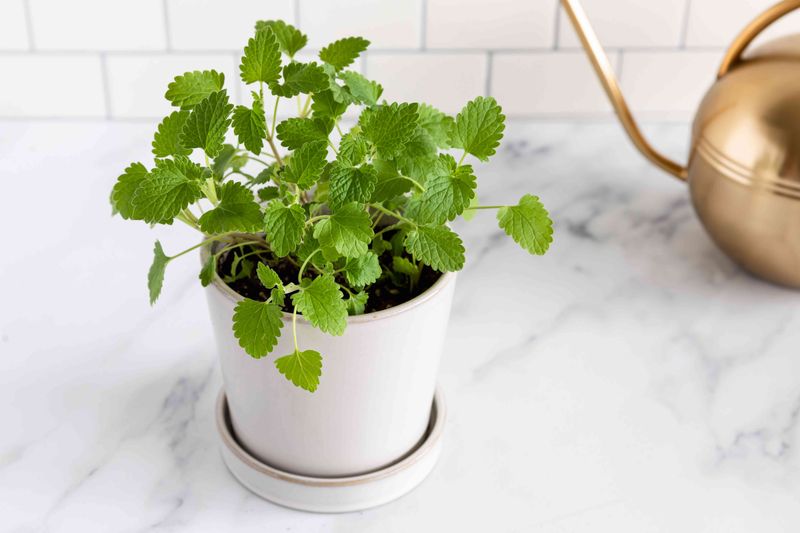
Catnip grows as a perennial reaching roughly 2 to 4 feet tall and wide at maturity, so the pot needs to be substantial enough to support that spread without tipping.
UF/IFAS Extension’s October 2024 Garden Bench newsletter describes catnip as a plant that can be grown in Florida but identifies it as nonnative and potentially aggressive, recommending that gardeners keep it in a container or leave part of the nursery pot above the soil line to limit spread.
A container is the right call for a Florida porch, full stop.
North Carolina Extension’s plant profile for Nepeta cataria and Missouri Botanical Garden’s entry both flag catnip as somewhat intolerant of intense heat and humidity, and both emphasize good drainage as non-negotiable.
Persistently wet soil will kill the roots faster than any Florida summer heat.
Use a coarse, well-draining potting mix, choose a pot with at least one large drainage hole, and never let the container sit in a saucer full of standing water.
Sun exposure matters, but full Florida midday sun from June through August can stress the plant.
Positioning the pot where it receives morning sun and some afternoon shade, particularly in Central and South Florida, gives catnip a better chance of staying productive rather than burning back to the soil.
Trim the plant after flowering to encourage fresh growth and remove seed heads if you notice seedlings appearing in nearby beds, since self-seeding can become a management issue in Florida’s warm soil.
Adapt watering to your specific site, letting the top inch of soil dry out between waterings rather than following a fixed schedule.
Place The Pot Without Adding Harborage

Where you set the pot can work against you if you are not careful.
A dense, leafy plant pressed tight against the foundation creates exactly the kind of damp, sheltered hiding space that cockroaches look for at night.
The goal is to place the catnip where its chemistry might do some good without accidentally building a roach hotel in the process.
UF/IFAS Extension’s guide on landscaping to prevent pests from entering your home recommends keeping landscape plants at least 2 feet from the house at maturity, because vegetation close to the structure provides harborage for insects and other nuisance wildlife.
Proper spacing also improves airflow, which helps keep the area around the foundation drier.
A catnip plant that sprawls against the siding at 3 feet wide is defeating its own purpose.
UF/IFAS Extension’s cockroach management publication recommends keeping mulch to a thin layer extending only about 1 foot from the foundation, because thicker or wider mulch beds hold moisture and provide roach harborage.
That same logic applies to the catnip pot’s immediate surroundings.
Do not nestle it into a deep mulch bed or push it into a corner where water pools after a Florida afternoon storm.
Keep the container elevated slightly on pot feet if your porch surface stays damp, and make sure it does not block the threshold or cover existing cracks where roaches could enter undetected.
The UF/IFAS Garden Bench guidance on containing catnip in a pot is a harborage-management precaution as much as a spread-control one.
These placement steps are prudent roach-management habits that happen to work well alongside any porch plant, not proven catnip-specific effects.
Keep Cats From Overeating The Plant
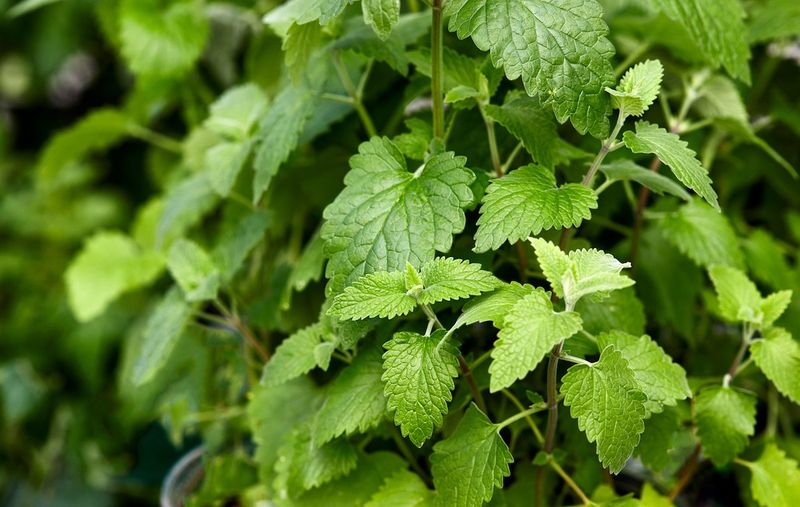
A catnip plant on the back porch will attract neighborhood cats, and if you have one of your own, you already know what happens next.
The ASPCA lists catnip as non-toxic to cats, which is the reassuring headline, but eating a significant amount can still cause vomiting or diarrhea in some animals.
A cat that rolls in the plant once and wanders off is probably fine.
A cat that treats the pot as a daily salad bar is a different situation.
Prevent excessive consumption by moving the pot out of easy reach when you are not watching, or by placing it in a spot the cat cannot access without effort.
If your cat develops gastrointestinal symptoms after contact with the plant, contact your veterinarian.
The plant itself is the issue here, not a cause for panic, but symptoms worth taking seriously.
Homemade catnip essential-oil sprays are a separate matter entirely.
Concentrated plant oils create different exposure questions than a living plant, and spraying an improvised mixture around a door, near a pet, on a food-prep surface, or on children’s play areas introduces risks that a potted plant does not.
EPA conditions for minimum-risk pesticides make clear that unregistered plant-oil products have not been evaluated for effectiveness or safety, and product claims cannot promise broad control such as repelling all insects.
Stick with the living plant as a contained experiment, and skip the DIY spray.
Make The Back Door Harder To Enter
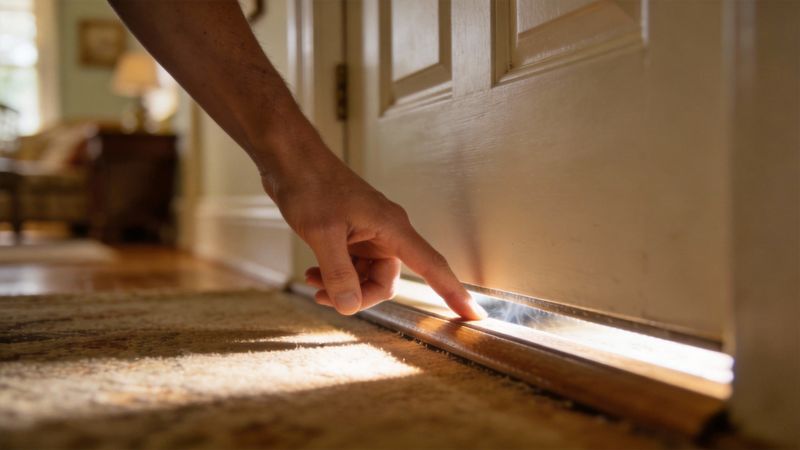
Adult cockroaches can squeeze through a crack about 1/16 inch wide, and they prefer to rest in spaces around 3/8 inch across.
That means the gap under a worn door sweep, the space around a utility pipe, and the crack between the door frame and the siding are all open invitations on a warm Florida night.
No plant addresses those entry points, but a few hardware-store fixes do.
Start at the door itself.
Replace any door sweep that lets light show underneath, seal gaps around the frame with appropriate caulk, and check that weatherstripping makes full contact on all sides.
Then work outward.
Remove standing water from porch surfaces, saucers, and gutters within about 10 feet of the door.
Secure pet food in sealed containers and bring bowls inside after feeding.
Clean food debris from the porch floor, grill grates, and trash can lids regularly.
Move firewood stacks at least 20 feet from the structure, because stacked wood is prime cockroach harborage.
Keep shrubs trimmed so they do not touch the house, and maintain that 2-foot gap between mature plants and the siding.
UF/IFAS Extension’s cockroach management guide recommends bait stations placed near suspected hiding or entry points around the foundation, and gel bait applied inside cracks and crevices around doors and windows.
Bait works by attracting roaches, so do not spray liquid insecticide anywhere near a bait station, because the spray will repel roaches away from the bait and cancel out both treatments.
These steps address the actual biology of how Florida’s outdoor cockroach species reach a back door.
They are not glamorous, but they work in a way that a fragrant pot of herbs simply cannot replicate on its own.
Use Catnip As A Trial, Not A Cure
Keeping a catnip pot on the porch is a reasonable experiment if the plant grows well, stays manageable in its container, and does not create a cat-traffic or maintenance problem.
Evaluate it honestly after a season.
If it thrives and you enjoy having it there, that is a fine reason to keep it.
But measure its value as one small, unproven supplemental layer, not as the thing standing between your kitchen and a roach problem.
The evidence-supported approach combines exclusion, sanitation, moisture control, harborage reduction, and properly placed labeled products.
UF/IFAS Extension states that this complete integrated pest management approach can achieve an 80% or better reduction in outdoor cockroach abundance when all the components work together.
That figure belongs to the whole system, not to any single plant or product.
Two shortcuts worth skipping: boric acid dust spread across open porch floors, soil, or mulch beds, because UF/IFAS notes it is highly toxic to plants, and bug bombs, because UC IPM’s cockroach management guidance explains that foggers can be hazardous and may scatter roaches without actually eliminating them.
The Iowa State catnip study is genuinely interesting science, and it is worth knowing about.
It just does not promise that a pot of Nepeta cataria will stop every Florida roach from reaching the door.
Seal the gaps, pull the mulch back, set the bait stations, and let the catnip be what it actually is: a curious plant with a story worth telling, not the last line of defense.