
Pennsylvania Gardeners Are Trading Lawn Patches For Clover That Almost Mows Itself
Follow us on Google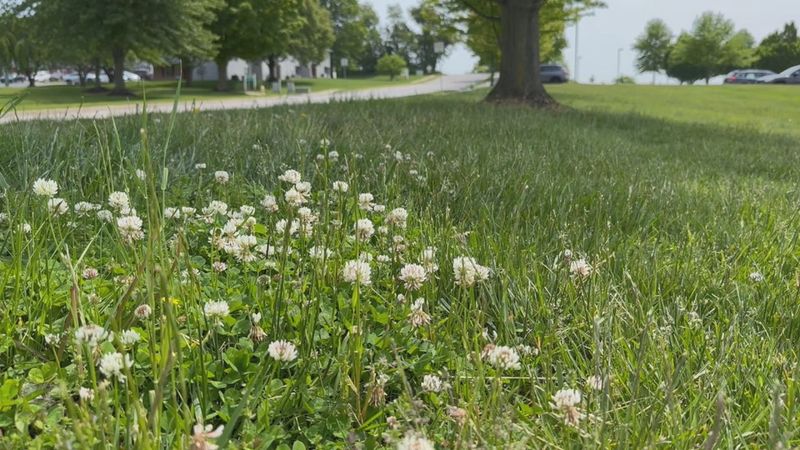
You step into the backyard on a May morning and notice a patch of grass so thin you can see bare soil between the blades.
Fertilizing it every year feels like pouring money into a sieve, and the mower still has to come out every week.
White clover, Trifolium repens, is the plant a growing number of Pennsylvania homeowners are quietly testing in exactly those tired spots, and the results can genuinely surprise you.
It will not run the yard for you, but it can take a real load off your routine.
What White Clover Can—and Cannot—Do
No survey or extension report shows Pennsylvania gardeners broadly converting their lawns to clover.
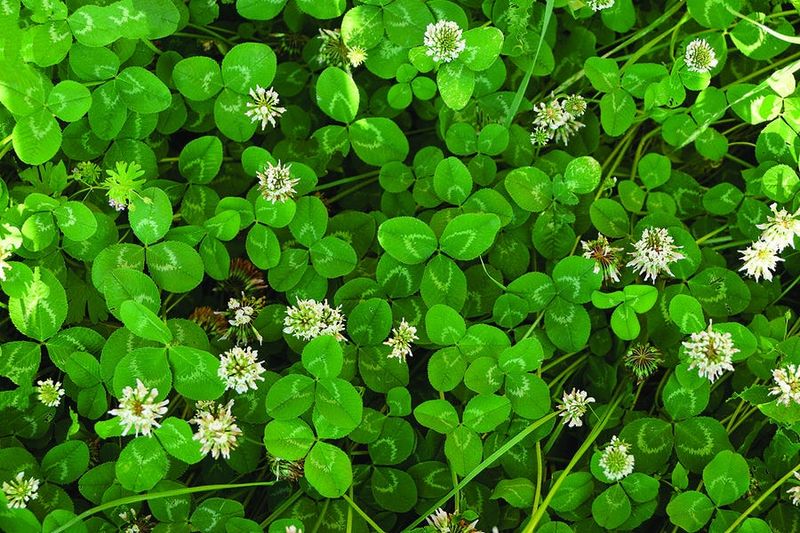
What the evidence actually supports is quieter and more useful: white clover, Trifolium repens, can work well when mixed into an existing grass lawn or planted as part of a bee lawn, reducing some of what that lawn demands from you after it gets established.
That is the honest version of the headline’s promise.
White clover is a short-lived perennial that spreads through creeping stems, called stolons, that root at nodes as they travel across the soil.
Penn State Extension describes it as growing best in cool, moist conditions, which fits a lot of Pennsylvania springs and falls nicely.
It stays low, tolerates close cutting, and fills in thin turf without the aggressive vertical push of tall fescue or ryegrass.
The approach with the clearest support in the research is a clover and turfgrass mixture, not a pure clover lawn.
University of Minnesota Extension says established bee lawns containing Dutch white clover can require similar or less maintenance than a traditional lawn.
University of Maryland Extension says the research does not currently support microclover as an exclusive lawn alternative in the Mid-Atlantic, and that finding is worth keeping in mind even though ordinary white clover and microclover are not identical plants.
Microclover refers to smaller cultivars such as Pirouette and Pipolina.
They have tinier leaves and fewer flowers, but they share the same general weaknesses around heat, drought, and shade.
If you are reading about clover lawns online and the photos show a very fine-leafed, almost seamless green carpet, that is likely microclover, not the standard white clover sold in most Pennsylvania garden centers.
The practical starting point is a small overseeding trial in a thin, sunny patch rather than stripping the whole yard and hoping for the best.
Think of it as a test run, not a renovation.
Why A Mixed Lawn May Need Less Input
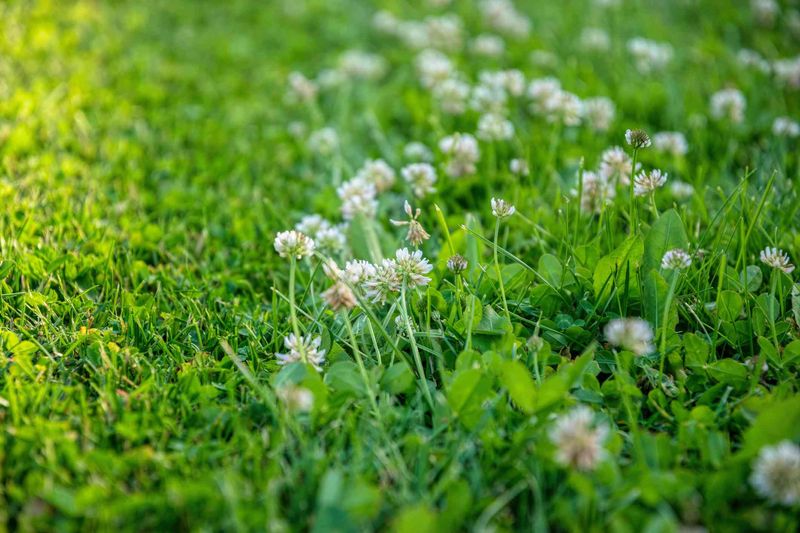
Clover pulls off something most lawn plants cannot.
It partners with soil bacteria called Rhizobium to pull nitrogen directly from the air and convert it into a form that nearby grass roots can use.
That biological handoff is why a clover and grass mixture can genuinely reduce how much nitrogen fertilizer you need to apply, though it does not mean you never feed the lawn again.
Penn State Extension notes that clover stands still benefit from soil-test-based fertilization, and companion grass may need nutrients that clover alone does not supply.
Think of the nitrogen fixation as one less bag of fertilizer to haul home each spring, not a permanent cancellation of lawn care.
The mowing side of the equation is similarly encouraging without being miraculous.
White clover grows low and spreads horizontally, so it does not race upward the way tall grass does between cuts.
Minnesota Extension recommends mowing bee lawns at 3 inches or higher and delaying the mower during peak bloom so pollinators can forage.
That kind of flexible schedule, a few extra days between cuts, is what the phrase “almost mows itself” really means in practice.
Water needs are a different story.
Clover is not drought-proof, and peer-reviewed research identifies white clover as sensitive to water deficit.
No cited evidence shows that clover uses less irrigation than Pennsylvania turfgrass overall, and actual water needs shift with soil type, slope, shade, and whatever the summer decides to throw at you.
A drier-than-normal August in the Susquehanna Valley can stress a clover patch just as it stresses a grass lawn.
So the honest pitch is this: a mixed clover lawn may reduce fertilizer runs and loosen your mowing schedule once it settles in, but it is still a living plant that needs attention, especially in its first season.
Choose A Site Before You Buy Seed
Before you open a seed packet, walk the yard and be honest about what you are working with.
White clover performs best in sunny spots with decent drainage and cool, moist soil conditions.
A shaded corner under a Norway spruce, a compacted path where the dog runs the fence line every morning, or a low spot that puddles after every thunderstorm will not give clover a fair start.
Overseeding thin, sunny existing turf is the approach that makes the most sense for most Pennsylvania homeowners.
You are not asking clover to colonize bare clay from scratch.
You are giving it a foothold in a spot where grass is already struggling, which is exactly the kind of low-competition environment where it can spread and fill in.
Soil testing is the step most people skip and then regret.
Penn State Extension recommends collecting samples from 8 to 10 random locations across the lawn, pulling each core about 4 inches deep.
That sample goes to a lab and comes back telling you pH, phosphorus, potassium, and what the lawn actually needs rather than what the bag at the hardware store assumes it needs.
White clover prefers a soil pH between 6 and 7, according to Penn State, though Minnesota Extension notes it can tolerate pH down to about 5.5.
Pennsylvania soils vary considerably.
Rocky, acidic soils are common across the northern tier and Allegheny Plateau.
Clay-heavy ground shows up in parts of southeastern Pennsylvania and across many central and western counties.
Limestone-valley soils tend to be more naturally fertile.
No single amendment fixes all of those situations, which is exactly why a test matters before you spend anything on seed or lime.
Correct pH and nutrient problems first, then seed.
Planting into poorly prepared ground wastes seed and sets you up for a patchy, frustrating result.
Seed Shallowly In A Suitable Window
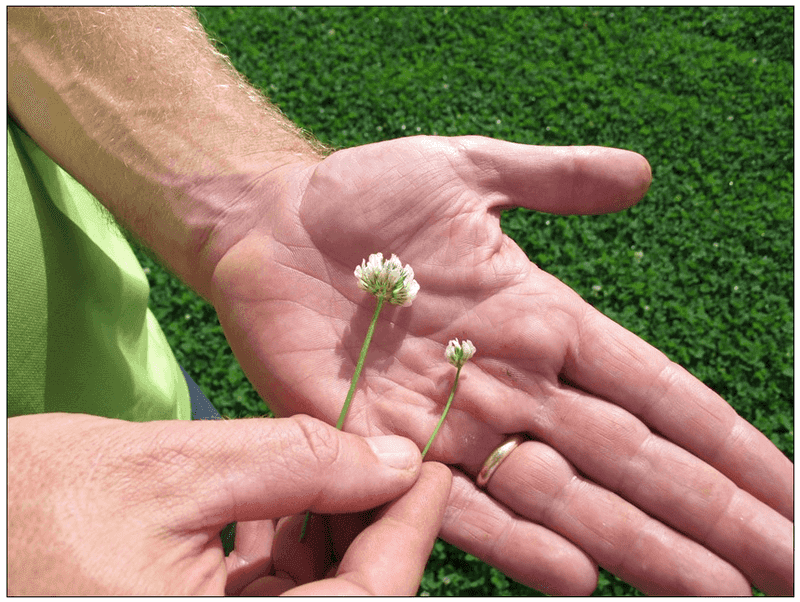
Timing a clover seeding in Pennsylvania is not complicated, but it does require paying attention to what the calendar and the weather are actually doing.
Penn State Extension identifies mid-to-late spring and late summer to early fall as the best general windows for Pennsylvania lawn seeding.
Both windows give germinating seed a stretch of moderate temperatures and, ideally, reliable soil moisture.
Summer seeding between those two windows is possible but risky.
Heat, drought, and disease pressure all climb in July and August, and a seedbed that dries out between Pennsylvania’s sudden thunderstorms can kill germinating clover before it anchors itself.
If you miss the spring window, waiting for late August or early September is usually the smarter move, especially in the Poconos or at higher Laurel Highlands elevations where summer nights cool down faster.
Seed preparation matters as much as timing.
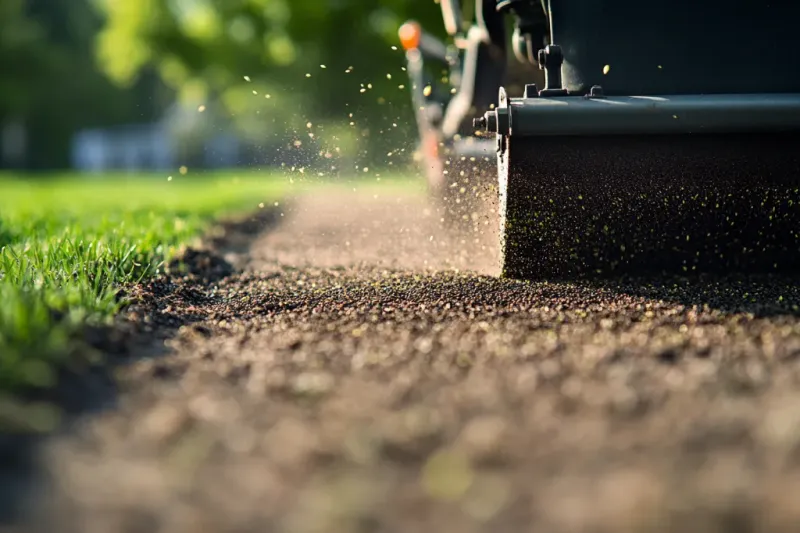
Firm up the seedbed, rake out any thatch or debris, and sow white clover no deeper than 1/4 inch.
Penn State notes that firm seed-to-soil contact improves establishment, so a light roller pass or foot-pressing after broadcast seeding is worth the extra ten minutes.
Seeding rates depend on what you are planting and why.
Penn State’s forage overseeding guidance gives 2 to 4 pounds per acre, which works out to roughly 0.7 to 1.5 ounces per 1,000 square feet.
Those numbers come from pasture and hay systems, not finished residential lawns, so a residential seed label should take priority when it differs.
University of Minnesota’s bee-lawn formula uses about 4 pounds of fine fescue plus 1.1 ounces of Dutch white clover per 1,000 square feet, which is a grass-heavy mixture with clover as a companion, not a clover-only seeding rate.
Keep those two figures separate when you are shopping for seed.
When in doubt, follow the label on whatever residential or lawn-mixture seed you buy.
It reflects the cultivar’s actual performance, not pasture research.
Establishment Comes Before The Easy Part
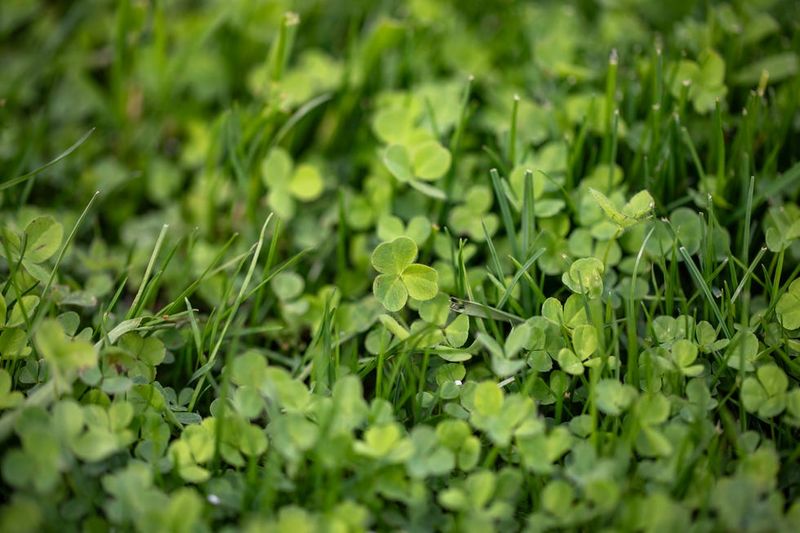
The first four to eight weeks after seeding are the stretch where most clover projects succeed or quietly fail.
Seedlings are shallow-rooted and completely dependent on whatever moisture the top inch of soil holds.
Let that layer dry out for a day or two and you can lose a week’s worth of germination progress.
Penn State Extension says new lawn establishment may require light, frequent irrigation to keep the seedbed consistently moist without becoming waterlogged.
That usually means two or three short watering sessions per day in dry weather, just enough to keep the surface damp, not enough to puddle or wash seed downhill.
Once seedlings reach about an inch tall and show a second leaf, you can shift to deeper, less frequent watering.
What comes after that active establishment stretch is where the lifestyle payoff starts to appear.
An established bee lawn can be mowed at 3 inches or higher, and Minnesota Extension recommends delaying mowing while flowers are in full bloom so visiting bees can finish foraging.
That might mean stretching a ten-day mowing interval to fourteen days during a heavy bloom period in June, which is a genuinely pleasant kind of lawn care problem to have.
Long-term watering needs stay site-dependent and weather-dependent.
A general landscape benchmark is about 1 inch of rain or irrigation per week, but a shaded slope in the Delaware Valley behaves differently than an exposed, south-facing strip in central Pennsylvania.
No formula replaces watching the soil and the plants themselves.
Treat the first season as an investment.
The lighter routine comes later, and it comes more reliably if establishment goes well.
Weather And Microclimate Still Matter
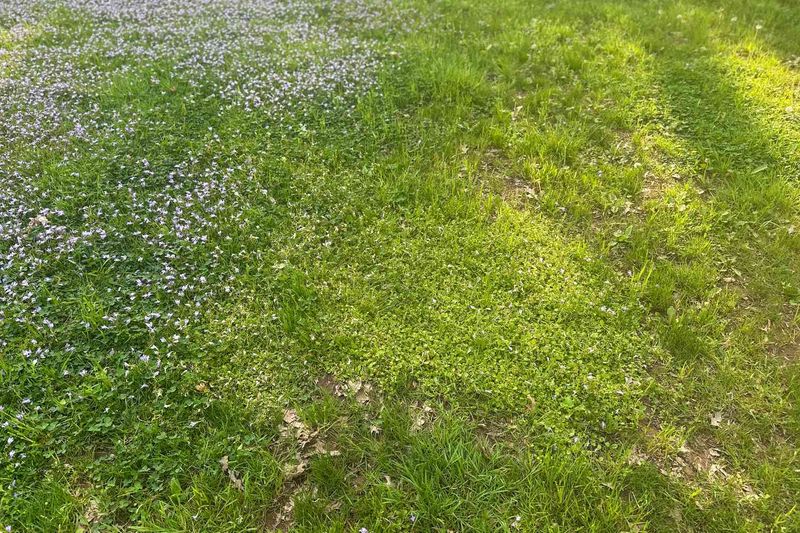
Pennsylvania’s weather does not read gardening articles.
A wet, mild spring can make a clover patch look lush and thick by Memorial Day, and then a dry stretch in July can thin it back to scattered rosettes by August.
That cycle is normal, and it is worth understanding before you commit a whole yard to clover.
White clover genuinely prefers cool, moist conditions, and peer-reviewed research identifies it as sensitive to water deficit during a drying cycle.
Shallow, compacted, or sandy soil makes drought stress arrive faster because there is less water held in reserve for roots to reach.
An exposed, south-facing slope in the central valleys will challenge clover more than a gently graded, loamy spot in a northern-tier yard that stays naturally moist into June.
Penn State Extension notes that unusual drought, heat, or cold can require delaying or adjusting ordinary lawn practices, and that caution applies to clover just as much as to turfgrass.
Pennsylvania spans USDA hardiness zones roughly 5b in colder northern and higher-elevation areas up to 8a in the warmest southeastern pockets, and growing season length, frost timing, and summer heat load vary considerably across that range.
Microclover and ordinary white clover are not interchangeable in this conversation.
University of Maryland Extension reports that microclover can die back during high heat and drought, leave bare patches over winter, struggle in shade, and require reseeding.
Ordinary white clover is more vigorous, but it shares some of those vulnerabilities in extreme conditions.
Penn State confirms it grows best in well-drained, fertile soil with a pH between 6 and 7, and performance drops outside those conditions.
A trial patch in a manageable corner of the yard tells you more about your specific microclimate than any general guideline can.
Watch it through one full summer before you decide to go bigger.
Flowers And Foot Traffic Define The Fit
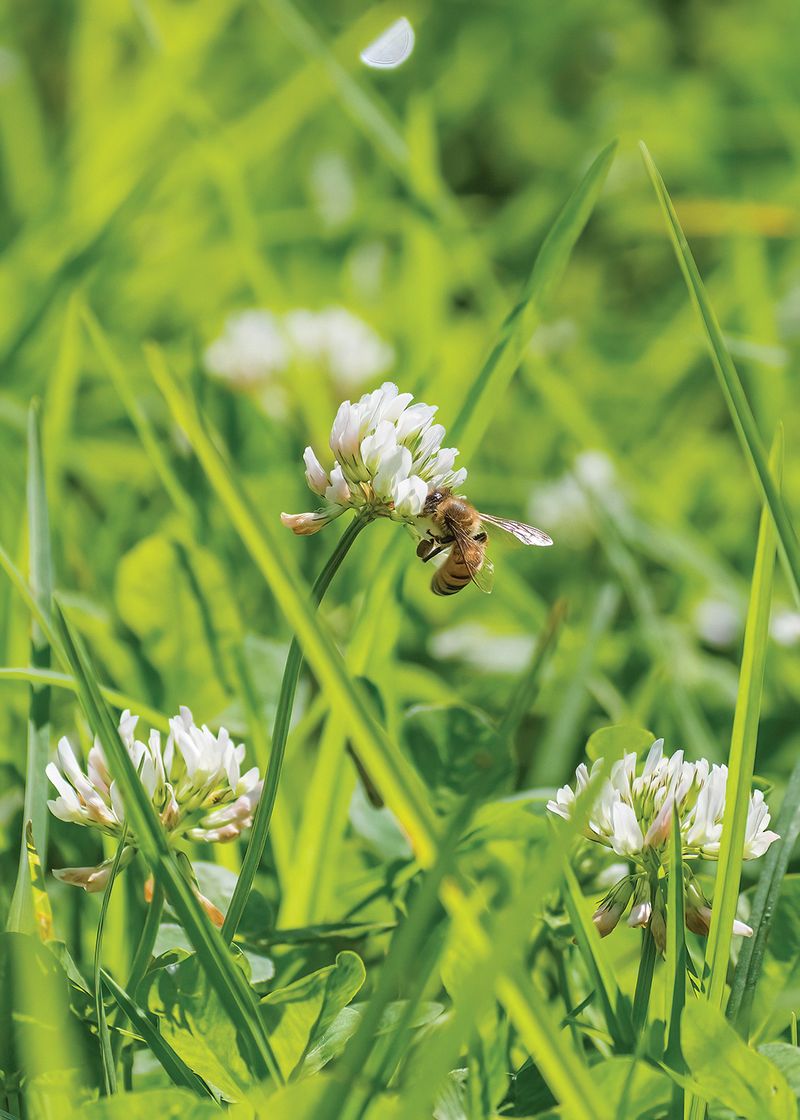
Here is where clover stops being a lawn question and becomes a yard question.
White clover flowers, and those flowers attract bees.
Minnesota Extension reports that researchers observed 56 bee species foraging on white clover in bee-lawn studies.
Most of those native bees are docile and focused entirely on collecting pollen and nectar, not on your ankles.
But if someone in the family has a serious bee-sting allergy, a bloom-heavy clover patch near the swing set or the back porch is a legitimate concern worth discussing before you seed.
Traffic tolerance is the other honest limitation.
Minnesota Extension notes that white clover has poor traffic tolerance, meaning it does not hold up well under frequent, concentrated foot pressure.
A yard that hosts Saturday afternoon games, a dog that runs the same loop fifty times a day, or a path between the garage and the back gate needs durable turfgrass in those specific spots.
Clover belongs in the lower-traffic zones, the side strip, the shady edge you converted to a pollinator garden, the thin patch under the oak that grass never loved anyway.
Dutch white clover, the variety most commonly sold for lawn use, was introduced from Europe, not native to Pennsylvania.
University of Maryland Extension acknowledges its value for bees while being clear that it does not substitute for Pennsylvania native plants.
If supporting local pollinators and wildlife is the goal, clover works as one useful piece of a broader yard, not the whole answer.
Native bee balm, black-eyed Susan, native asters, goldenrod, and milkweed do things for Pennsylvania’s native insects that an introduced European clover simply cannot replicate.
Map the yard before you seed.
Put clover where the traffic is light, the sun is good, and the flowers will not surprise anyone walking barefoot to the grill.
Manage Weeds And Ticks Separately
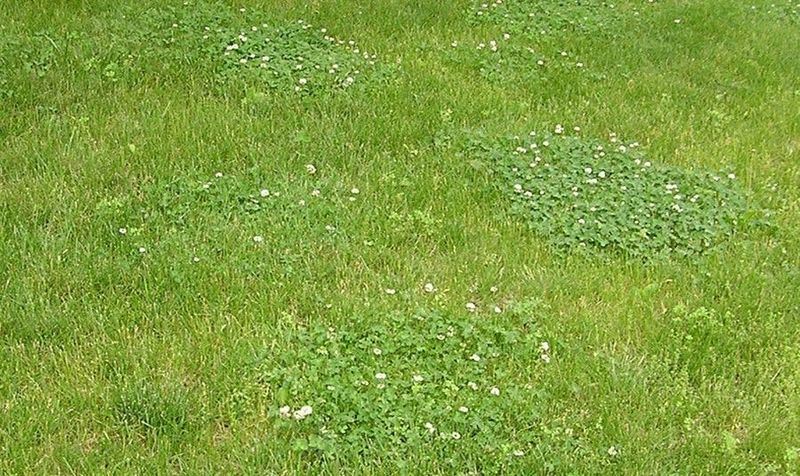
Clover can fill thin turf and crowd out some weeds by occupying the space they would otherwise take.
But calling it weedproof is too strong, and Penn State Extension actually lists white clover itself as a common lawn weed that spreads into sparse grass.
A dense, well-adapted turf stand is still the most reliable defense against weed invasion, and clover works best as a partner to that stand, not a replacement for it.
The herbicide situation requires care.
Many broadleaf weed killers that are routine in grass lawns will also kill clover.
If you want clover to stay, hand-pull isolated weeds rather than reaching for a sprayer.
University of Maryland Extension recommends avoiding routine herbicide use in clover areas, and EPA pollinator-protection guidance recommends measures such as avoiding applications during bloom, reducing drift, and following all label restrictions.
Read the label before you spray anything near a planting you want to keep.
Ticks are a separate issue entirely, and clover does not help with them.
CDC guidance on tick prevention focuses on frequent mowing, removing leaf litter, clearing tall grass and brush along lawn edges, and placing a 3-foot-wide wood-chip or gravel barrier between the lawn and any wooded area.
Tick exposure is most associated with shaded, brushy, moist edges, not open sunny lawn.
A clover patch in full sun is not a tick habitat, but it is also not a tick solution.
Keep those two things completely separate in your planning.
The practical plan comes down to this: test the soil, trial clover in a suitable sunny patch, water carefully through the first 4 to 8 weeks, mow at 3 inches, hand-pull weeds rather than spray, and accept that the lawn will look a little different in August than it did in May.
A yard that asks less of you every week is worth a little patience at the start, and that is genuinely what clover offers when you put it in the right place.