
Florida HOAs Keep Fighting This Native Lawn Plant That State Law Actually Protects
Follow us on Google
You step outside on a July morning, the air already thick before 8 a.m., and your St. Augustine grass looks like it lost a fight with the summer.
A lot of Florida homeowners are quietly replacing patches of thirsty turf with sunshine mimosa, a low-growing native ground cover that spreads pink powder-puff blooms across sunny yards.
The catch is that some HOAs push back hard, even though Florida law gives homeowners a real argument for water-conserving, Florida-friendly landscapes.
Before you pull a single plug of grass, here is what you need to know about the plant, the statute, and the paperwork trail that could save you from a fine.
Meet Sunshine Mimosa Before You Replace The Lawn
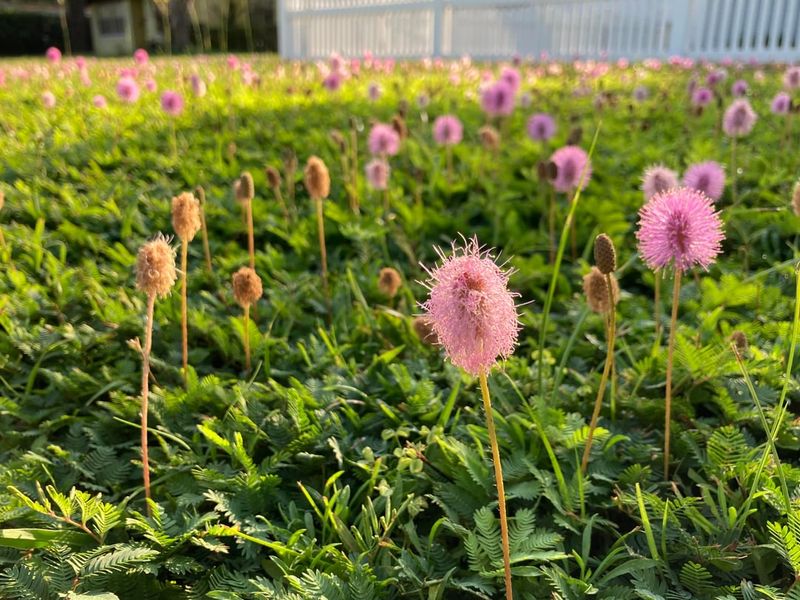
Sunshine mimosa goes by a few names around Florida neighborhoods: powderpuff, sensitive plant, and botanically, Mimosa strigillosa.
Touch a leaf and it folds shut, which is the trick that earns it the sensitive-plant nickname and the thing that makes every kid on the block want to visit your yard.
Underneath that novelty is a genuinely useful plant for Florida conditions.
UF/IFAS Gardening Solutions describes it as a Florida-native, low-growing ground cover that stays roughly 3 to 9 inches tall, spreads by creeping stems that root wherever they touch soil, and produces those distinctive pink flowers from spring through fall.
It suits full sun or partial shade, which covers a wide range of Florida front yards.
After it establishes, it handles drought reasonably well.
The plant can be mowed or pruned, and it tolerates light foot traffic, so a path across the yard will not kill it outright.
What it cannot handle is heavy, constant use.
The dog’s worn dirt track from the gate to the back door, the spot where the kids cut across every afternoon, the area right in front of the garage: those are not good candidates for sunshine mimosa.
The UF/IFAS Green Stormwater Infrastructure Plant Guide lists it as a turf alternative, and the Florida Native Plant Society confirms its native status.
That combination matters when you are building a legal case for a Florida-friendly landscape.
But native status alone does not make it a perfect grass substitute for every yard, and being honest about that upfront will save you headaches later.
The Law Covers Florida-Friendly Landscaping, Not One Plant
Florida Statute 720.3075 is the provision homeowners most often cite in HOA landscaping disputes.
In plain language, the statute says that an HOA’s governing documents may not prohibit, or be enforced to prohibit, Florida-friendly landscaping on a homeowner’s property.
That is a meaningful protection, but the statute does not hand you a list of approved plants and say these are safe to install without HOA review.
The definition doing the real work lives in Florida Statute 373.185, which describes Florida-friendly landscaping as a set of practices and outcomes, not a catalog of species.
The category covers landscapes that conserve water, protect the environment, fit local conditions, use drought-tolerant plants, place plants correctly for the site, irrigate efficiently, fertilize appropriately, reduce stormwater runoff, and get maintained properly over time.
A landscape has to actually do those things, not just contain native plants.
Sunshine mimosa fits the description well when it is designed and maintained correctly.
It is drought tolerant after establishment, native to Florida, adapted to local soils and climate, and capable of reducing the need for irrigation compared to conventional turfgrass.
A well-maintained installation on a suitable site gives a homeowner a strong statutory argument that the HOA cannot simply ban it because the board prefers grass.
The critical distinction to hold onto: the law does not name sunshine mimosa.
It does not protect the plant itself.
What it protects is a category of landscaping practices and outcomes.
Your installation has to genuinely qualify for that category, which means the design, placement, irrigation, maintenance, and documentation all matter.
A poorly placed, waterlogged, untrimmed patch of mimosa spreading into a neighbor’s yard is not going to win that argument.
An HOA Review Process May Still Apply

Statutory protection for Florida-friendly landscaping does not mean you can plant sunshine mimosa and skip the HOA’s application process.
Here is where it gets tricky, and where homeowners sometimes walk into avoidable fines.
A Florida Bar Journal analysis of how the Florida-friendly landscaping statute applies to HOA disputes makes this point directly: an owner may still need to seek architectural approval even when the proposed landscaping would be legally protected if approved.
If your declaration or community guidelines authorize the board to review the location, size, type, or appearance of landscape improvements, that review authority does not disappear just because your chosen plant is native and water-conserving.
Florida Statute 720.3035 addresses the scope of an HOA’s architectural control authority.
The version cited in this article is from 2024, and you should verify the current official text before relying on any specific provision as settled law, because statutes get amended.
The general principle, supported by the Florida Bar analysis, is that an HOA’s authority extends to what its governing documents actually authorize, including reasonable rules about placement, appearance, drainage, visibility, and maintenance standards.
The practical takeaway is to treat your sunshine-mimosa plan as a complete landscape design proposal, not as a plant-specific exemption request.
Submit it through whatever channel the HOA uses for landscape changes.
Include a site plan, a plant list, an irrigation approach, an edging strategy, and a maintenance schedule.
Frame it explicitly as a Florida-friendly landscape.
Assuming that the plant’s native status settles the matter before the board even reviews the application is the kind of shortcut that tends to generate a fine notice instead of an approval letter.
Check The Site Before You Commit
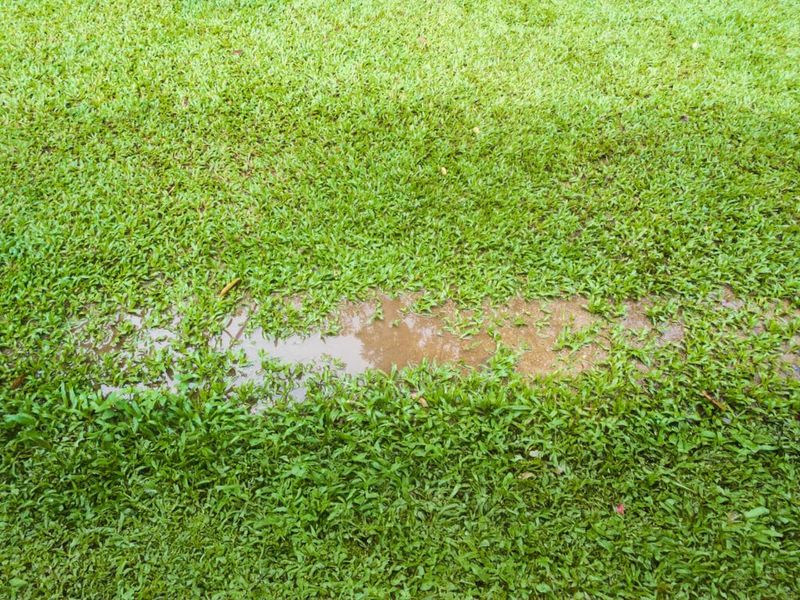
Sunshine mimosa is forgiving about a lot of things, but waterlogged soil is not one of them.
Before you buy a single pot, walk your yard after the next heavy rain and watch where the water sits.
Florida’s summer storms can drop 2 to 4 inches in an afternoon, and low pockets, compacted spots, and poorly graded areas near the house can stay saturated for hours or days.
UF/IFAS is clear that sunshine mimosa does not tolerate waterlogged conditions well, and the Florida-Friendly Landscaping Plant Guide reinforces that drainage matters for a successful planting.
Stick to areas with well-drained soil and full sun or partial shade, and rule out spots that stay wet.
Regional conditions change the picture considerably.
The Florida Wildflower Foundation’s fact sheet places sunshine mimosa in a hardiness range of roughly zones 8 to 11, which covers most of the state, but that range is context, not a performance guarantee.
In North Florida and the Panhandle, a hard freeze can make the foliage disappear entirely until spring.
In Central Florida, a brief cold snap can have a similar effect for a few weeks.
Along the Gulf and Atlantic coasts, salt spray and sandy soils add variables that affect establishment and spread.
South Florida’s year-round warmth and shallow limestone soils in some areas create a different set of conditions than the sandy loam common in the Panhandle.
UF/IFAS Extension Sarasota County notes that ground cover performance varies meaningfully by site.
Spend 20 minutes with your specific yard before you commit to a full conversion, because what works beautifully in a Tampa front yard may struggle in a shaded, low-lying spot in Gainesville.
Start With A Trial Plot And A Realistic Planting Plan
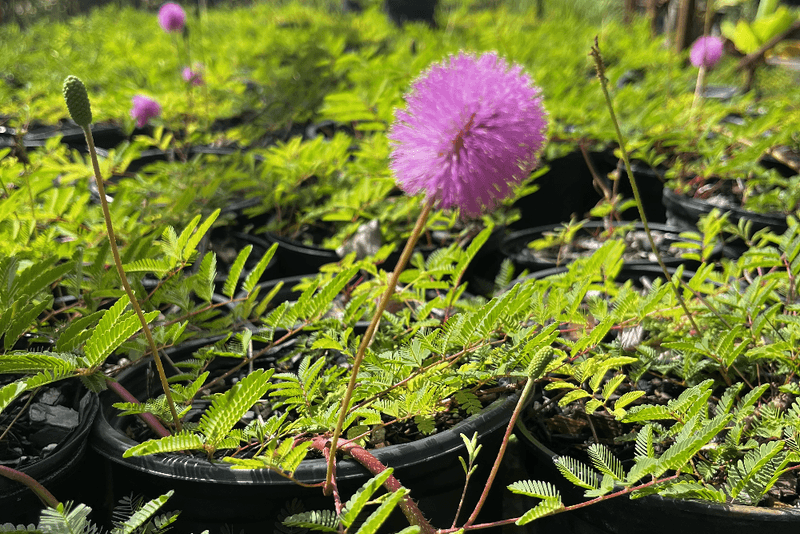
Converting an entire front lawn at once is a big bet on a plant you have never grown.
A smarter move is to pick a 10-by-10-foot section, something visible enough to be meaningful but small enough to manage, and run it as a test for one full growing season before you go further.
Sunshine mimosa spreads by creeping stems that root wherever they make contact with soil.
That spreading habit is part of its appeal as a ground cover, but it means you need a plan for the edges from day one.
The UF/IFAS Green Stormwater Infrastructure Plant Guide specifically recommends physical barriers, regular trimming, or mowing to keep the plant within its intended boundaries.
Install edging before the plants go in, not after runners have already crossed the sidewalk or reached a neighbor’s property line.
For spacing, UF/IFAS Gardening Solutions suggests at least 2 feet between plants.
Separately, a UF/IFAS Extension Sarasota County post offers the estimate that four or five pots may cover roughly 300 square feet in a growing season under good conditions.
Treat both figures as starting estimates, not promises.
Soil quality, sun exposure, rainfall, and how well you manage establishment watering will all affect how quickly the planting fills in.
Keep the trial area away from drainage paths, areas with constant foot traffic, and spots within a few feet of the sidewalk or property line.
The Florida Native Plant Society’s profile notes the plant’s spreading tendency, and an installation that visibly overruns its boundaries is going to generate HOA complaints regardless of what the statute says.
Establish It With Water, Not Wishful Thinking
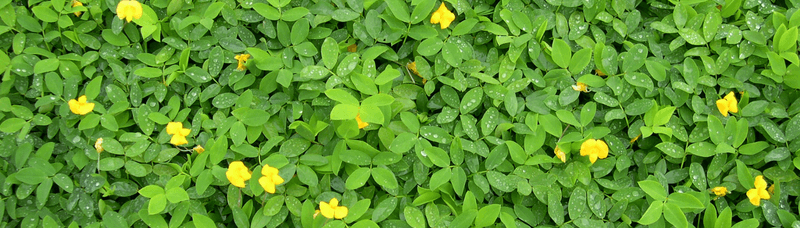
Drought tolerant does not mean drought proof from day one.
New sunshine mimosa plants need regular irrigation while they are getting established, and skipping that step is one of the most common reasons a planting fails before it ever has a chance to prove itself.
UF/IFAS recommends checking soil moisture rather than watering on a fixed schedule, and avoiding irrigation when adequate rain has already fallen.
Timing your planting near the start of Florida’s rainy season, roughly June, can reduce how much supplemental watering you need during those first critical weeks.
A UF/IFAS Extension Sarasota County dry-season guide reinforces the value of efficient, targeted irrigation over broad, scheduled watering.
Once established, the plants can handle dry stretches well, but during a prolonged hot, dry spell, even mature sunshine mimosa may benefit from a supplemental drink.
Fertilizer is a different matter entirely.
Many homeowners assume that what works for St. Augustine grass will work for a ground cover, and that assumption leads to problems.
Sunshine mimosa fixes its own nitrogen from the atmosphere, similar to legumes.
The UF/IFAS Green Stormwater Infrastructure Plant Guide advises against fertilizing a mimosa planting during the first year because added nutrients tend to favor weed competition rather than the mimosa itself.
Before you add anything to the soil, get a soil test through your county Extension office.
UF/IFAS Extension’s publication on establishing plants in Florida landscapes and Southwest Florida Water Management District irrigation guidance both point toward checking what your site actually needs rather than applying a routine product.
Feed the soil based on data, not habit, and let the plant do what it is naturally built to do.
Manage Traffic, Dormancy, And Spreading
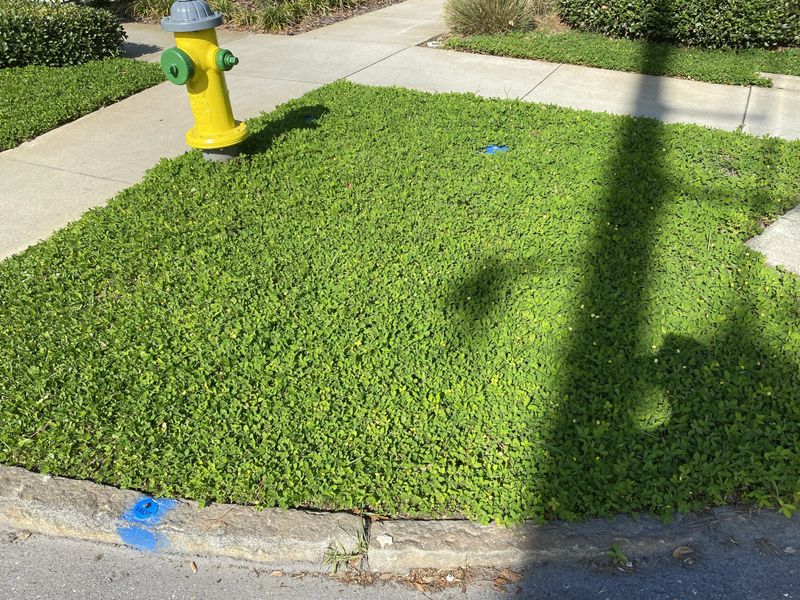
Once sunshine mimosa fills in, the maintenance rhythm is genuinely lighter than a conventional turfgrass lawn.
You can mow it alone or mixed with grass, trim back runners at the edges, and largely leave it alone between maintenance sessions.
That lighter workload is part of the appeal for homeowners who are tired of weekly mowing on a tight water budget.
The limits matter, though.
The UF/IFAS Green Stormwater Infrastructure Plant Guide is direct about the traffic issue: sunshine mimosa handles light foot traffic but not heavy use.
If your yard doubles as a weekend gathering space where people stand and walk across the same spots for hours, expect the planting to thin out in those areas over time.
Seasonal appearance is the other honest conversation to have before you convert.
In North Florida, a freeze can make the foliage vanish entirely until temperatures climb back up in spring.
In Central Florida, a cold snap in January can leave the planting looking sparse for several weeks.
The Florida-Friendly Landscaping Plant Guide and UF/IFAS Extension Hillsborough County both note that sunshine mimosa is not the strongest year-round cover from late fall through early spring, particularly in northern parts of the state.
Spreading is the maintenance task that connects directly to your HOA situation.
Visible, well-trimmed edges tell the board that the planting is intentional and controlled.
Runners crossing the sidewalk or creeping into a neighbor’s yard tell a very different story.
The Florida Native Plant Society notes the plant’s tendency to spread beyond small gardens, so plan to trim edges every few weeks during the growing season and treat that task as part of your Florida-friendly landscape documentation, not just a chore.
Document A Design The HOA Can Evaluate

Your strongest position in any HOA landscaping dispute is a paper trail that shows the board exactly what you planted, why it qualifies as Florida-friendly landscaping, and how you are maintaining it.
Start building that file before the first plant goes in the ground, not after you receive a violation notice.
Pull your HOA’s declaration and landscaping guidelines and read them carefully.
Note whether the documents require an application, an architectural review, or advance approval for landscape changes.
Then submit a complete proposal: a simple site plan showing where the mimosa will go, a plant list with the botanical name (Mimosa strigillosa), your irrigation approach, your edging and boundary plan, a basic maintenance schedule, and drainage information for the area.
Frame the submission explicitly around the Florida-friendly landscaping definition in Florida Statute 373.185, connecting each element of your design to the category’s criteria.
Cite Florida Statute 720.3075 in your cover letter as the basis for your position that the HOA may not prohibit a properly designed Florida-friendly landscape.
Do not claim automatic approval or exemption from review.
Keep copies of everything you submit and every written response you receive from the board.
A Florida Bar Journal analysis of the Florida-friendly landscaping statute in HOA disputes notes that the directly applicable case law is relatively undeveloped, which means outcomes in specific disputes are not always predictable.
The statute’s text references an older version of Section 720.3035 whose current operative language should be verified against the official statute before you cite it.
If the HOA issues a formal fine or begins enforcement proceedings, preserve every document, photograph, and written exchange, then consult a Florida attorney or a qualified HOA dispute professional before responding.
Use The Plant As A Measured Alternative, Not A Magic Fix
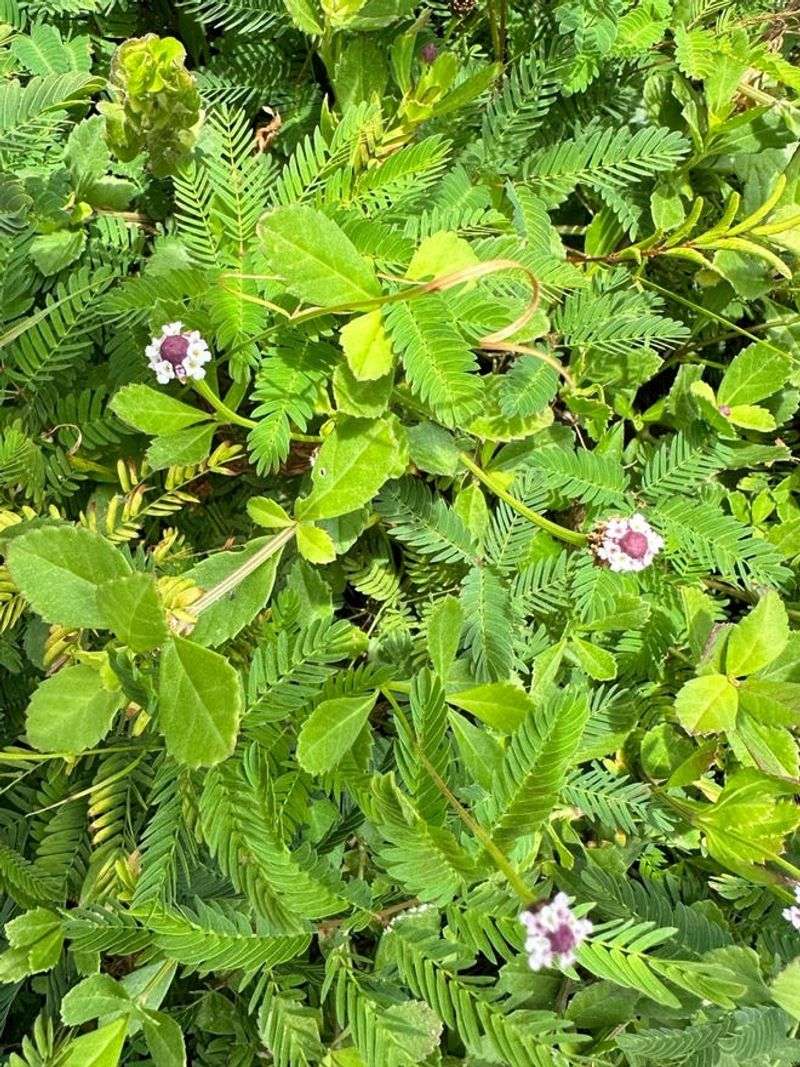
Sunshine mimosa earns its place in a Florida yard when the conditions line up: well-drained soil, adequate sun, light foot traffic, controlled edges, and a homeowner willing to manage it through the establishment period and the leaner winter months.
Where those conditions exist, it can meaningfully reduce turf dependence in a way that is both practical and legally defensible.
Water savings are real but not guaranteed on any specific dollar amount.
How much you save depends on what kind of grass you replaced, how your irrigation system is set up, how much of the lawn you converted, how much rain falls, and how your soil holds moisture.
Southwest Florida Water Management District irrigation guidance and UF/IFAS drought guidance both support drought-tolerant plants and efficient irrigation as part of a water-smart landscape, but neither source promises a specific household savings amount.
The UF/IFAS publication on watering Florida lawns is a useful benchmark for comparing what conventional turf actually demands.
The legal argument works the same way: strong when the design is solid, documented, and genuinely fits the Florida-friendly definition, and weaker when the planting is poorly placed, untrimmed, or installed without going through the HOA’s stated process.
The Florida-Friendly Landscaping Plant Guide and the Florida Bar’s analysis of these disputes point toward the same conclusion: the homeowner who wins this argument is the one who did the work upfront, not the one who assumed a plant name would carry the day.
Start with a small trial area, keep the edges clean, and let a well-maintained, well-documented design make the case for you.