
More Green Anoles Around Your Texas Garden Means Fewer Aphids, And Here Is How To Bring Them In
Follow us on Google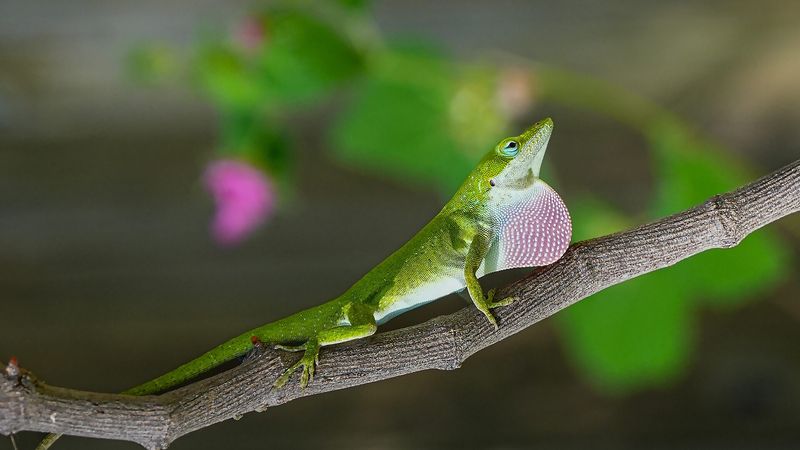
That little lizard doing push-ups on your fence post is not just a curious neighbor, it is one of Texas’s most familiar native reptiles, and gardeners in the eastern part of the state have long wondered whether it helps keep pest insects in check.
Green anoles have been sunning on Gulf Coast shrubs and East Texas pines long before anyone planted a vegetable bed nearby, and their broad appetite for small insects makes the aphid question feel reasonable.
The honest answer is more complicated than the headline suggests, but the habitat story behind it is genuinely worth knowing.
A Brown Lizard May Still Be A Green Anole
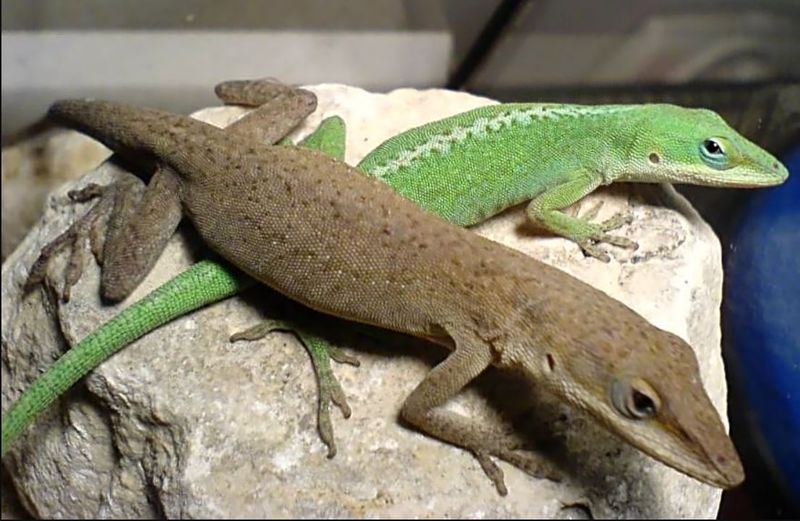
Spotting a lizard on your fence in Houston or Beaumont and calling it a green anole feels straightforward until the animal turns brown right in front of you.
Texas Parks and Wildlife Department places Anolis carolinensis throughout the eastern third of the state, which means the species is genuinely at home along the Gulf Coast, in the Houston-Galveston region, across East Texas pine country, and into the wetter parts of Central Texas.
If you garden in Lubbock, El Paso, or anywhere in the Trans-Pecos, your chances of hosting a resident population are much lower, and the habitat advice in this article will not translate cleanly to those drier regions.
Color alone will not tell you what species you are looking at.
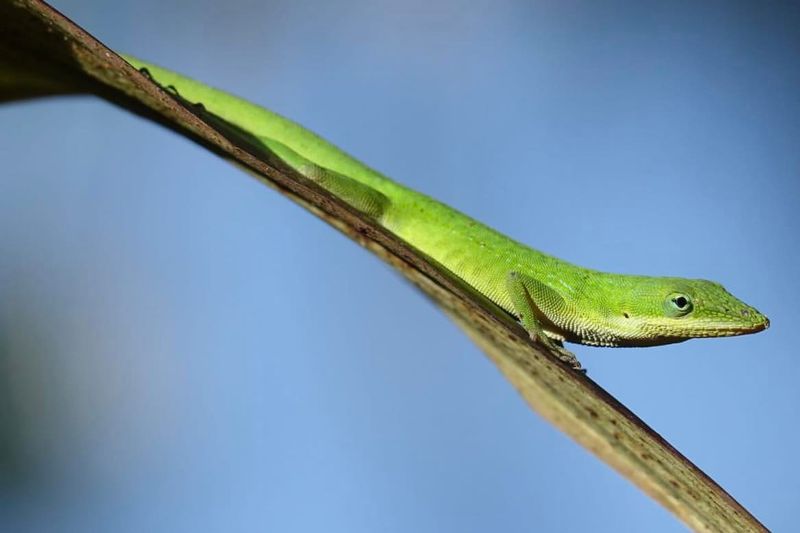
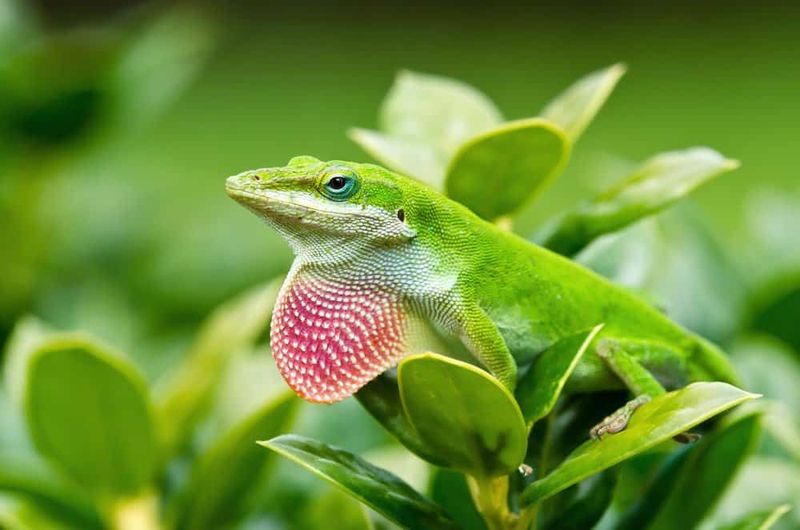
Green anoles shift from bright emerald to gray-brown or tan depending on temperature, stress, and light conditions, and that color change does not mean the lizard has transformed into a different animal.
The creature people around Texas sometimes call a chameleon is not a true chameleon at all, it belongs to its own native lineage and uses pigment cells rather than the structural color tricks of Old World chameleons.
A few other traits help with a confident identification.
Male green anoles flash a pink or reddish-pink dewlap, the loose throat fan they extend during territorial displays and courtship.
The body is slender and the toes have small adhesive pads that let the animal run up smooth surfaces.
Brown anoles, a nonnative species now established in parts of Texas, tend to be stockier, often show a pale lateral stripe or pattern, and the male dewlap is typically orange with a white border.
Geckos have different head shapes and often call at night.
When in doubt, look at body shape, dewlap color, and behavior, not just the shade of the back.
The Aphid Connection Remains Unmeasured
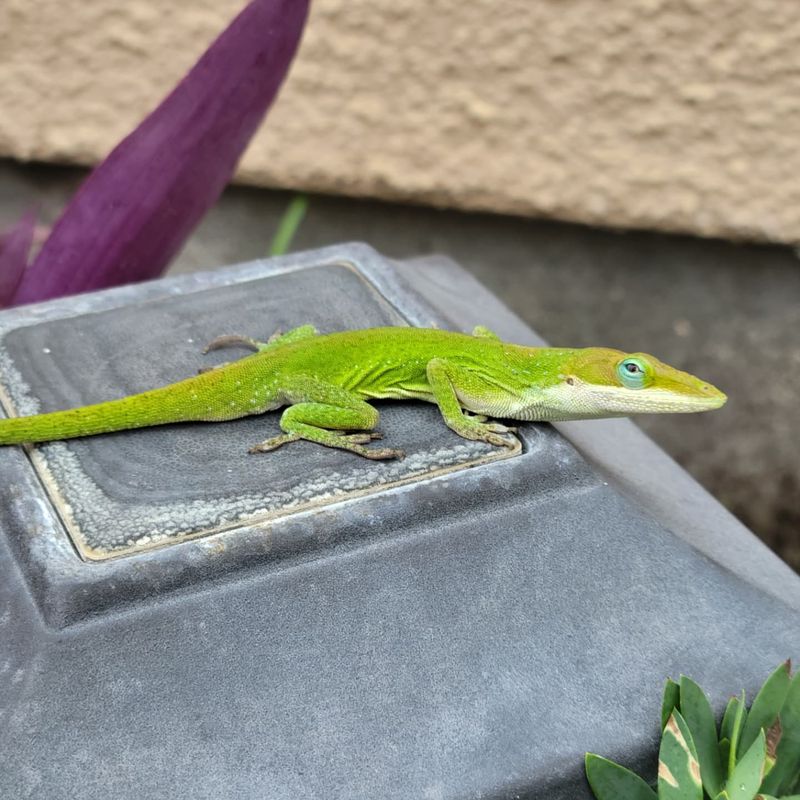
Here is where the popular story gets tricky.
Because green anoles eat insects, and aphids are insects, the logical leap to “anoles eat my aphids” feels almost automatic.
The diet picture from the University of Texas Biodiversity Center confirms that green anoles are insectivorous, eating a wide range of small arthropods including beetles, flies, and spiders.
Aphids are small enough to be plausible prey by that logic alone.
The problem is that plausible is not the same as demonstrated.
The sources reviewed for this article do not include a single field study that measured how many aphids a green anole ate in a home garden, or tracked whether aphid populations fell when anole numbers rose.
The Animal Diversity Web profile for Anolis carolinensis describes a generalist insectivore that takes whatever suitably sized prey is available, not a lizard with a particular interest in soft-bodied plant pests.
An anole hunting on a warm afternoon is just as likely to snap up a fly, a small moth, or a spider as it is to pick aphids off a rose stem.
There is another layer worth thinking through.
A yard that supports more anoles probably has more leafy cover, more moisture, more shelter, and more insects of all kinds.
More insects means more prey for anoles, but it also means more potential pest pressure.
So seeing a healthy anole population may simply reflect a richer habitat rather than a yard where pests are being controlled.
Treat the connection as an open and interesting question, not a settled fact, and you will make better decisions about what actually needs attention in your garden.
Forest Evidence Points To Structure, Not A Formula
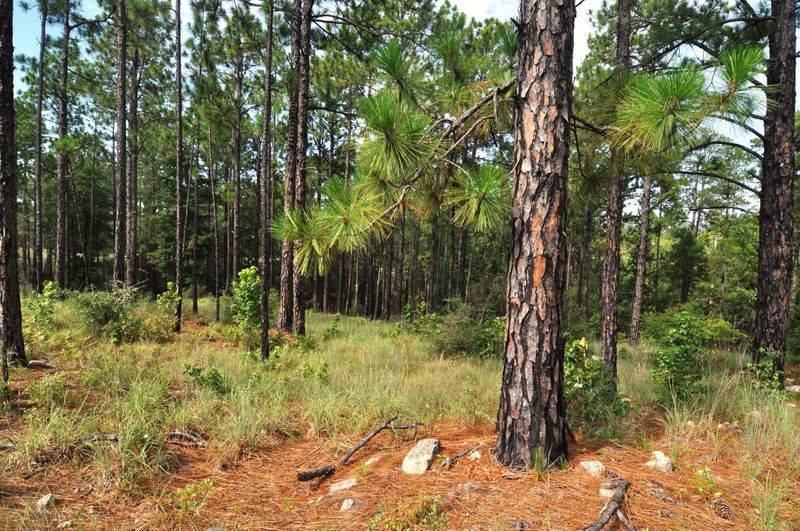
The strongest piece of research behind the habitat recommendations in this article comes from an eastern Texas open-pine forest, not a backyard.
Forest Service habitat-selection study found that forest plots with greater shrub density supported an estimated green anole population 16 times larger than plots where shrubs were sparse.
The same study found that anoles chose to perch on individual shrubs that were 4 to 6 times greater in volume than the average shrub measured across the study area.
Those are striking numbers, and they point clearly toward shrub structure as a meaningful habitat feature.
Before you start measuring your backyard shrubs against a forest baseline, a few limits are worth keeping in mind.
The study describes habitat association and selection in open pine-forest plots, not a controlled experiment in a residential yard.
Researchers observed where anoles were found relative to vegetation, and the data show a strong preference for denser, larger shrubs.
What the study cannot tell you is whether adding shrubs to a suburban lot will produce the same 16-fold population difference, because the starting conditions, predator community, surrounding landscape, and available colonists are all different.
What the findings do offer is a design principle you can actually use.
Substantial, connected shrub structure appears to matter far more than any particular plant species.
The study found little preference among different shrub species, which means anoles were responding to volume, layering, and cover rather than to a specific leaf shape or berry type.
A yard that transitions from open lawn to a few isolated ornamental shrubs to a denser mixed planting near a fence or wall is moving in the right direction, even if the outcome is not guaranteed.
Think of it as improving suitability rather than engineering a population.
Create Connected Cover Instead Of A Magic Planting
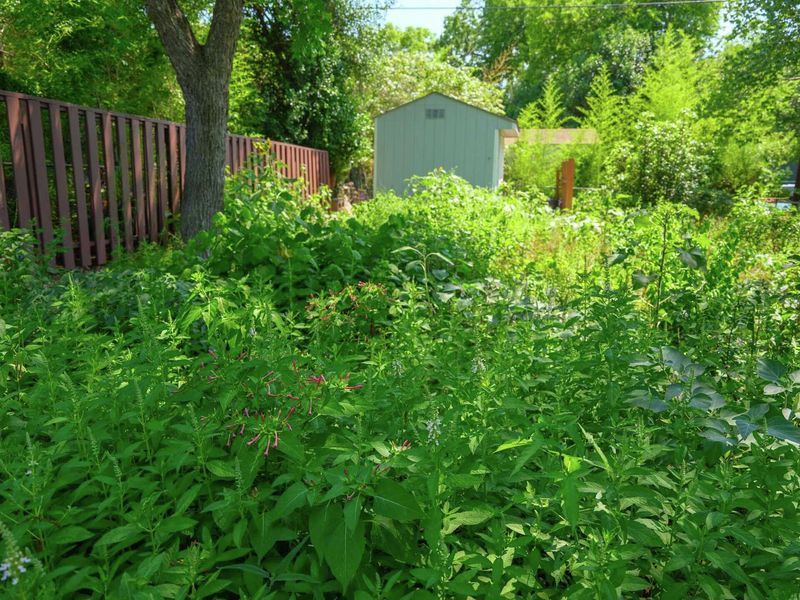
Nobody can hand you a single plant name and promise that green anoles will show up within a season.
The forest study made that clear, and Texas Parks and Wildlife’s Wildscapes guidance reinforces it by framing habitat in terms of food, water, and shelter working together rather than any one species doing all the work.
What you are actually building is a layered system, and the goal is connected cover that gives a small climbing lizard places to hunt, hide, warm up, and escape.
In practical terms, that means combining taller native or regionally adapted shrubs with mid-height plants and some low groundcover, then letting vines fill vertical spaces like fences and walls.
Native plants suited to East Texas, the Gulf Coast, or wetter Central Texas soils tend to establish more reliably because they are already matched to local rainfall patterns and soil chemistry, whether that is the acidic sandy loam of the Piney Woods or the heavier clay near the coast.
TPWD notes that native plants generally require less supplemental water and maintenance once established, which matters during a Central Texas summer when supplemental irrigation can feel like a second job.
The key distinction is structure versus decoration.
A few annual flowers planted in a sunny, exposed raised bed may do wonders for pollinators but offer almost nothing to a lizard that needs shade, climbing routes, and a quick escape from a mockingbird.
Aim for plantings that are at least 3 to 4 feet deep from front to back, with overlapping canopies at different heights.
Connecting those shrub masses to a fence, wall, or larger tree creates the travel corridor that lets any resident anole move through the yard without crossing open ground.
That connectivity matters as much as the total amount of green.
Add Sheltered Ground And Carefully Managed Moisture
Leafy cover up above is only half the picture.
What happens at ground level matters too, and Galveston County Master Gardeners note that green anoles lay their eggs individually in moist soil, rotten stumps or logs, and forest-floor litter.
That is useful to know not because you should go searching for eggs but because it tells you what kind of ground conditions make a yard feel finished to a lizard rather than hostile.
A thick layer of hardwood mulch under shrubs, a partially shaded corner with accumulated leaf litter, or a small rotting log left near a planting bed all contribute to that ground-level texture without any extra effort on your part.
Water is a supporting feature, not a guaranteed draw.
Texas Parks and Wildlife’s Wildscapes tips mention that ponds, drippers, and misters can provide water for wildlife and help create a suitable microclimate.
A shallow dish kept clean and refilled every 2 to 3 days, a low-pressure dripper line near a shrub base, or a small recirculating fountain all work without creating standing-water problems.
What you want to avoid is any container that holds still water for more than a few days, because that is where mosquitoes lay eggs, and the tradeoff is not worth it.
One practical sequence for a Gulf Coast or East Texas bed: let leaf litter accumulate naturally under established shrubs rather than raking it out, tuck a short section of weathered log near the base of a dense planting, and add a shallow water dish in a spot that gets morning sun and afternoon shade.
None of those steps require a trip to a nursery, and together they round out the ground-level conditions that complement the leafy structure above.
Protect The Food Web From Broad-Spectrum Sprays
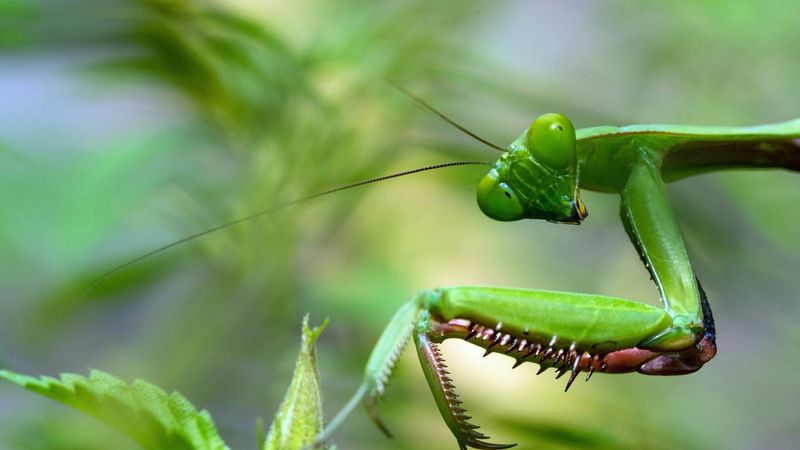
A yard set up for green anoles is only worth the effort if the insect community those lizards depend on is still intact.
Texas A&M AgriLife Extension states directly that broad-spectrum insecticides eliminate natural controls, meaning that a single routine spray across your whole yard can knock out the beneficial insects, predatory mites, and other organisms that were already working on pest populations before you noticed a problem.
That is a real cost, and it is not reversed quickly.
The EPA’s guidance on reducing pesticide impacts on wildlife adds a broader frame: non-target animals including birds, small mammals, and beneficial invertebrates can all be affected by pesticide applications that were aimed at something else entirely.
An anole that eats a poisoned insect, or simply loses its food supply to a whole-yard spray, is an anole that is less likely to stay in your garden through the season.
Anoles are also prey themselves, and that is worth keeping in mind.
Galveston County Master Gardeners identify birds, snakes, cats, and dogs as predators of green anoles.
A wildlife-friendly garden is not a sealed container where pests disappear and lizards multiply undisturbed.
It is an open system with hawks passing through, neighborhood cats on patrol, and the occasional rat snake moving along the fence line.
Accepting that complexity is what separates a realistic habitat approach from a pest-free fantasy.
The goal is not zero spraying forever, it is using targeted, label-compliant treatments when monitoring actually shows a need, rather than treating the whole yard on a calendar schedule as a precaution.
Monitor Aphids While Habitat Develops
Building better anole habitat takes a full growing season at minimum, and aphids do not wait.
Texas A&M AgriLife’s guidance on aphids in Texas landscapes lays out a monitoring-first approach: check plants regularly, because aphid populations can explode in warm spring weather and then collapse just as fast when temperatures climb past 90 degrees or natural enemies catch up.
Seeing 20 aphids on a crape myrtle stem on Monday does not automatically mean you need to spray by Wednesday.
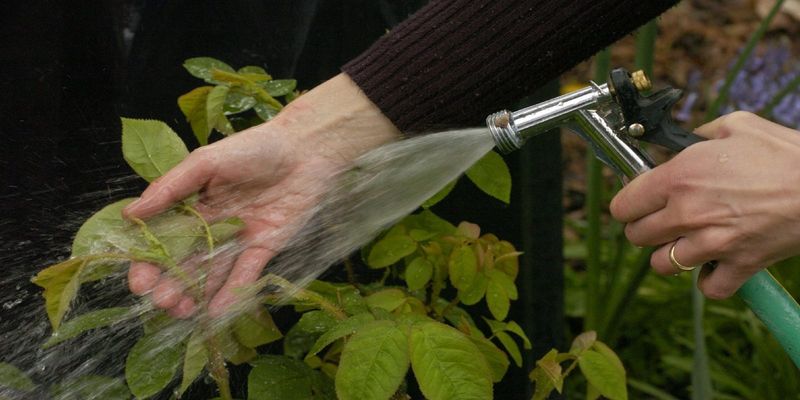
For minor infestations on small plantings, a strong stream of water from a garden hose directed at the undersides of leaves can dislodge enough aphids to slow a colony without any chemical input at all.
That approach works best in the morning so foliage dries before evening, and it needs to be repeated every 3 to 5 days to stay ahead of the survivors.
When a heavier infestation persists and monitoring confirms that natural controls are not catching up, labeled insecticidal soaps or horticultural oils are reasonable options, but the product must specifically list your crop or plant on the label and you must follow every direction, including application rate, temperature limits, and reapplication intervals.
Do not substitute a dish-soap mixture from a home recipe, because concentration and phytotoxicity risk vary and no home formula carries the crop-safety testing that a registered product does.
Honeydew-feeding ants deserve their own attention in this picture.
Texas A&M notes that ants tend aphid colonies, protecting them from some natural enemies in exchange for the sugary honeydew aphids excrete.
If you see a steady ant trail running up a plant stem, that trail is worth interrupting.
Texas A&M AgriLife’s integrated pest management guidance treats ant management as a separate step, handled carefully around edible crops, children, pets, and beneficial insects rather than folded into a general spray program.
Build A Habitat, Not A Stocked Pest-Control System
The clearest action sequence from everything above is also the simplest one.
Start by identifying any lizards you already see using body shape, dewlap color, and climbing behavior rather than relying on color alone, because Texas Parks and Wildlife confirms that green anoles shift between green and brown regularly.
Add layered shrub cover that connects to a fence, wall, or tree, and preserve a small patch of sheltered ground with leaf litter or a weathered log nearby.
Keep a shallow water source clean and refreshed, and manage any dripper or mister so it does not create stagnant pools.
Do not buy anoles, capture them from another property, relocate them into your yard, or disturb eggs you find in the soil.
Texas Parks and Wildlife’s Wildscapes guidance consistently points toward improving the habitat and letting wildlife find it on its own terms.
Moving lizards rarely works and can stress or harm the animals.
One lizard on a fence post cannot tell you whether your garden is healthy, pest-free, or in good shape.
What it can tell you is that your yard has at least some of the cover, warmth, and prey that a small native reptile needs.
Respond to actual aphid pressure by monitoring first and treating only when the numbers and the plant’s condition justify it, following Texas A&M AgriLife’s aphid management guidance rather than a calendar spray schedule.
Green anoles may contribute something useful to that broader network of natural enemies, and that modest, honest role is actually worth building for.