
The Most Underrated North Carolina Native That Helps Make Mosquito Hour Less Miserable
Follow us on Google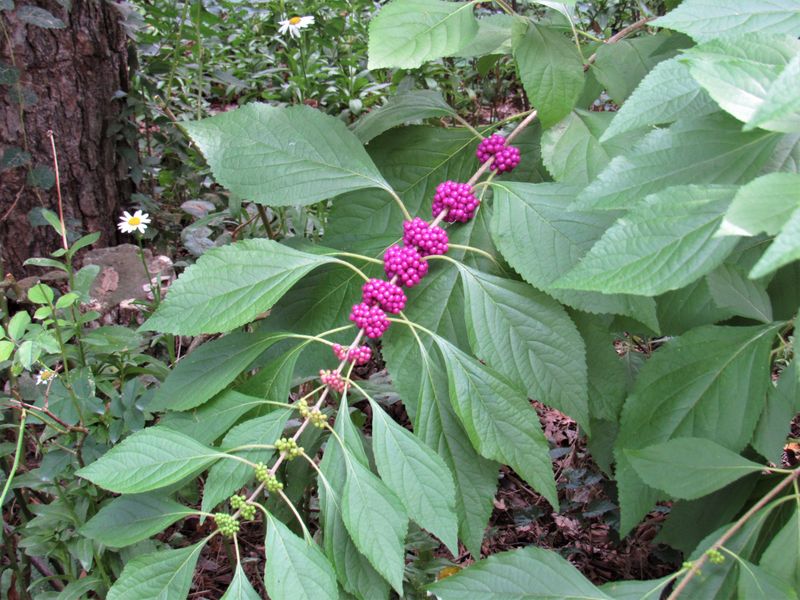
Somewhere between the third slap at your ankle and the moment you give up on the porch, you start wondering if there is a plant that could actually help.
American beautyberry, Callicarpa americana, is a North Carolina native shrub that keeps coming up in that conversation, and for genuinely interesting reasons.
Its leaves contain compounds that showed real mosquito-deterrent activity in laboratory research, which sounds like exactly the answer you were hoping for.
The honest story is a little more layered than that, and knowing the difference could shape how you spend your yard budget this season.
Meet North Carolina’s American Beautyberry
Pull up a photo of American beautyberry in fruit and you will understand immediately why people remember it.
The berries crowd tightly around each stem in neon-purple clusters so dense they look almost painted on, and they appear just as summer starts loosening its grip across North Carolina yards from the Coastal Plain to the Piedmont.
The shrub, Callicarpa americana, grows wild across the state and qualifies as a true regional native.
NC State Extension’s plant profile describes it as a low-maintenance deciduous shrub that typically reaches 3 to 8 feet tall and 3 to 6 feet wide, with small lavender flowers in summer followed by those striking berries.
It earns its place in a yard on looks and wildlife value alone.
Here is where the mosquito story enters.
USDA Agricultural Research Service scientists identified compounds in beautyberry leaves that showed bite-deterrent activity in laboratory tests, and a peer-reviewed study published in the Journal of Agricultural and Food Chemistry confirmed significant activity against Aedes aegypti and Anopheles stephensi mosquitoes.
That finding is real and worth knowing about.
What that finding does not mean is that planting a beautyberry shrub near your porch will clear the air of mosquitoes or make your cookout more comfortable.
NC State Extension states plainly that there is little scientific evidence so-called repellent plants reduce mosquito activity in the landscape.
A living shrub is not a diffuser, and its leaves do not release a tested protective cloud around your chair.
American beautyberry is an intriguing, underrated native with genuine laboratory chemistry and dependable backyard value, and that combination is worth understanding clearly before you head to the nursery.
What The Leaf Research Actually Shows

Southern farmers once tucked crushed beautyberry leaves under horse harnesses to discourage biting insects.
That account has been passed down for generations across the rural South, and it is the kind of detail that makes researchers pay attention.
Treat it as historical and anecdotal context, though, because it does not identify which insects were involved, what dose worked, how long protection lasted, or whether the practice is safe for people today.
What moved the story from folklore to peer-reviewed science happened at the USDA Agricultural Research Service, where chemists isolated specific compounds from beautyberry leaves and ran controlled laboratory bioassays.
The 2005 study in the Journal of Agricultural and Food Chemistry identified callicarpenal and intermedeol as the primary active terpenoids.
Both compounds showed significant bite-deterrent activity against Aedes aegypti, the yellow fever mosquito, and Anopheles stephensi, a malaria-vector species, under controlled laboratory conditions.
A follow-up from the same research group, detailed in a USDA ARS publication, explored the compounds further and described the findings as preliminary when discussing any potential for human use.
That word matters.
Preliminary means promising enough to study further, not ready to recommend as a household remedy.
USDA’s 2007 research news item also noted that beautyberry compounds showed activity against ticks and fire ants in early testing, which generated a wave of excitement.
Those findings remain laboratory-level and preliminary.
The practical takeaway from all of it is straightforward: beautyberry leaves contain real chemistry that researchers found worth studying, but the tests used crushed foliage, isolated compounds, and treated materials in controlled settings, not a potted shrub on a patio.
The gap between a bioassay and a backyard is wide, and NC State Extension’s mosquito management guidance reflects that gap honestly.
Its Reliable Payoff Comes From Berries And Habitat
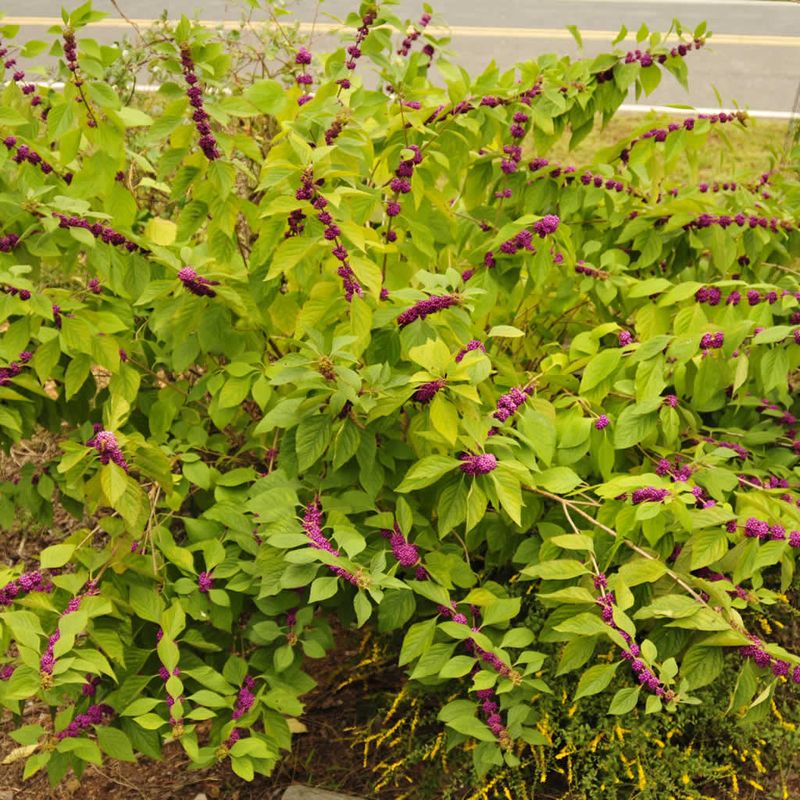
Set aside the mosquito question for a moment and look at what beautyberry actually delivers every single year without any drama.
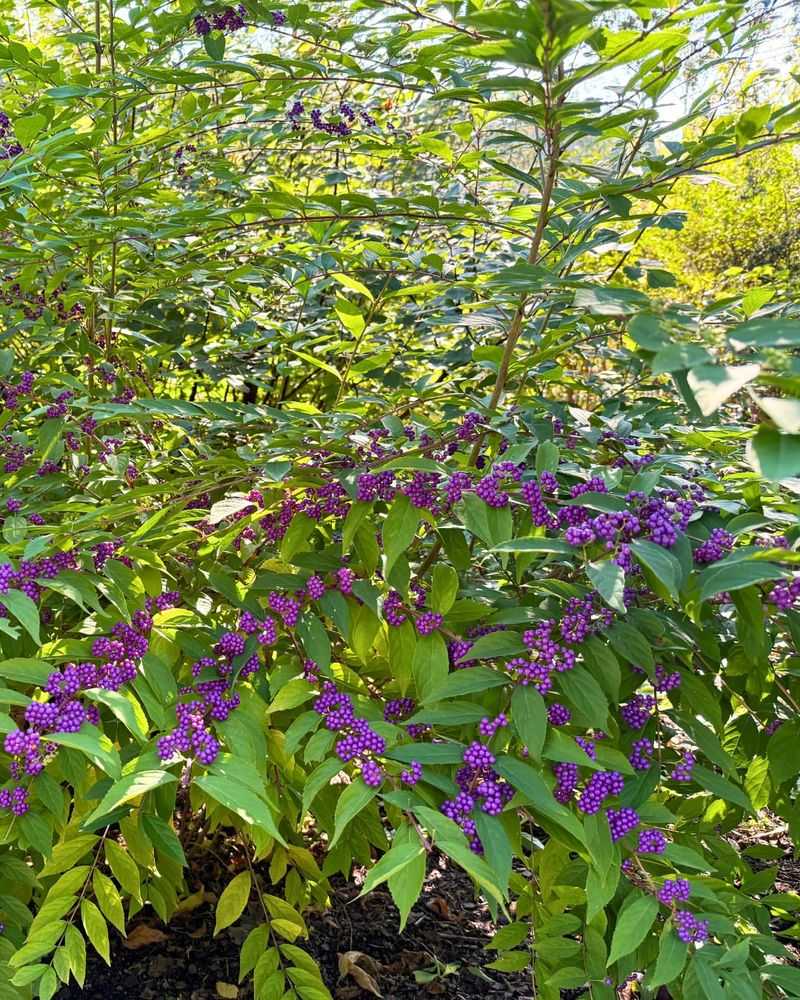
From late August through October, the stems hold those dense purple berry clusters that stop people mid-walk and make them ask what on earth that plant is.
The display lasts long enough to carry your yard through the awkward stretch after summer color fades but before the big fall show begins.
According to NC State Extension’s beautyberry profile, the shrub produces small lavender-pink flowers in late spring and summer that support pollinators, followed by the berries that become a food source for songbirds and small mammals.
American robins, brown thrashers, purple finches, and eastern towhees are among the birds documented feeding on the fruit.
That list reads like a who’s who of birds that North Carolina backyard watchers actually hope to see.
The USDA Forest Service species review for Callicarpa americana adds raccoons, opossums, and gray foxes to the list of mammals that use the fruit, which gives you a sense of how broadly this plant fits into a functioning yard ecosystem.
It is genuinely useful wildlife habitat, not just a pretty addition.
Audubon North Carolina recommends beautyberry specifically for homeowners who want to support birds with native plantings.
The shrub’s open, arching form also adds structure to a border without demanding the kind of attention that fussier ornamentals require.
You get seasonal color, wildlife activity, and a plant that largely takes care of itself, and none of that depends on the mosquito chemistry being anything more than an interesting footnote.
Choose A Site That Fits The Shrub
Beautyberry is genuinely adaptable, but it does have preferences, and matching those preferences to your specific yard makes the difference between a shrub that thrives and one that just survives.
Across North Carolina, that means thinking about light, drainage, and spacing before you dig the hole.
NC State Extension’s plant profile describes American beautyberry as tolerant of full sun or partial shade, with full sun defined as at least 6 hours of direct light daily.
The plant handles clay, loam, and sand as long as drainage is adequate.
That covers a wide range of North Carolina conditions: Piedmont red clay yards, sandy Coastal Plain sites, and many mountain and Sandhills locations all qualify, provided the planting spot does not stay waterlogged after rain.
A spot that puddles for more than a day after a storm is not the right home for this shrub.
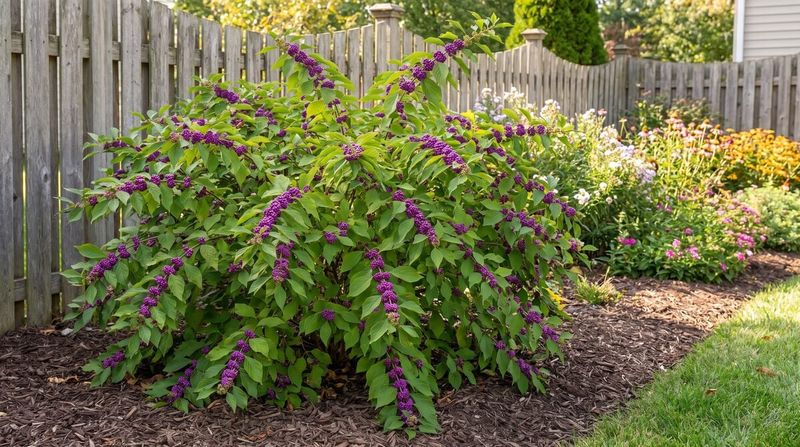
Plan for a mature spread of roughly 3 to 6 feet wide, which means giving each shrub at least 3 to 6 feet of clear space from walkways, foundations, and neighboring plants.
The arching stems want room to do their thing.
Natural fits include woodland edges, fence lines, pond margins, rain-garden edges, and the back layer of a patio border where the shrub can be seen but not crowded.
When you shop, check the tag carefully.
Audubon North Carolina specifically advises homeowners to buy the American species, Callicarpa americana, rather than Japanese beautyberry, Callicarpa japonica.
The two look similar enough to cause confusion at the nursery, and the documented research and native wildlife relationships apply to the American species.
Water regularly during the first growing season while roots establish, then step back and let the shrub settle in.
Prune For New Growth, Not Mosquito Control
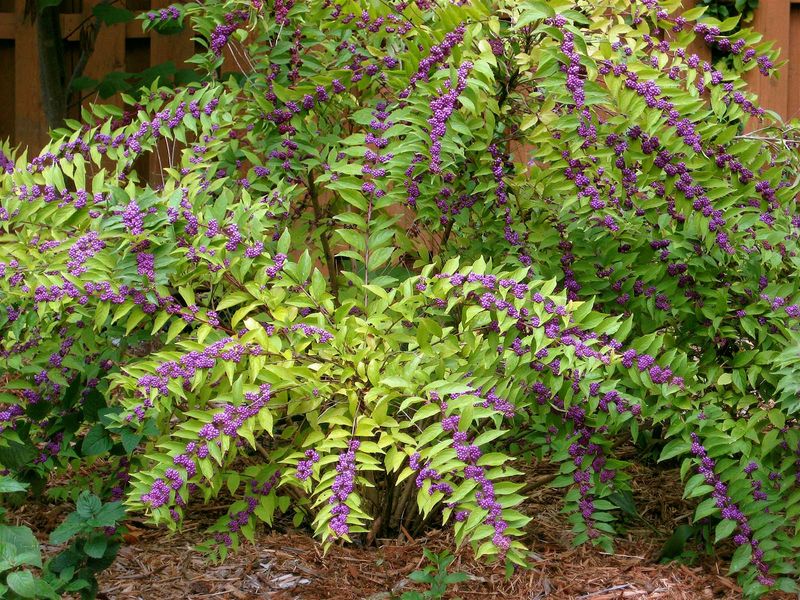
One of the quirks that surprises new beautyberry owners is how dramatically you can cut this shrub back and how enthusiastically it responds.
Many Piedmont gardeners who let a beautyberry grow unchecked for a few seasons end up with a sprawling, rangy plant that flops into the path or swallows a neighboring shrub.
Late-winter pruning solves that problem and actually improves the show.
NC State Extension recommends cutting American beautyberry back to about 1 foot tall in late winter, before new growth begins.
The reason is that flowers and fruit develop on new shoots, so fresh growth from a hard pruning is exactly what produces the berry display you are after.
You are not hurting the plant; you are setting it up for its best season.
The previous year’s shape disappears, but it comes back quickly and more compactly.
Beautyberry is deciduous, which means it drops its leaves in fall and spends winter as a bare-stemmed structure.
That is worth knowing before you plant it as a privacy screen or year-round visual barrier, because it will not serve either purpose once temperatures drop.
Think of it as a three-season performer: flowers in late spring and early summer, berries from late summer through fall, and then an honest winter rest.
The berries themselves can persist into early winter before birds and mammals work through them, so the seasonal display stretches longer than you might expect.
Some years a brown thrasher will stake out a shrub and defend it for weeks.
Pruning has nothing to do with mosquito management, despite what an optimistic headline might suggest, but it absolutely shapes how much wildlife activity and seasonal color your shrub delivers each year.
Reduce Mosquitoes With Measures That Match The Goal
You drag the patio chair into the shade at 6 p.m. and within four minutes you are slapping your arm.
That moment is what this whole conversation is actually about, and the honest answer is that a beautyberry shrub will not fix it.
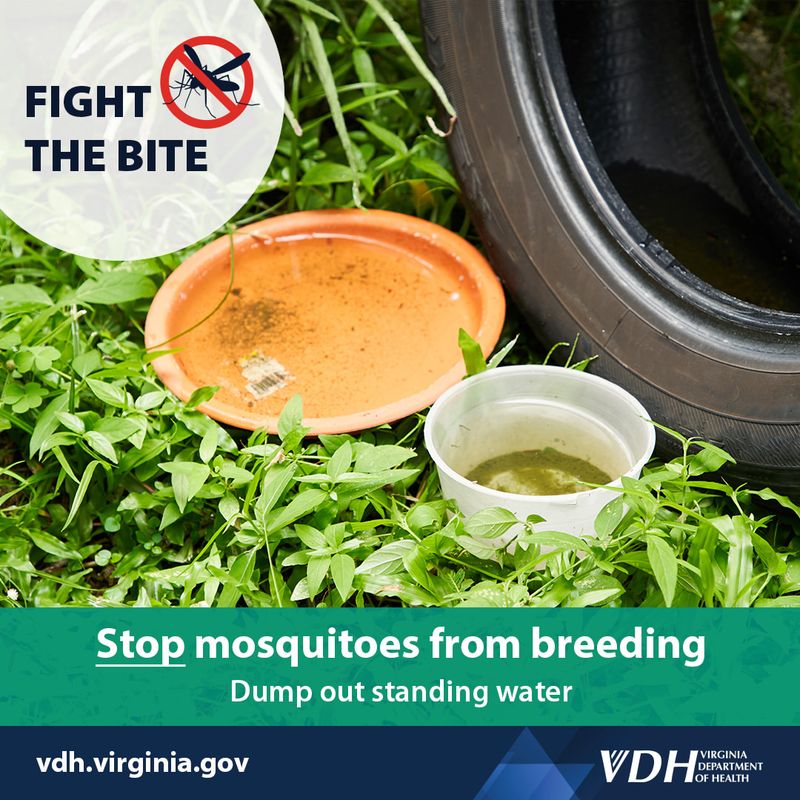
What does help starts with a walk around your yard and a five-gallon bucket.
CDC’s mosquito control guidance recommends emptying, scrubbing, turning over, covering, or discarding anything that holds water at least once a week.
The list is longer than most people expect: buckets, tires, toys, flowerpot saucers, birdbaths, clogged gutters, tarps, pool covers, trash containers, and even bottle caps.
Mosquitoes can complete their development from egg to biting adult in as little as 7 to 10 days in standing water, so weekly checks genuinely interrupt the cycle.
Source reduction like this helps limit the number of mosquitoes breeding near your home, though it does not provide immediate protection from mosquitoes that have already hatched or flown in from neighboring properties.
North Carolina’s Asian tiger mosquito, Aedes albopictus, adds a wrinkle that many homeowners do not expect.
NC State Extension notes that this species can feed during the day and around dusk, which means mosquito hour is not limited to after dark.
If you are getting bitten while weeding at 10 a.m., the tiger mosquito is likely the reason.
For dependable personal protection during a cookout, an evening walk, or any time you are actually outside, CDC recommends an EPA-registered repellent used according to its label.
Registered active ingredients include DEET, picaridin, IR3535, oil of lemon eucalyptus, para-menthane-diol, and 2-undecanone.
EPA-registered repellents have been evaluated for safety and effectiveness when used as directed, which is a meaningful distinction from a plant-derived substance with no established dose, protection duration, or allergy profile for skin use.
Protective clothing and well-fitted screens on doors and windows round out the toolkit.
These measures work together, and none of them requires choosing between a comfortable porch and a yard full of wildlife.
Plant Beautyberry For What It Can Actually Deliver
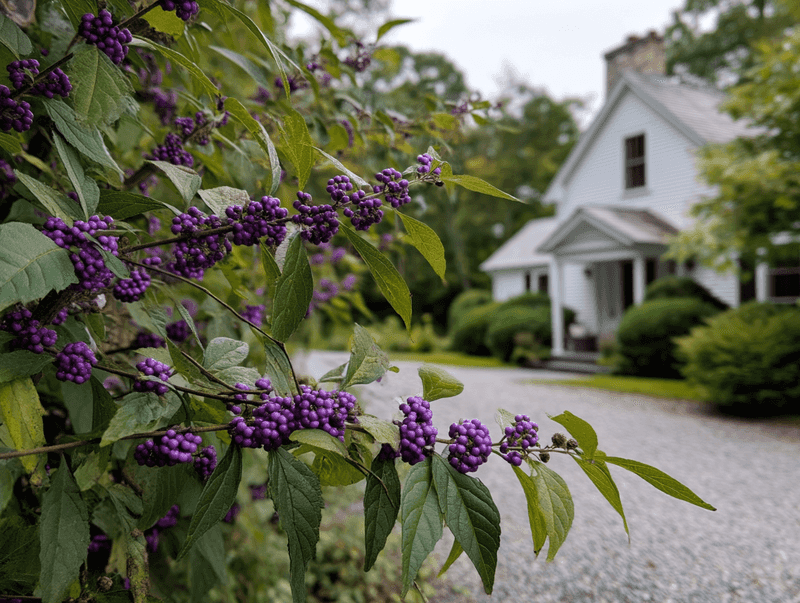
A yard that works well for your family and for the birds and animals moving through your neighborhood is not a compromise.
It is the actual goal, and beautyberry fits that goal better than most shrubs you will find at a typical garden center.
Select Callicarpa americana by its full botanical name, confirm it at the tag, and place it where its arching form and fall berry clusters earn the space.
A spot along a woodland edge, behind a rain-garden bed, or at the back corner of a patio border gives it room to arch and gives you a front-row seat for the bird activity that follows.
NC State Extension’s profile lists naturalized areas, native gardens, and pollinator gardens as ideal settings, and any of those fits a typical North Carolina residential yard.
Value this plant primarily for what it reliably does: native status, low-maintenance growth, a striking seasonal display from late August through early winter, and documented food value for songbirds and small mammals.
Audubon North Carolina’s recommendation rests on exactly those qualities, not on mosquito chemistry.
The laboratory leaf findings are genuinely interesting, and they may eventually lead somewhere useful for researchers.
For now, keep them in their proper place: a promising scientific footnote, not a reason to skip the weekly standing-water check or leave the EPA-registered repellent inside.
Consistent source reduction and proven personal protection are still the tools that actually shorten mosquito hour, and NC State Extension’s mosquito management guidance supports that layered approach.
Plant beautyberry because it belongs here, because it feeds things worth feeding, and because those purple berries in September will make every neighbor who walks by stop and ask where you found it.