
A Small Food Garden And A Quieter Routine Still Feel Like The Rich Life To Many Americans
Follow us on Google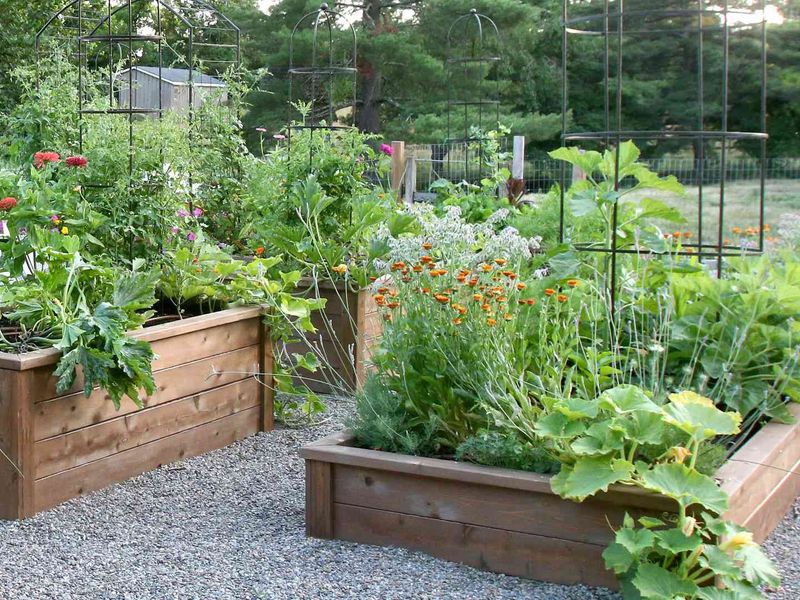
Somewhere between a raised bed of cherry tomatoes and a cup of coffee on the back steps, something shifts.
For some people, a handful of homegrown herbs or a bowlful of lettuce picked before dinner feels more satisfying than almost anything money can buy.
That feeling is real, even if it is personal rather than universal.
A small food garden will not solve every problem, but for a lot of people, it quietly makes daily life feel fuller.
A Small Garden Can Feel Like Plenty
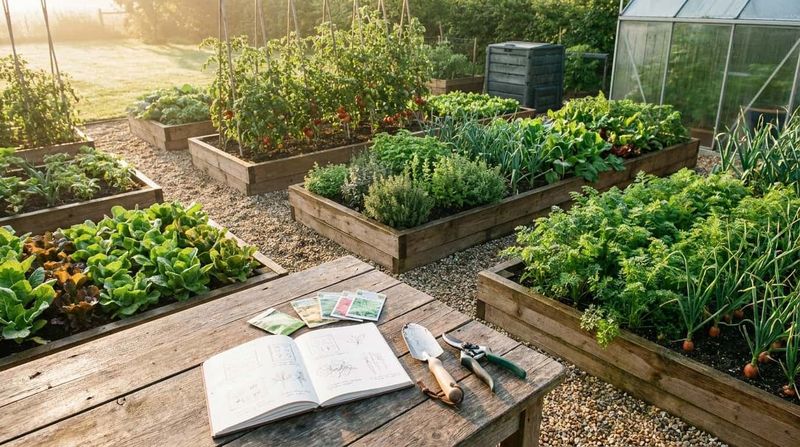
Plenty of people describe their backyard food garden the same way they describe a favorite meal: not fancy, but exactly right.
That feeling is worth taking seriously, even though it is a personal experience rather than a measured national attitude.
No survey has directly asked Americans whether a small garden makes them feel wealthy, and the participation numbers that do exist tell a narrower story than they might appear to at first glance.
According to the National Recreation and Park Association, nearly three-quarters of U.S. adults have gardened at some point in their lives.
That figure covers a lifetime, not a current food garden in the backyard.
A separate nationally representative study using federal food-acquisition data found that roughly 30 percent of respondents reported growing edible plants at home, though that figure comes from 2021 data and should not be read as a precise current rate.
The Bureau of Labor Statistics American Time Use Survey reported that about 10 percent of people spent time on lawn and garden care on an average day in 2025, a category broad enough to include mowing and mulching, not just food growing.
What those numbers do confirm is that gardening is common enough to be culturally meaningful.
The richer claim, that a quieter garden-centered routine represents the good life for many Americans, is better understood as a personal possibility than a national consensus.
For the people who feel it, the experience is grounded in something tangible: food that came from their own soil, time spent outdoors, the small satisfaction of watching something grow.
That is a real kind of richness, even if it does not show up in a survey.
What Gardening Research Can—and Cannot—Show
Research on gardening and well-being reads a bit like a weather forecast: generally favorable, but with enough uncertainty that you would not plan a wedding around it.
A 2024 umbrella review of 40 reviews found broadly positive associations between gardening or horticultural activities and well-being, quality of life, and mental health.
The pooled result leaned positive, but the studies varied enormously in design, population, and quality, and the authors were careful not to draw strong clinical conclusions from the pattern.
A newer systematic review focused specifically on controlled gardening trials found no statistically significant overall effect on mental health until lower-quality studies were removed from the analysis.
That does not mean gardening is without value, but it does mean the connection between digging in soil and feeling better is real for many people without being guaranteed for everyone.
People who garden may already differ from non-gardeners in income, outdoor access, neighborhood conditions, or general health, and those differences make it hard to separate gardening’s effect from everything else going on in a person’s life.
It also matters to distinguish an ordinary backyard food garden from structured therapeutic horticulture.
Some studies involve trained practitioners, clinical populations, or formal programs with scheduled sessions and measurable outcomes.
A 2025 review of social and therapeutic horticulture found promising results but also flagged high variation across studies and meaningful risk of bias.
Planting tomatoes in your backyard is not the same as participating in a clinical program, and no home garden should be presented as a treatment for depression, anxiety, or any other medical condition, or as a substitute for therapy or medication.
What a garden can offer is repeated, low-tech contact with food, place, and daily care, and for some people, that turns out to matter quite a bit.
Design Around Real Meals and Reachable Space
Before you buy a single seed packet, walk to your kitchen and look at what you actually cook.
The most satisfying gardens grow from that list, not from what looks good in a catalog.
If your household goes through basil every week, a pot of it on the patio will earn its keep faster than a row of squash you harvest once and freeze indefinitely.
University of Georgia Extension recommends dwarf or compact varieties for limited spaces and suggests planning a follow-up crop after an earlier one finishes, a practice called succession planting that keeps a small bed producing across more of the season.
Most fruiting vegetables, think tomatoes (Solanum lycopersicum), peppers (Capsicum annuum), and cucumbers (Cucumis sativus), need roughly 6 to 8 hours of direct sun for strong production.
Starting from scratch, leafy greens and many herbs can tolerate somewhat less light, which makes them good candidates for shadier spots or north-facing patios.
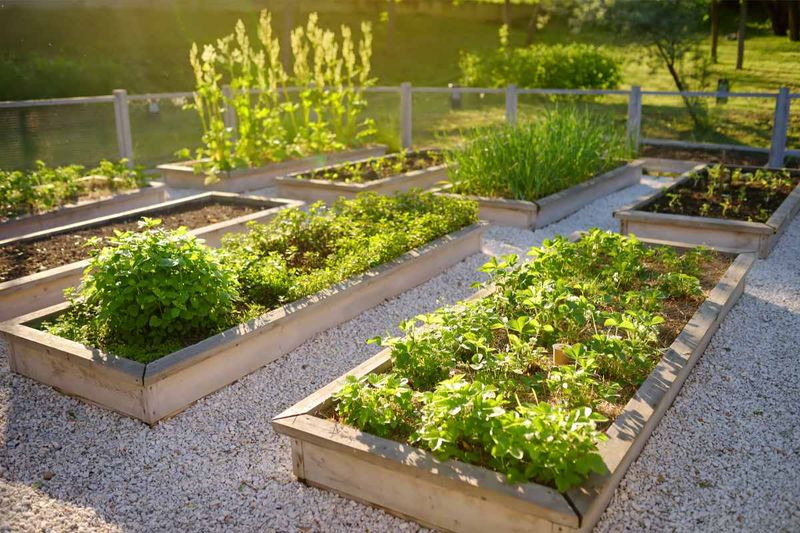
For raised beds, Illinois Extension advises keeping the width to no more than 4 feet when you can reach from both sides, and closer to 2 to 3 feet if you can only access it from one side.
The Illinois Extension raised bed checklist notes that 6 to 12 inches of depth covers a common minimum range for healthy root growth, though deeper-rooted crops like carrots benefit from more.
For renters or anyone with poor native soil, containers work well, but sizing matters.
Penn State Extension recommends at least a 20-inch-wide pot for a single tomato plant, around 14 inches for peppers and eggplants, and drainage holes in every container, because waterlogged roots suffocate even the toughest plant.
Treat all of these measurements as solid starting points, not universal rules that override your specific space and climate.
Make Maintenance Small Enough to Keep
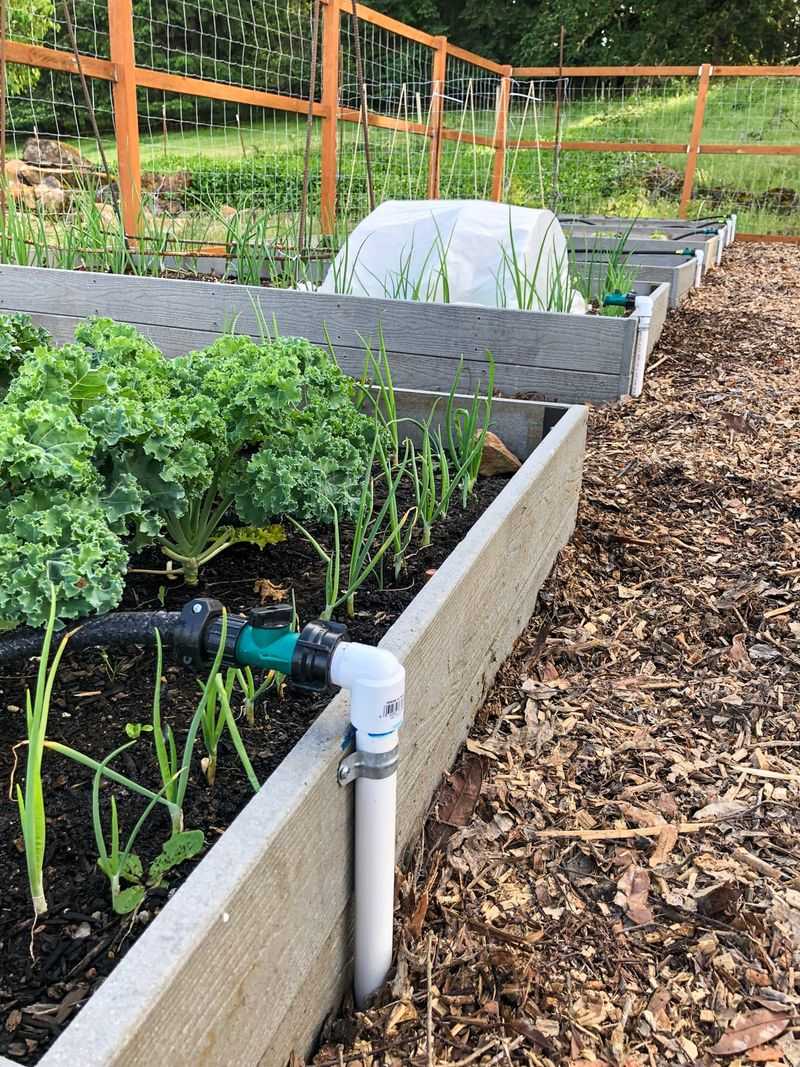
The garden that feels like the rich life in May can feel like a second job by July if the workload sneaks up on you.
Water is usually where things go sideways first.
Most vegetable gardens need about 1 inch of water per week, including rainfall, but heat, wind, soil type, and container size can push that number higher on any given week.
One inch across 100 square feet equals roughly 62 gallons, which is useful to know if you are calculating drip irrigation or hauling a hose.
Rather than watering by the calendar, University of Minnesota Extension advises checking soil about 2 inches below the surface.
If it feels dry there, water.
If it still feels damp, wait.
Colorado State Extension reinforces that soil type changes everything: sandy soil drains fast and may need water more often, while clay holds moisture longer but can stay waterlogged after a heavy rain.
Mulch acts like a quiet partner in a low-maintenance garden.
Penn State Extension’s mulch overview explains that a good layer can conserve soil moisture, moderate temperature, suppress weeds, reduce erosion, and keep fruit and vegetables from sitting in muddy soil.
It does not eliminate watering or pest monitoring, but it genuinely reduces how often both are needed.
Containers and raised beds can actually dry out faster than in-ground soil, so low-maintenance is a design goal you work toward rather than a condition that comes with the territory.
Building in a drip line or self-watering reservoir early is far easier than rescuing stressed plants in August.
Let Your Region Set the Calendar
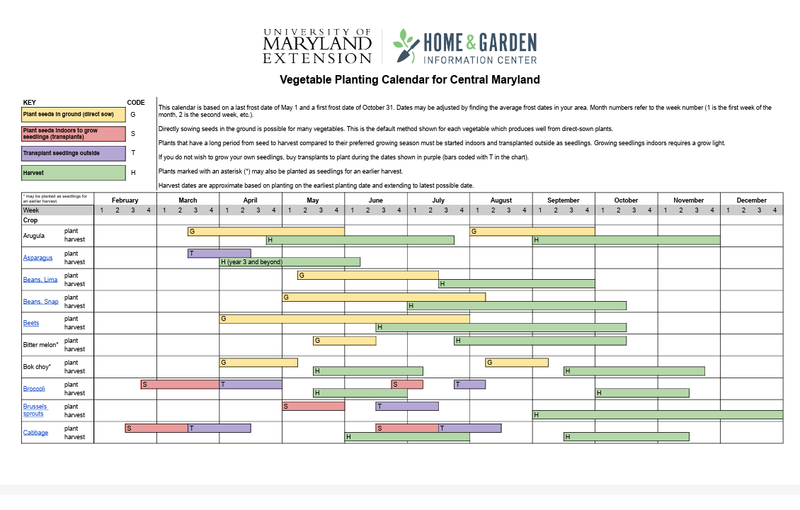
One of the fastest ways to lose a garden is to follow planting advice written for a different climate.
A seed packet that says “plant after last frost” is not wrong, but last frost in coastal Georgia falls around mid-March while gardeners in northern Minnesota may still see frost in mid-May.
Those are not minor differences, they are the whole calendar.
Frost timing is only the beginning.
Soil temperature controls germination more reliably than air temperature, and crops like beans and corn stall or rot in cold soil even after the last frost has passed.
Hot, humid regions such as the Gulf Coast face fungal pressure on tomatoes and squash that gardeners in the arid Southwest rarely encounter.
Dry Western states may face water use restrictions that change how practical an outdoor garden is in summer.
Northern short-season gardens benefit from cold-tolerant varieties and row covers that extend the window on both ends.
Starting a garden from scratch works best when you begin with your state’s own planting calendar, which accounts for your local frost dates, heat, and rainfall patterns.
Your state Cooperative Extension office publishes one for free, and it will be more useful than any national gardening magazine or general website.
The UGA Extension vegetable gardening guide is a good example of the regional specificity these resources offer.
USDA hardiness zones describe average winter minimum temperatures and help you choose perennials that survive cold, but they do not tell you when to plant tomatoes, how much to water in a drought, or whether your summer is too hot for spinach.
Use them for what they are, not as a full growing calendar.
Harvest Value Is More Than a Grocery Receipt
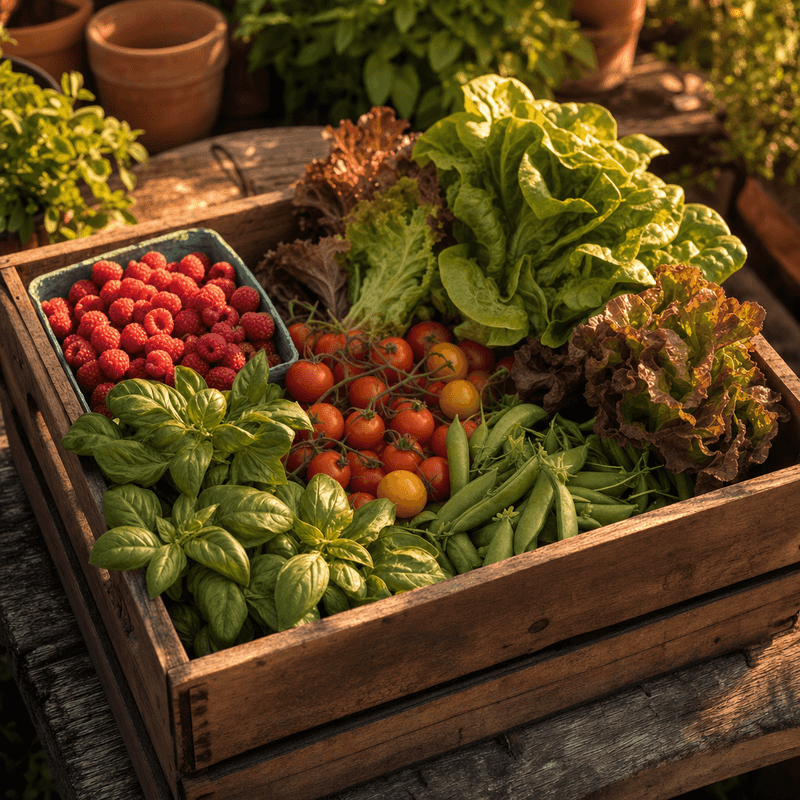
The financial case for a home food garden is real but narrow, and it depends on what you grow, where you shop, and whether you count your time.
A pot of basil (Ocimum basilicum) that costs two dollars to start and produces all summer has obvious value when fresh basil runs three dollars a bunch at the grocery store.
A bed of heirloom tomatoes that requires sixty dollars in soil amendments, plant starts, and irrigation to yield a harvest you could have bought for twenty dollars at the farmers market is a different calculation.
Penn State Extension advises comparing expense, quantity, timing, availability, and quality before planting specifically for preservation.
Failed crops, produce that goes bad before you use it, and the cost of canning supplies or freezer bags can quietly erase what looked like savings.
University of Minnesota Extension’s crop planning tools offer a more systematic way to think through what makes sense to grow at scale.
The crops that tend to offer the clearest return are fragile specialty items, fresh herbs, unusual salad greens, and small fruits that are expensive, perishable, or simply unavailable locally.
Bulk staple crops rarely pencil out in a small urban or suburban garden once startup costs are counted.
Beyond the math, a garden can make meals more interesting and daily life feel more connected to the seasons, and that has its own kind of worth even when it does not reduce a grocery bill.
What a garden cannot do is replace dependable food access.
USDA data shows that 13.7 percent of U.S. households experienced food insecurity at some point during 2024, and a backyard garden cannot reliably overcome shortages of land, water, time, or transportation.
Protect the Harvest Without Chasing Perfection
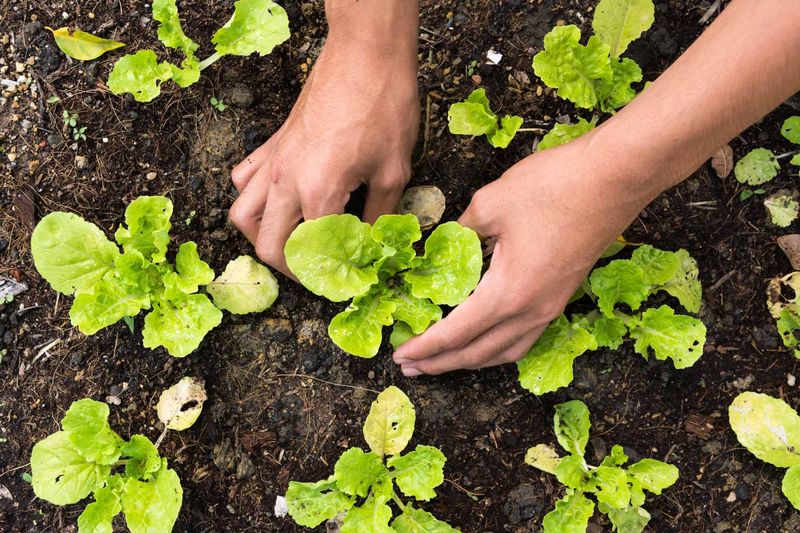
Homegrown food carries a certain glow, but it is not automatically safer than store-bought produce.
Your garden shares space with birds, squirrels, neighborhood cats, and soil that may have a history you do not fully know.
Penn State Extension’s home garden food safety guidance covers the basics clearly: use reputable or properly composted planting material, keep pets and poultry out of growing areas, check for wildlife feces before harvesting, wash your hands with soap and running water for at least 20 seconds, clean harvest containers between uses, and rinse all produce under clean running water before eating.
These steps are not complicated, but skipping them is where problems begin.
Raw manure deserves particular attention.
It can carry pathogens including E. coli and Salmonella, and aging alone does not prove those organisms are gone.
Penn State Extension’s manure guidance cites USDA organic-standard or best-practice waiting periods of 120 days between raw manure application and harvest for crops whose edible parts contact the soil, and 90 days for crops that do not contact the soil.
These intervals are commonly used benchmarks, not a universal guarantee of safety.
Dog, cat, pig, and human waste should not be used in vegetable gardens under any circumstances.
Pest management works best as a set of overlapping layers rather than a single solution.
Start by identifying the pest correctly, because the wrong product wastes money and can harm beneficial insects.
Use only a pesticide labeled for that specific crop and pest, and follow all label directions, including reentry intervals and days-to-harvest restrictions.
EPA notes that pesticide labels are legally enforceable documents, not suggestions.
Reading the label first protects your garden, your family, and your neighbors.
Natural or organic products are not automatically harmless, they can injure people, pets, or beneficial insects if misapplied.
EPA recommends avoiding applications when pollinators are actively foraging and following any bloom-time or time-of-day restrictions on the label.
Physical barriers, crop rotation, resistant varieties, mulch, hand removal, and consistent monitoring all reduce pest pressure without requiring any product at all.
A small garden managed this way will not be pest-free, but it will be genuinely manageable, and that is the version of the rich life that actually holds up over a full season.