
A Summer Rain Does More For Your Garden Than Save You One Watering
Follow us on Google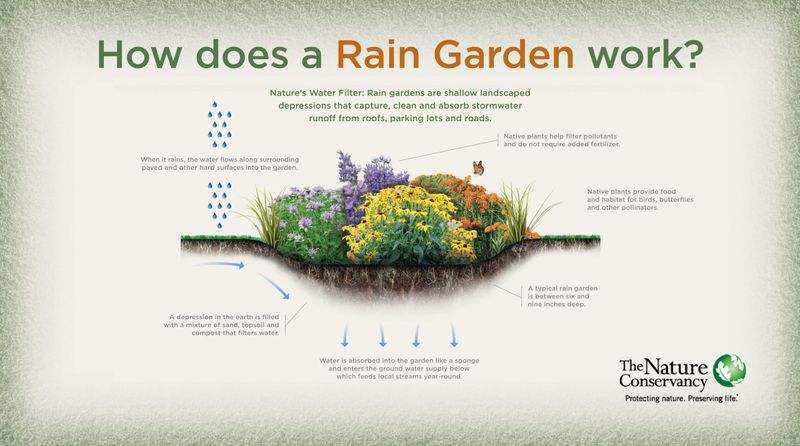
After a slow summer rain, your garden looks different, and not just because the leaves are wet.
Something shifts below the surface, in the soil, around the roots, and sometimes even in the tiny organisms that keep nutrients moving.
Whether that shift actually saves you work at the hose depends on how the rain fell, what your soil is like, and which plants you are trying to keep alive.
Understanding what rain can and cannot do turns a familiar weather moment into a smarter watering decision.
When Summer Rain Does More Than Replace Watering
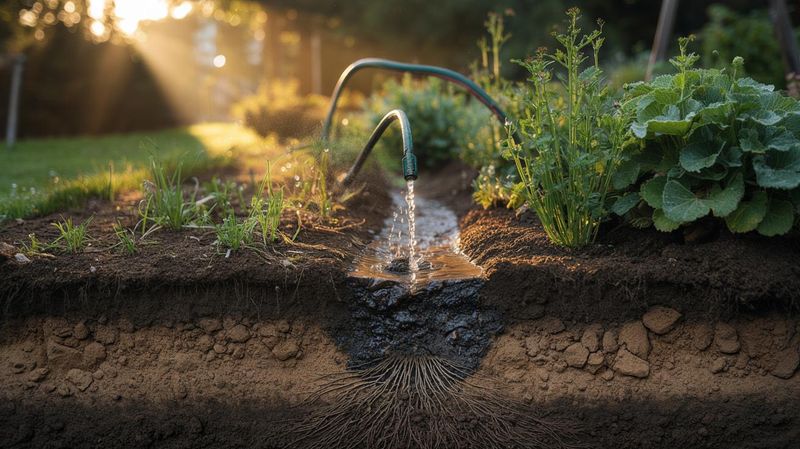
Picture a slow, steady summer rain that lasts two hours and soaks the whole yard at once.
The water falls broadly, cooling the soil surface, wetting the ground beneath shrubs at the back fence, and reaching roots you might never aim a hose toward.
When rainfall moves slowly enough to infiltrate rather than run off, it can wet a wider area of the root zone than typical spot-watering with a hose aimed at individual plants, and it cools foliage and soil in the process.
Penn State Extension guidance on garden watering myths makes the useful point that the real comparison is not between rain and tap water, but between a broad, gradual infiltrating event and shallow, uneven, or poorly placed irrigation.
None of that makes rainfall magically better than water from a spigot.
A slow drip system or soaker hose placed carefully across the root zone can reproduce many of the same benefits.
The difference is that a good rain often does the job across the whole garden at once, while a gardener running one hose tends to water unevenly, spending more time near visible plants and less time reaching the edges where roots actually spread.
The storm’s value is not fixed.
It depends on how fast the rain fell, whether the soil could absorb it, how recently the ground was watered, and what each plant actually needed.
Oregon State Extension’s watering basics guide emphasizes that soil condition, plant type, and application method shape how useful any water event turns out to be, whether it arrives from a cloud or a hose.
Rain that falls too fast, on compacted ground, or after recent saturation may deliver far less than it appears to.
A Dramatic Storm Can Leave Roots Dry
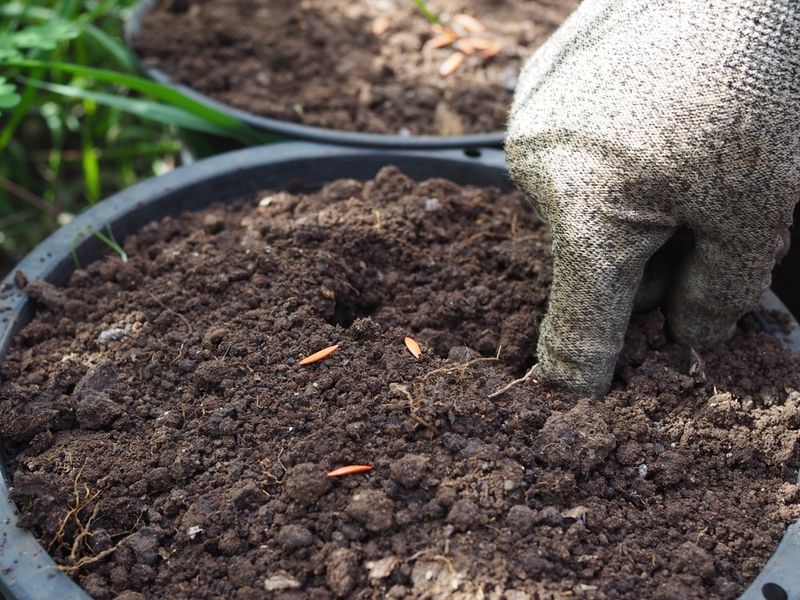
A hard summer downpour can make a yard look thoroughly watered while the root zone underneath stays surprisingly dry.
Heavy rain that falls faster than soil can absorb it simply runs across the surface, collecting in low spots and flowing toward drains.
NOAA’s streamflow and precipitation research explains that rainfall intensity is one of the key factors determining how much water actually enters the soil versus how much runs off.
A half-inch storm that falls in fifteen minutes may produce far more runoff than the same half-inch falling over two hours.
Several other conditions change how much of a storm reaches the roots.
Compacted lawns and clay-heavy beds absorb water slowly, so intense rain sheets off before it can penetrate.
Slopes shed water faster than flat ground.
Dry, crusted soil can actually repel the first few minutes of rain before it softens enough to let water in.
Dense ground cover, bare pavement nearby, and even a thick thatch layer in a lawn can redirect water away from the soil you care about.
Wet leaves and puddles on the sidewalk are not proof that roots received enough water.
The most reliable check is physical.
Push a finger about 2 inches into the soil near the plant you are concerned about.
If the soil feels dry at that depth, the storm may not have delivered what the roots needed, and supplemental irrigation is worth considering.
Oregon State Extension’s watering basics recommends this kind of direct inspection over any visual or calendar-based assumption.
A rain gauge gives you the total, but only the soil tells you where the water went.
Water Can Briefly Reactivate Soil Biology
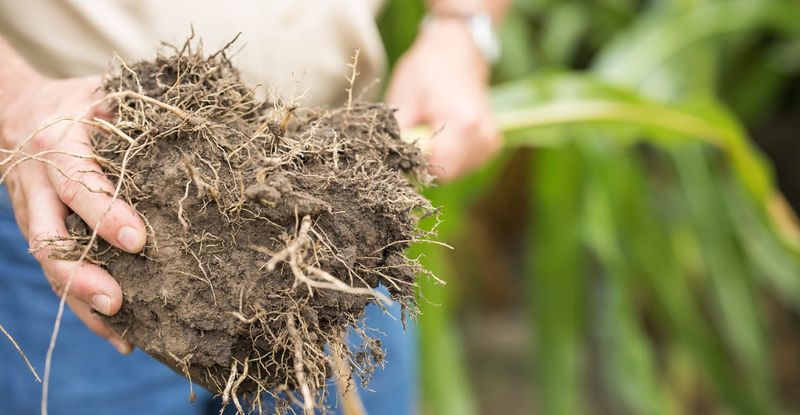
Soil is not just dirt holding roots in place.
It is a working system full of bacteria, fungi, and other organisms that break down organic matter, release nutrients, and help roots absorb what they need.
When soil dries out during a summer drought, much of that activity slows down or pauses entirely.
Rain can restart it.
Research backs up that observation carefully.
One field study on rainfall and soil bacteria found that bacterial numbers in a rainfall plot doubled within 3 days of a precipitation event, though the effect declined as dry conditions returned.
Separate research on precipitation pulse timing found that the size and timing of rain events can change bacterial and fungal activity at different soil depths, and that responses varied depending on drought history and how much water actually moved through the profile.
Both studies point to a real, measurable effect, not a guaranteed or uniform one.
What this means practically is that a slow, soaking rain after a dry stretch can briefly increase the activity of organisms involved in nutrient cycling, which is the process by which nutrients locked in organic matter become available to plant roots.
That is a genuine benefit, not a myth.
But it does not mean every garden will show a visible growth boost after every summer storm.
The response depends on what organisms are present, how deep the water moved, and whether dry conditions return quickly.
USDA Natural Resources Conservation Service soil health guidance identifies nutrient cycling as one of the core functions that healthy soil performs, and moisture availability is central to keeping that function running.
Healthy Soil Helps Rain Become Useful Reserve
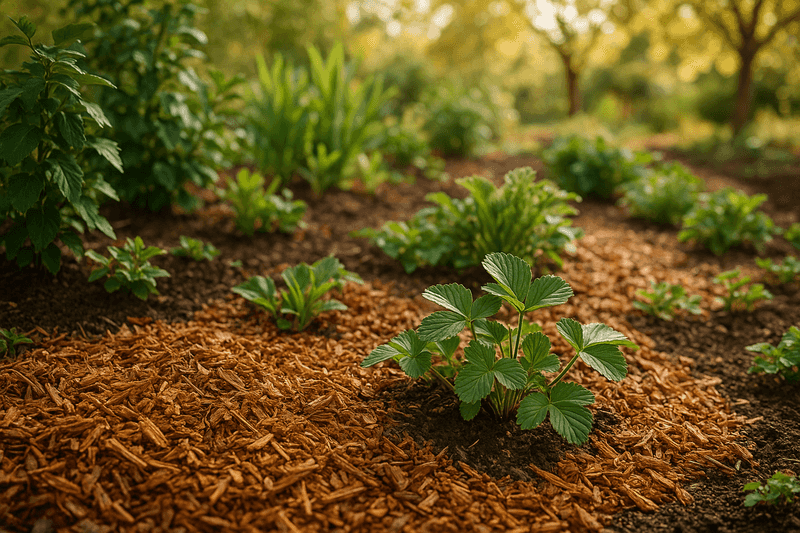
Rain landing on bare, compacted, or depleted soil behaves very differently from rain landing on a bed full of organic matter and living roots.
Good soil structure acts like a slow-release sponge, pulling water in and holding it where roots can reach it over the following days.
Without that structure, even a generous rain runs off or evaporates before plants can use much of it.
Organic matter is the biggest single factor.
Compost, decomposed leaves, and other organic additions improve a soil’s ability to absorb and retain water while also feeding the microbial community described in the previous section.
Living roots, even from nearby plants or cover crops, open channels that help water move downward.
Reduced compaction, whether from avoiding foot traffic in beds or aerating a lawn, keeps those channels from closing up.
USDA NRCS soil health resources list water regulation, nutrient cycling, and root support as core functions that depend directly on soil condition, and all three improve when organic matter and soil structure are in good shape.
Mulch extends those benefits after rain by slowing evaporation, preventing surface crusting, and reducing the splash erosion that can move soil away from plant bases.
Penn State Extension’s rain garden introduction recommends about 2 inches of mulch in a rain garden context to help manage water infiltration and reduce runoff.
For ordinary garden beds, mulch depth should follow local horticultural guidance for your specific plants and climate.
Do not pile mulch against plant crowns or tree trunks, where it can hold moisture against bark and encourage rot.
Think of mulch as a layer that helps the soil keep what the rain delivers, not a fix for fundamentally poor drainage.
Use Rainfall To Adjust Irrigation, Not Abandon It
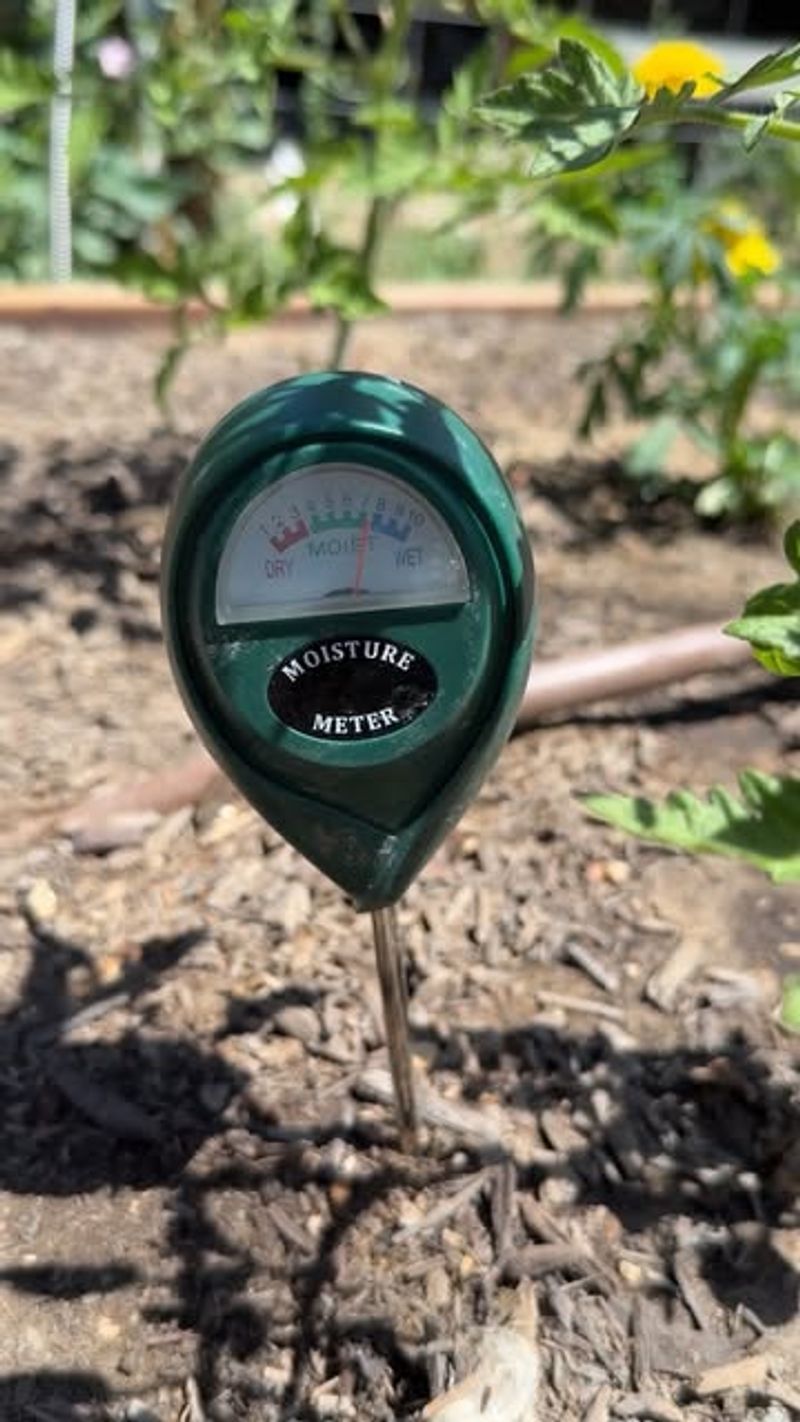
After a good summer rain, the instinct to skip watering entirely makes sense.
The ground looks wet, the plants look refreshed, and turning the sprinklers on feels wasteful.
But acting on appearances alone can leave newly planted trees, shallow-rooted annuals, and container plants dry within a day or two, especially in heat or wind.
A rain gauge is the most useful tool for making that call honestly.
Knowing that 0.6 inches fell is more actionable than knowing it rained.
Most established landscape plants in active summer growth need roughly 1 inch of water per week as a general starting point, though Oregon State Extension’s water conservation guide frames this figure as a benchmark for many newly established plants, not a universal law.
New lawns during dry periods may need 1 to 1.5 inches per week.
These numbers shift with soil type, drainage, heat, humidity, and how effectively the rain actually infiltrated.
After measurable rain, pause any automatic irrigation system and wait a day.
Then check the root zone directly before restarting.
For established landscape trees and shrubs, the goal when supplemental irrigation is needed is to wet the active root zone slowly and thoroughly, with one Oregon State guide identifying roughly 8 to 10 inches as a useful soaking depth for established plants in that context.
For newly planted specimens, check more frequently because their roots have not yet spread wide enough to buffer against dry spells.
Penn State Extension’s watering myths guide reinforces that effective moisture at the root depth matters far more than any weekly number, and that rainfall intensity and infiltration conditions determine whether the water from a storm ever reached the roots in the first place.
A storm that delivered 0.4 inches on dry sandy soil may have barely postponed your next watering.
A slow 1-inch rain on a well-mulched bed may carry you several days further.
Slow Irrigation Can Reproduce Rain’s Useful Pattern
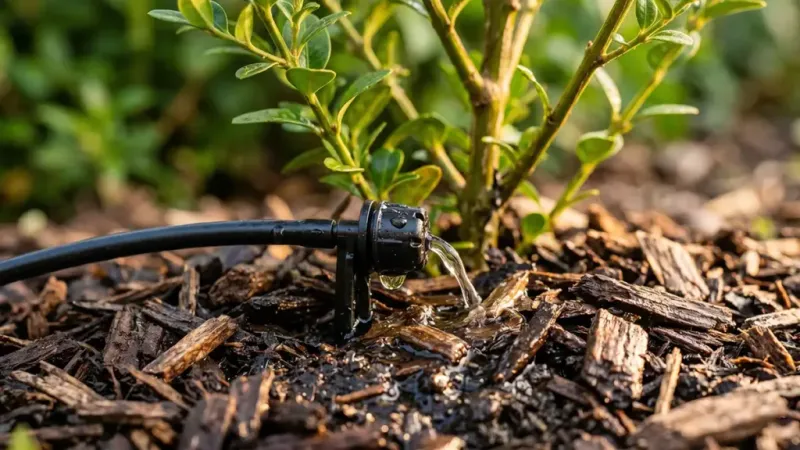
Rain does not hold a monopoly on deep, even watering.
A drip system, soaker hose, or slow hand-watering session placed thoughtfully across the root zone can deliver the same broad, gradual soak that a good rain provides, sometimes more reliably.
The key word is placement.
Most of the fine feeder roots that actually absorb water for trees and shrubs are concentrated in the upper 12 inches of soil and can extend well beyond the canopy edge.
Watering only at the trunk misses most of that absorbing area entirely.
For trees and larger shrubs, aim irrigation beneath the full spread of the canopy and a bit beyond it rather than at the base of the stem.
Oregon State Extension’s water conservation guide notes that feeder roots may extend past the drip line, so spreading water across a wider zone gives plants a better chance to absorb what they need.
A soaker hose looped in a ring at the canopy edge or a series of low emitters spaced across the bed will distribute moisture more evenly than a single sprinkler head aimed at the trunk.
Timing matters as much as method.
Watering early in the morning reduces evaporation compared with hot, windy midday conditions, when a significant share of applied water can disappear before it reaches the root zone.
Oregon State Extension’s watering basics also flags overhead watering as a practice that increases evaporation and can splash soil-borne pathogens onto foliage, raising disease pressure.
Keeping water at the soil surface, whether from a hose, drip line, or a slow rain, is the pattern worth reproducing.
Rain gets credit for doing it naturally, but a well-set irrigation system can do the same job on a dry week.
Direct Rain Is Not The Same As Roof Runoff
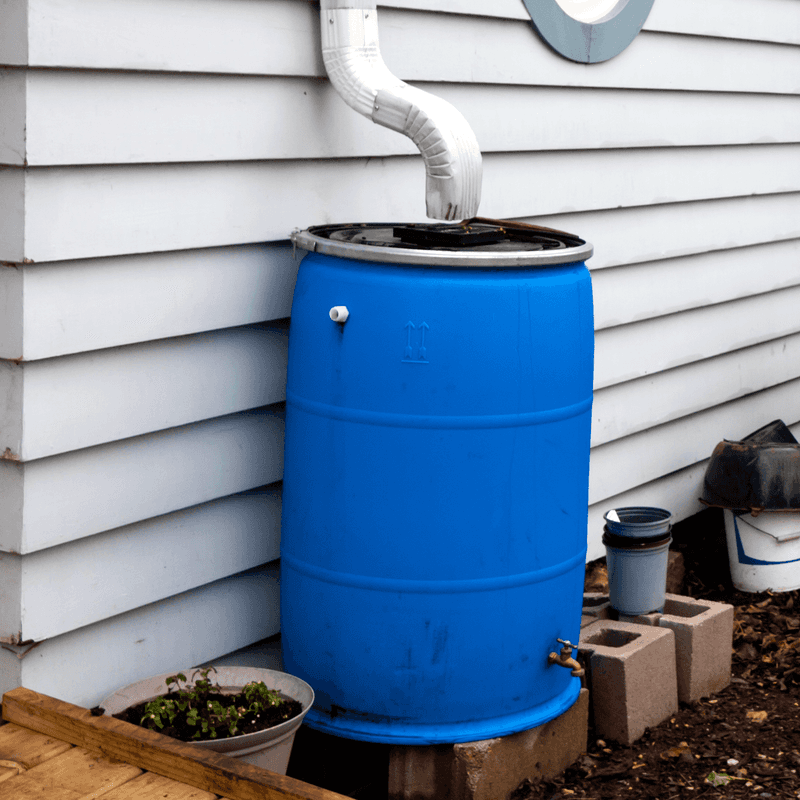
Rain falling straight from the sky onto your garden and water flowing off your roof into a barrel are two very different things, even though both start as precipitation.
Roof runoff picks up whatever it crosses on the way down, including bird and animal droppings, roofing materials, metal particles from gutters, and anything else that has settled on your roof since the last rain.
That makes stored barrel water untreated and nonpotable, regardless of how natural its origin feels.
University of Minnesota Extension guidance on rain barrels recommends treating collected roof runoff as nonpotable and using it on ornamental plants rather than edible crops.
That is the clearest low-risk recommendation.
If you want to use rain barrel water around a vegetable garden, the safest approach is to avoid spraying or splashing it onto any edible portion, including leaves, fruits, roots, herbs, and edible flowers.
Apply it at the soil surface through a drip line or careful hand-watering, and check your local food-safety guidance before proceeding, because recommendations vary by state and municipality.
The comparison between rainwater and municipal tap water is worth keeping honest, too.
University of Maine Extension’s water comparison guidance points out that rainwater may be slightly acidic and can contain dissolved atmospheric materials, while municipal water is treated for public health but varies in mineral content, hardness, chlorine, chloramine, or salinity depending on your water system.
Neither source is automatically better for every plant or every garden.
What matters more than water source is how much you apply, where you apply it, how the soil handles it, and whether the plant’s root zone ends up with the right amount of moisture at the right depth.
Too Much Rain Can Harm Roots And Move Nutrients
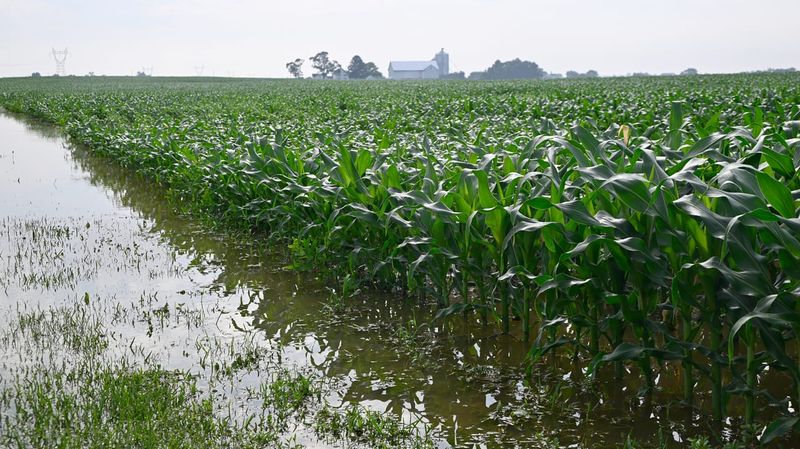
Soil that stays waterlogged after heavy rain stops being helpful and starts being harmful.
Roots need oxygen as much as they need water, and saturated soil pushes air out of the pore spaces between soil particles.
Utah State University Extension’s overwatering guide explains that roots deprived of oxygen begin to deteriorate, and in severe cases the damage can kill branches or entire plants.
Compacted or clay-heavy soil makes this worse because water drains slowly, keeping roots in saturated conditions for days after a storm.
Heavy rain also moves nutrients.
Nitrate, the form of nitrogen most available to plant roots, is water-soluble and travels downward with water as it drains through the soil.
After a soaking event, some of that nitrate can move below the root zone entirely, where plants cannot reach it.
Penn State Extension’s research on nitrogen losses from extreme summer rainfall addresses this leaching risk directly, and University of Missouri Extension nitrogen management guidance notes that waterlogged soils can also trigger denitrification, a process in which soil bacteria convert nitrogen into gases that escape into the air.
Both losses are most significant when heavy rain follows a recent fertilizer application.
Rain can help move soluble salts downward through a well-drained soil profile, which benefits plants in high-salt conditions.
Utah State University Extension’s guidance on soil salinity explains that this leaching benefit only works when enough water moves through the profile and drains away freely.
In compacted or poorly drained soil, the same rain can make salt problems worse by creating oxygen-depleted zones.
After a heavy summer storm, resist the urge to fertilize right away.
Check drainage first, inspect plant symptoms over the following week, and use a soil test if you suspect a nutrient deficiency.
A storm is not a cue to feed the garden, it is a reason to watch it carefully before deciding what it needs next.