
7 Features Sandhill Cranes Look For Before They Keep Returning To A Florida Lawn
Follow us on Google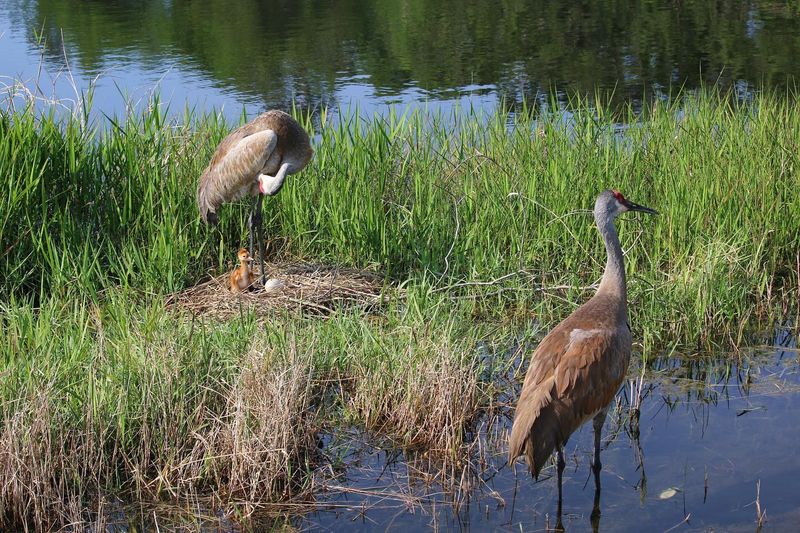
You step onto the patio after breakfast, coffee in hand, and a rolling, rattling bugle call drifts across the yard. Two gray birds as tall as a fourth grader are strolling your grass like they pay the mortgage.
Sandhill cranes do not pick Florida lawns at random, and the ones that keep coming back are checking off a very specific list. Once you know what they are looking for, you can enjoy them more, or quietly nudge them along when they wear out their welcome.
1. A Lawn Hiding Plenty Of Bugs Below The Surface
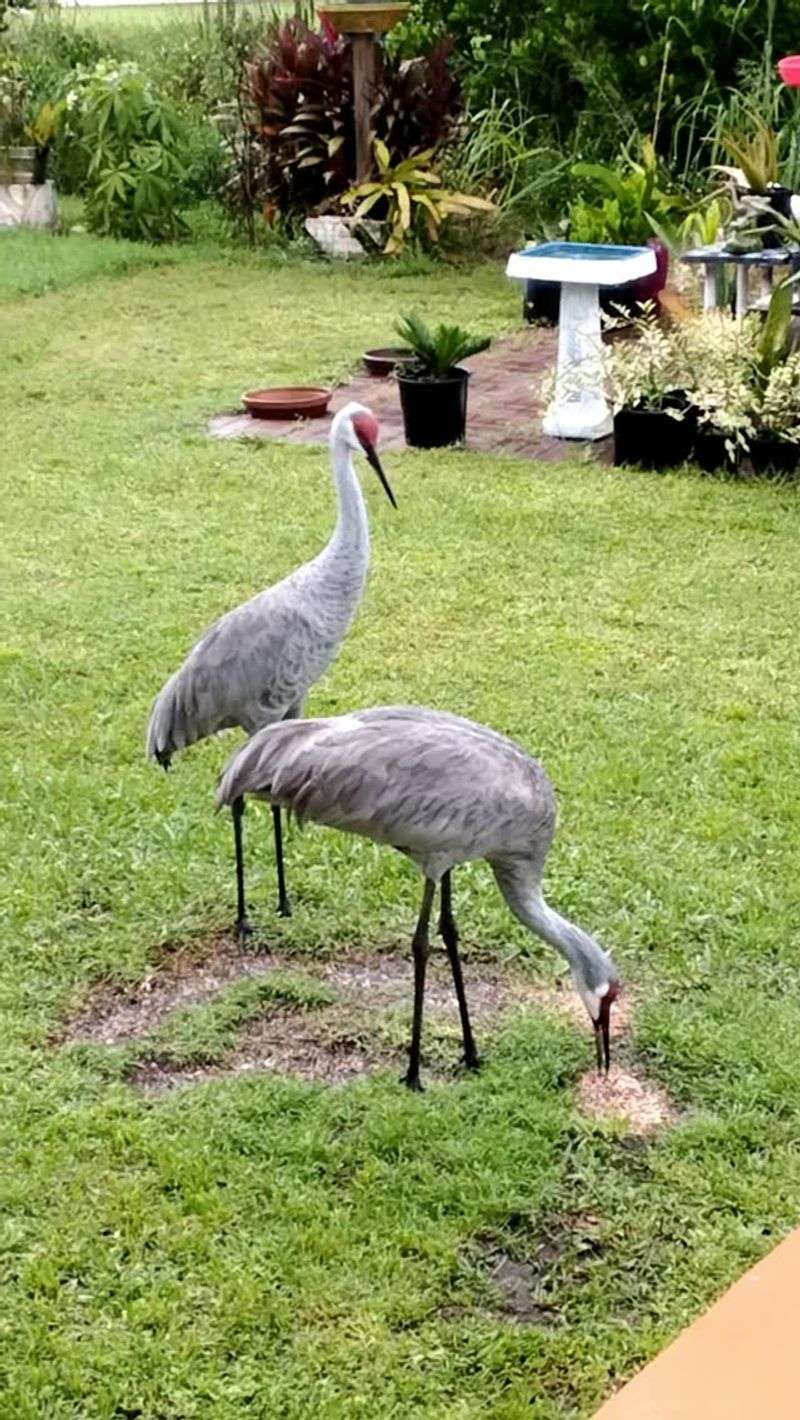
Those little holes in your St. Augustinegrass are not random vandalism. A crane drills its beak into the turf like a sewing machine needle, hunting for mole crickets, grubs, cutworms, and earthworms hiding in the top few inches of soil.
Here is the surprise. Cranes are omnivores, which means they eat both plants and animals, and a lawn packed with insect larvae looks like a loaded buffet to them.
Florida’s sandy soil makes digging easy, so a pest-heavy yard gets noticed fast.
If divots keep showing up, check for mole crickets with a soap flush. Mix 2 tablespoons of dish soap in 2 gallons of water, pour it over a 2-foot square, and count what crawls up within 3 minutes.
UF/IFAS Extension suggests treatment once you find 2 to 4 per square, which also removes the crane’s reason to keep digging.
So the probing birds are actually telling you something useful about your soil.
2. Short Grass That Lets Them See Trouble Coming
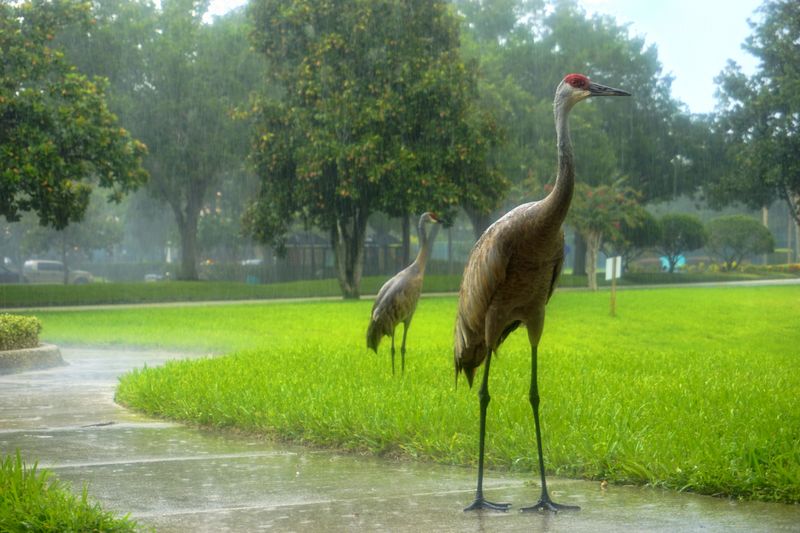
Picture trying to spot a coyote while standing in grass taller than your knees. That is the nightmare a crane avoids every single day.
A Florida sandhill crane stands about 4 feet tall, yet its chicks, called colts, are small and easy to grab. Cranes genuinely favor open ground with vegetation under about 1.5 feet tall, and a freshly mowed lawn works like a watchtower.
Often one adult keeps its head up as lookout while the other feeds.
Mowing St. Augustinegrass at 3.5 to 4 inches is already the healthy height UF/IFAS recommends. If you would rather see fewer cranes, letting a back corner grow into a native meadow of muhly grass, Muhlenbergia capillaris, removes some of that open view.
It will not banish them, but it is one layer.
Along the Gulf Coast and the Atlantic Coast alike, a tidy lawn quietly reads as safe ground.
3. A Pond Or Marsh Within Easy Walking Distance
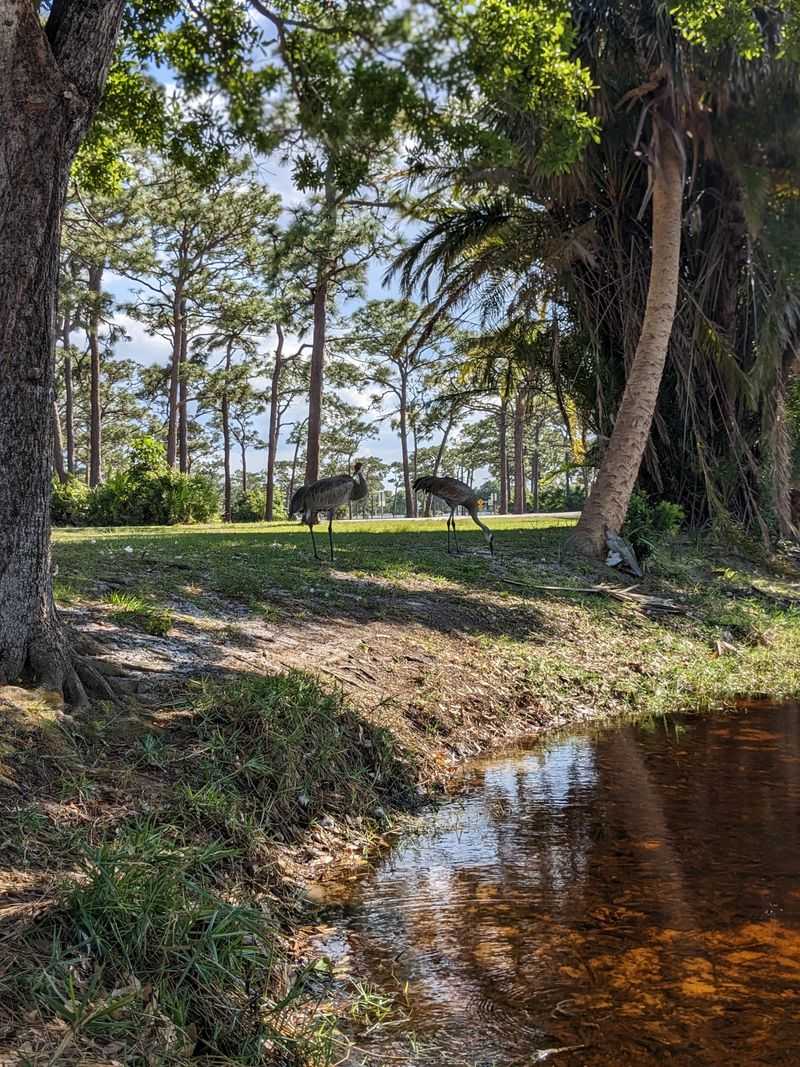
Most people assume cranes love the lawn itself. In truth, the lawn is the dining room, and the water down the street is the bedroom.
Cranes roost and nest in shallow freshwater, often standing in water just 5 to 13 inches deep at night so predators splash before they arrive. A retention pond, marshy ditch, or wet prairie nearby makes your yard a convenient commute.
Within a few hundred yards of water is the sweet spot.
That is why so many Central Florida subdivisions built around stormwater ponds have resident pairs. You cannot move the pond, of course.
But knowing it is the anchor explains why your yard and your neighbor’s get the same morning visitors year after year.
Look at a map of your block, and the crane commute suddenly makes perfect sense.
4. A Calm, Predictable Daily Routine Around Your Home
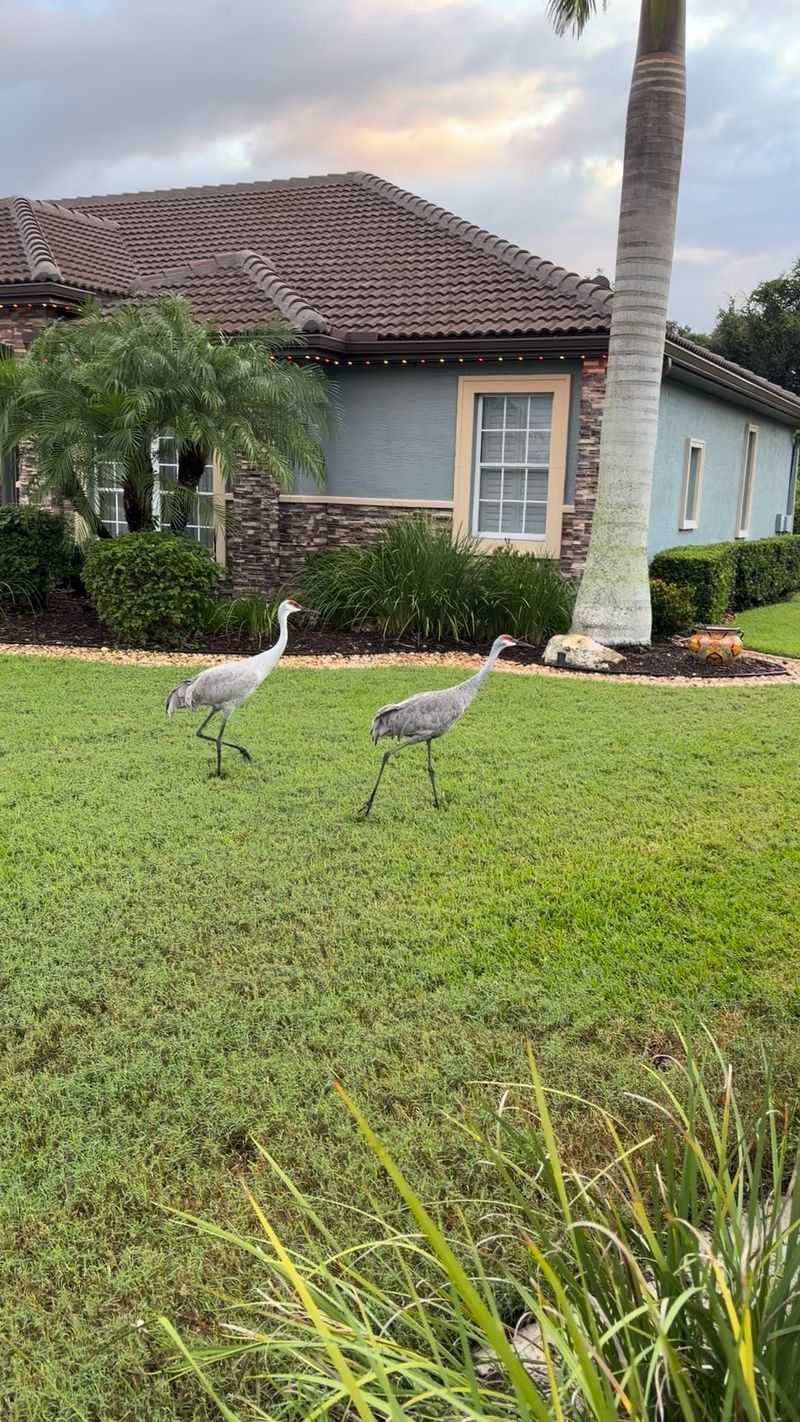
Cranes are creatures of habit, and so are you. That overlap is a big part of the attraction.
The Florida subspecies, Antigone canadensis pratensis, evolved in quiet prairies, yet many pairs have learned to read suburban rhythm. The same mower on Saturday, the same school bus at 7:15, the same dog walker.
When noise follows a pattern, cranes stop treating it as a threat.
Here is where it gets tricky. A yard with chaotic surprises, like a loose dog or constant chasing, tends to lose its regulars.
A steady, low-drama yard gains them. If you want fewer visits, gently walking toward them each time, without running or hitting, slowly breaks the comfort.
Either way, you now hold the remote control.
5. Safety Records From Raising Colts Nearby
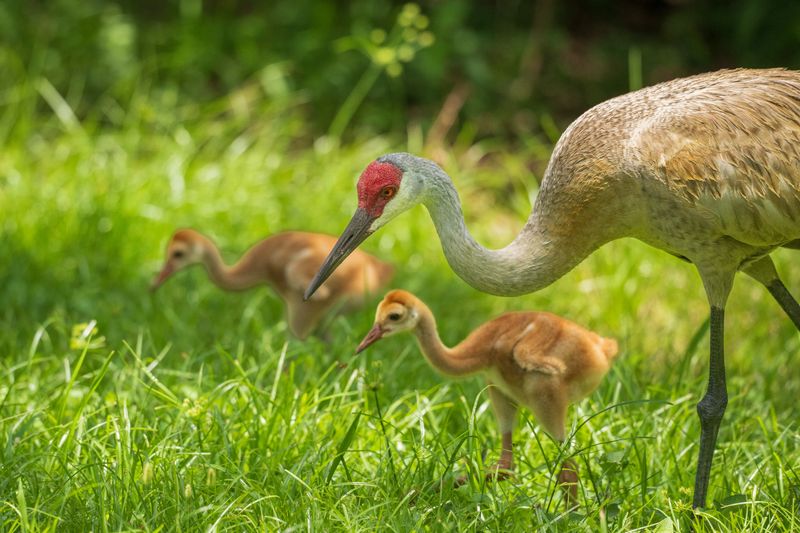
A pair that raised a healthy colt near your house last spring will remember. Success is the strongest invitation of all.
Young cranes stay with their parents for roughly 9 to 10 months, learning where to feed and where to hide. Suburbs can be surprisingly safe compared with wild prairie, since coyotes and raccoons there often fill up on garbage and pet food instead of chicks.
Cars and pools are the bigger dangers.
In Florida, cranes and their nests are protected by state law, so never disturb a nest or harass a family. If colts are using your yard, keep dogs leashed and drive slowly on your street during spring.
Watching that fluffy cinnamon colt grow up over summer is a front-row nature show most people never get.
6. Nesting Wetlands Close To Their Lifelong Territory
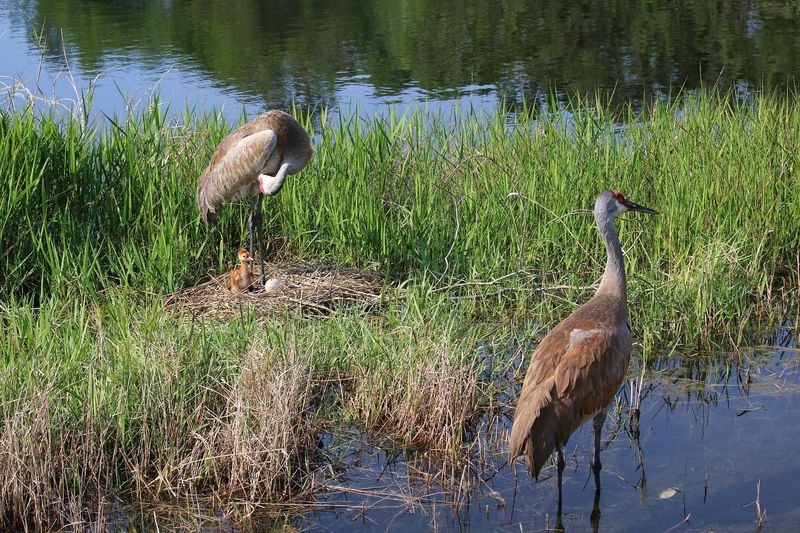
Sandhill cranes mate for life. They also tend to keep the same home turf for years, and your lawn may simply sit inside it.
Nests are bulky mounds about 2 feet across, built of grass and sticks in shallow marshes. In Florida, egg laying often peaks between late February and early March, and incubation lasts about 29 to 31 days.
During that stretch, adults feed close to the nest and defend the area fiercely.
That is why visits often spike in late winter, from North Florida down through Central Florida. The pair is not new, they are just busier.
If one keeps pecking your window or car mirror, it is fighting its own reflection. Cover the glass with cardboard for a few weeks.
Once the nesting rush passes, things usually settle back down.
7. Easy Food From People, Which Is Actually Illegal
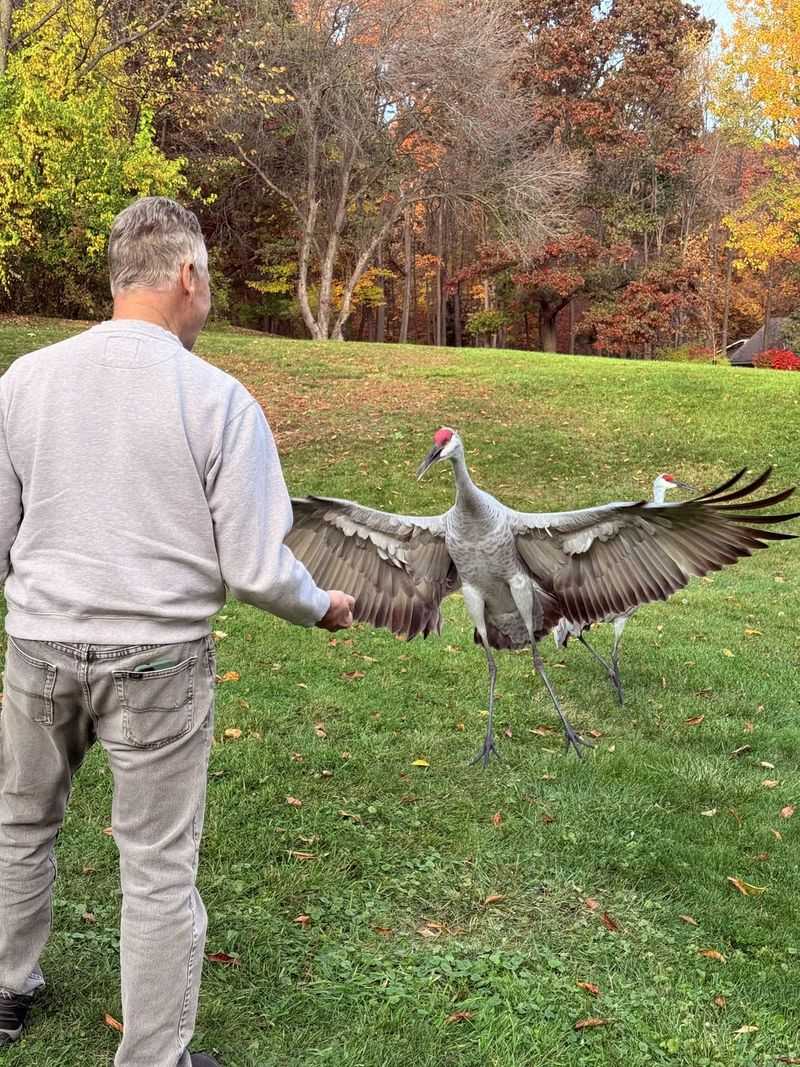
Some neighbors toss bread or corn because the birds seem so friendly. That kindness backfires.
Feeding sandhill cranes has been illegal in Florida since 2002 under Florida Fish and Wildlife Conservation Commission rules. Fed cranes lose their caution, wander into traffic, and can turn pushy with kids and pets.
Spilled birdseed counts too, so raise feeders at least 5 feet high or use trays that catch dropped seed.
Cut off handouts, and most cranes go back to natural foraging within a few weeks. They are excellent at finding their own meals, as your lawn divots prove.
Admire them from the porch, camera ready. The wild version of these birds is the one genuinely worth keeping around.
